
PROLOGUE | PERSONAL
Mo, imagine welcoming us into your studio or your home. Where would we be talking together, where would we meet you?
We’d probably be sitting at my place, at our dining table.
My studio is very sterile. It really only contains the essentials. There’s a chair for visitors, and everything else is set up to be practical and efficient. It’s not a cozy place to have a conversation.
My home, however, is made for that. Lots of wood, filled with light, and with a warm atmosphere. Both places serve their purpose. In one, I can work with focus; in the other, I feel sheltered.
Maybe we’d be sitting in your favorite spot?
My favorite spot is probably in my garden allotment. That’s where you can let your mind wander. Undisturbed.
You were born in 1983 in Iran and came to Berlin with your parents in 1985. You grew up in Spandau. You’ve said you remember playing at the Wall. Please tell us more about that, and about the places and people who have shaped you the most so far.
My childhood in Spandau shaped me in many ways. We moved into a high-rise housing estate on the edge of the city, surrounded by fields, lakes, and forests. I spent most of my childhood in nature.
I grew up in pretty modest circumstances, which encouraged my creativity. When you don’t own much and you’re bored, you learn—without even noticing—to keep yourself busy, to build castles in the air, and to create whole imaginary worlds.
I also learned early on that visions can come true if you take responsibility and move from dreaming to doing.
Which writers do you currently find exciting, and which books can be found on your bookshelf?
None. Years ago, I gave away all my books, including the bookshelf. Every now and then I’m given a book as a gift. If I read it — which rarely happens — I leave it in the hallway afterwards.
The last book I “read” was actually an audiobook: Orion Taraba, The Value of Others.
Which books have influenced or shaped you?
I think films have shaped me more than books, because I’m a deeply visual person. I even turn my thoughts into images.
Still, there are books that left a lasting impression: Hermann Hesse’s Siddhartha, Paulo Coelho’s The Alchemist, Eckhart Tolle’s The Power of Now, Spinoza’s Ethics …
And also Osho, Harari, Hawkins, Viktor Frankl, Ram Dass. Mostly philosophy and life wisdom — until I eventually realized for myself that the most valuable insights are the ones I discover and experience on my own. Those I never forget.
What are you reading at the moment, and where do you keep the book within reach?
My Sudoku booklet. One puzzle before going to sleep and one after waking up.
What music do you listen to and when?
I listen to everything, all the time, and all mixed together. Of course I have different playlists for different occasions. But the playlists I listen to most are like musical diaries.
This is how they come about: for three months I collect songs I come across in everyday life. They all go into one playlist. After three months, I have a chronological collection of music that’s representative of that period — for example, Summer 2025. When I listen to it later, I can relive the entire summer. I’ve been doing it like that for quite a while.
If you were to cook something for us, what would it be?
I don’t cook — I prepare food. I’d probably make you chicken with broccoli and sweet potatoes. That covers a lot of the nutrients we need.
What’s your favorite thing to eat?
Chocolate. Of course, only for the magnesium.
And what are your thoughts on breakfast?
The best meal of the day.
Four eggs or quark with berries. (Ed. note: German quark is a sort of fresh curd cheese.)
What kind of sport or balance to your artistic work do you practice?
I’ve been working out regularly since I was fifteen. I played American football for eight years, became German champion multiple times, and after my football days I just kept training out of habit.
These days, it’s mainly about keeping my body functional and healthy. I have a home studio and train five to six times a week. It’s a bit like brushing your teeth. It’s simply part of life, and you do it without thinking much about it.
What special passions or hobbies are you really into?
I’ve discovered gardening for myself. Working in the garden has something meditative about it, and while I’m digging in the soil, I don’t think too much.
Besides digging, I love analogue photography. It forces me to take my time, to look carefully, and to press the shutter mindfully. That’s how countless images have come into being — images that make me happy whenever I look at them. One note:
I have no idea about photography or gardening, which makes both playful and exciting.
Which personality trait defines you most?
I’m very honest — sometimes too honest.
Is there something you’d like to share with us? Or an answer to a question (not asked by us) that has been on your mind lately?
No.
INTERVIEW | ARTIST + POSITION
Please share with us the key stages of your artistic journey.
As a teenager, to earn some money, I painted murals — in restaurants, offices, clubs, and bars. Later on, I started painting tin soldiers and taking part in painting competitions, which I also won at the national level. That allowed me to finance many things throughout my youth.
I don’t have any formal training in the arts. I believe creativity is something you carry within you, and at some point it finds its way to the surface.
How did you come to art? Or in short: why art?
One of my biggest principles in life is freedom — the freedom to do and not do whatever you want.
Art is the ideal space for freedom. It knows no boundaries and gives me what I’ve always longed for: a way to express myself without having to follow rules.
What is making you happy at the moment?
Both in the context of art and in life — for me there’s not much of a difference — authenticity is what makes me happiest. Artists and people who are real.
What is making you afraid right now?
At the moment, I’m pretty much without fear. I hope it stays that way.
That’s probably because the prevailing feeling is trust. I believe there’s no such thing as coincidence, and that in the end everything will be okay. And if it’s not okay, it’s not the end yet.
This sense of trust takes up so much space that there’s hardly any room left for fear.
Do you believe that art carries a social responsibility? And what do you think it can achieve?
Maybe responsibility isn’t the right word. I believe art is the only thing in life that truly makes sense. Without art, life would be a constantly repeating, monotonous cycle.
A world without music, images, films, poetry, and so on would be a rather bleak world. And if all of it is carried by the frequency of love, there’s probably nothing more meaningful.
What defines your art? What is your work about — what are its central themes?
What’s becoming clearer and clearer is this: everything I do and create is essentially a reflection of my personality and my values.
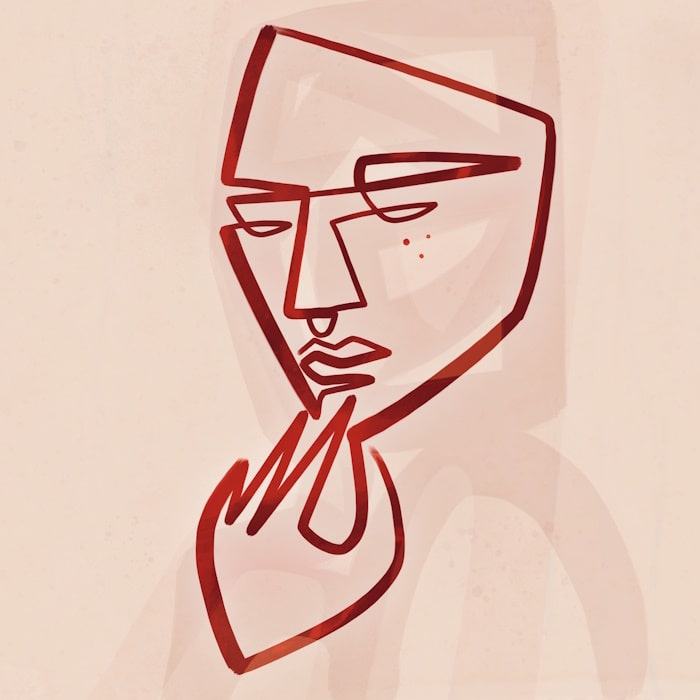
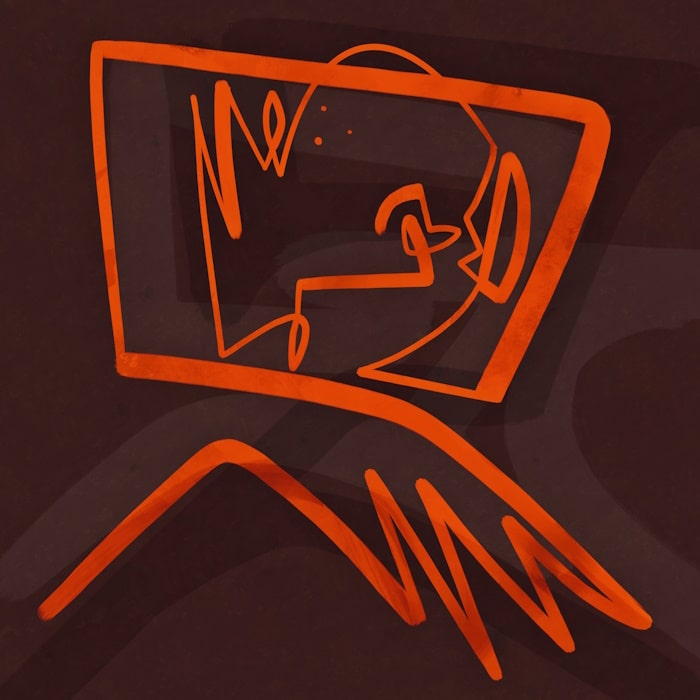
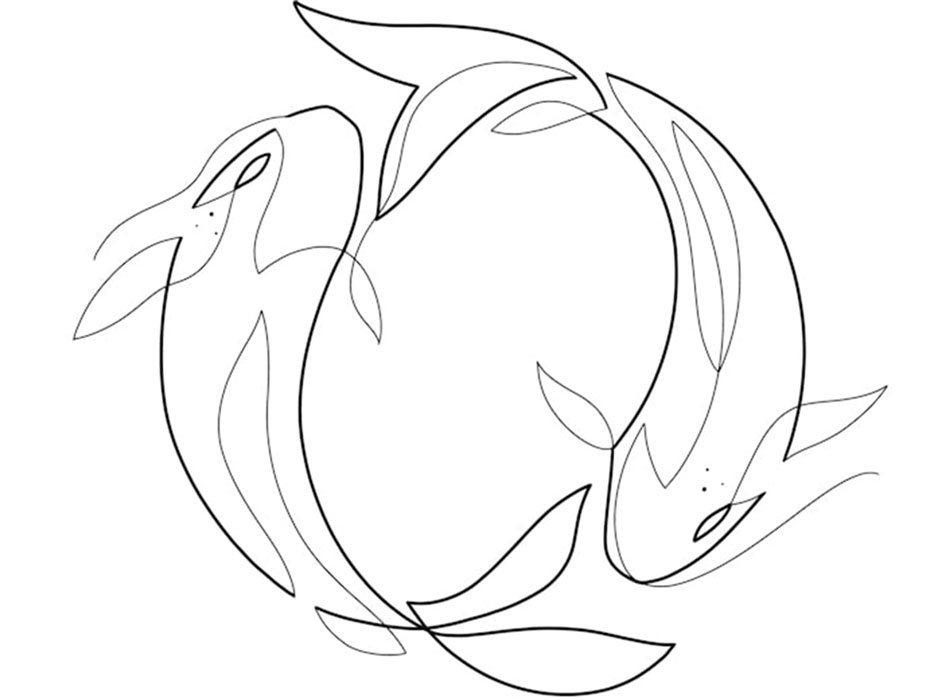
I try to simplify and reduce things in order to make the essential visible. My work is shaped partly by the practical and partly by the philosophical.
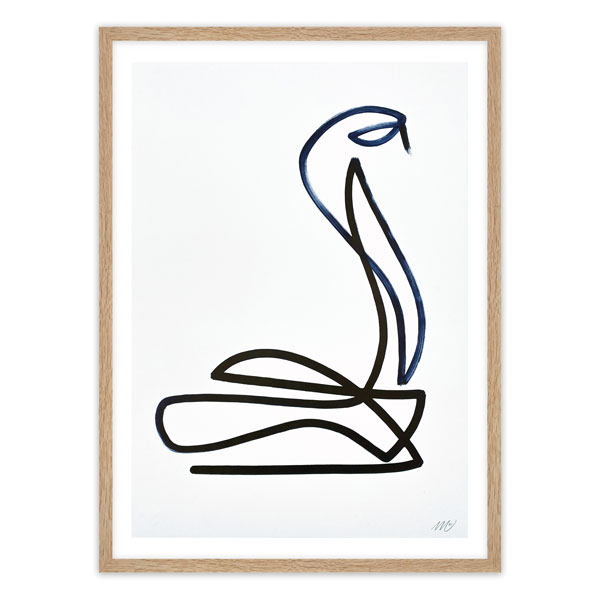
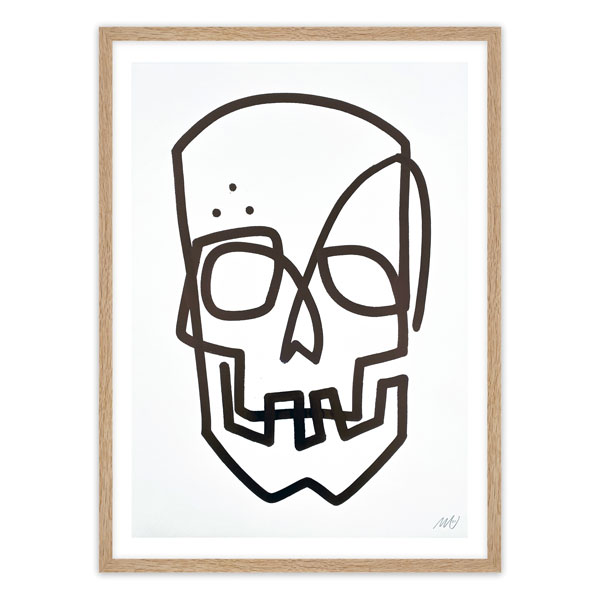
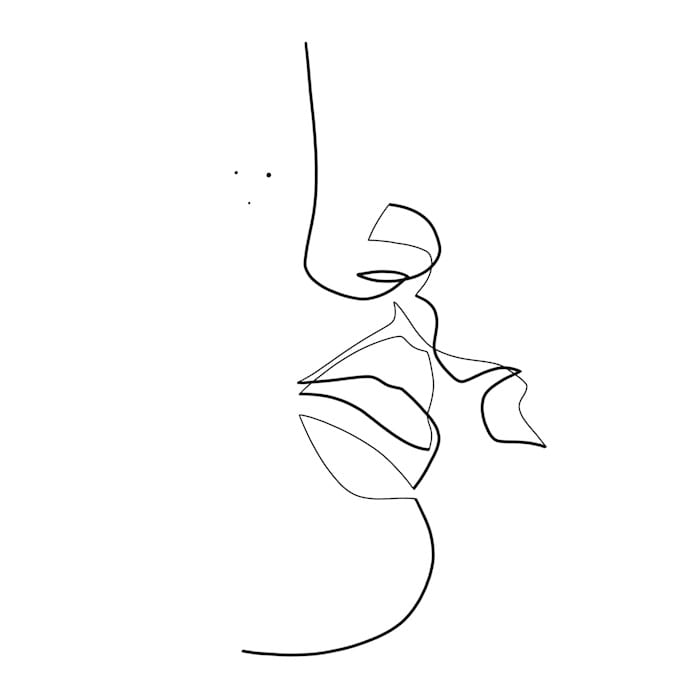
One line to tell everything — no more, no less. At its core very simple, and therefore highly complex. Like life itself.
How do you protect yourself from too much inspiration these days?
I don’t actually have to protect myself that much. The greatest inspiration in my life is nature. The rest is more distraction than inspiration.
How much of your work is planned in advance — and how much happens intuitively?
I almost always have a vision and plan many steps ahead in order to realize it.
That then allows me to be intuitive in the process, without having to think too much about it.
What are your (next) goals?
I’d like to reach more people with my work and get them to reflect.
The topic of sculpture occupies me. That’s something I want to dedicate myself to in the future, because the question of perspective fascinates me. What happens to an object when we change our point of view? Does the point of view change the experience? Does the experience change the feeling? And if both change, don’t we always have the option to change our reality simply by moving — without anything around us moving?
What is your stance on faith? Do you have guiding beliefs or a motto?
I basically believe that without faith you’re lost. Because at the core, we know nothing. A realization I had when I was six:
“– Mom, what happens when we die?
– We go to heaven.
– Mom, have you ever been to heaven?
– No.
– Then how do you know?
– I don’t know. I believe it.
– Mom, so does believing mean not knowing?”
What we believe in doesn’t really matter, as long as it gives us courage, hope, strength, and motivation to fulfill our visions.
Religion doesn’t play a big role for me personally in this context, as long as you practice it in your own heart and don’t carry it out into the streets.
Which project would you like to realize if lack of time, courage, or financial resources played no role?
I’d like to build animals out of metal and place them in different locations around the world so they can absorb the energy of their surroundings. A life-sized camel in front of the pyramids. A silverback in the mountains of Uganda, a rhinoceros in the savannah, etc.
I’d then like to show these sculptures in natural history museums around the world.
In your view, what are attributes of good art?
For me, art is good when I stop, when I can lose myself in it, when I feel something. That’s completely subjective.
When I was younger, I often judged art by whether I could understand the creative process. If I could, the art became uninteresting to me — it lost some of its magic.
Today, I don’t see it so strictly anymore. I tend to avoid judging altogether and simply try to perceive.
Is one born an artist? Or is an art degree essential?
Both the label artist and the art degree are concepts. And if there’s one thing art is not, it’s a concept. Concepts have a tendency to exclude — and in my understanding, that’s not what art should do.
I don’t put much value on titles or boxes. We’re all born with potential, and some of us are privileged enough to have the time and resources to discover and deepen that potential.
I’d describe myself as a very creative person. That’s how I was born — but not as an artist.
How do you see the future of art in the age of AI?
I don’t think much about AI anymore. I assume it’s not capable of making the same mistakes we make.
But it’s precisely those mistakes that make a work visible and unique in the end.
What’s your stance on NFTs?
It’s a topic I’d have to explore more deeply to give a truly well-founded answer.
My brother knows a lot more about it than I do. 😉
Who do you show a new piece to first?
My wife.
She’s my Lieblingsmensch — my favorite person.
What does the first hour of your day look like?
One Sudoku puzzle, a glass of water with lemon, stretching, working out, showering.
Every morning, without exception. Discipline is a virtue that’s indispensable, especially in the morning, because the morning often determines the course of the entire day.
In the age of the Internet of Things, are galleries still necessary? If so, why and for what?
I don’t know if they’re necessary. But they’re definitely a part of the art world, and without them something would be missing. They certainly have their place, but like all institutions, they should adapt to the times.
Social media — blessing or curse?
On the one hand, it’s a contemporary tool to connect with the world and to share one’s work and one’s perspective.
On the other hand, it invites you to create a version of yourself that feels artificial and inauthentic.
In the end, social media is neither good nor bad. Like any tool, it’s a means — and whether it’s a blessing or a curse depends entirely on how you use it.
Read more about Mo Ganji’s artistic message in THE DEED | DAS WERK:
THE DEED | DAS WERK: Mo Ganji

Born in Iran in 1983 and living in Berlin since 1985, artist Mo Ganji speaks about the central message of his artistic work.

Mo, please describe the core theme and central message of your work.

How much can be reduced without losing the essence?
If you look closely, you realize that at the core there is no difference — everything is the same. Everything comes from the same source.

Introduce to us the piece that, in your view, stands as an example of your message or embodies it best.

I would simply show a single stroke, a simple line that symbolically stands for everything.

What is the aim of your art, of your artistic work? What should it evoke in the viewer?

It should spark reflection, questioning, a dialogue with oneself and with the outside world. It may provoke and at the same time connect.
It should create awareness and raise questions. What is important? What is truly essential?

--------------------------------------------------------------------------
The question regarding THE DEED | DAS WERK is a supplementary and separately presented part of THE INTERVIEW IN|DEEDS with Mo Ganji.
EPILOGUE | CURRENT
The new work cycle 1 – CORE | KERN | 核心 — featuring 250 single-line works on Post-its from the series Lifeline | Lebensader | 生命線 by Mo Ganji — will be presented from Thursday, 18 December to Sunday, 21 December 2025 at the MOORDN Art Fair at the Haizhu International Convention & Exhibition Center in Guangzhou, China.
DEEDS interviews are neither edited nor shortened by our editorial team and are always published in the interviewee’s original words. For this reason, we do not provide translations of interviews into English or German unless they are submitted by the interviewee or we are specifically entrusted with the translation. In this case, the German version of the interview was submitted by the artist. The English translation was prepared by our editorial team at the artist’s request.