

One hundred years after the 1925 International Exhibition of Modern Decorative and Industrial Arts brought Art Deco to the forefront of the world stage, the Musée des Arts Décoratifs is celebrating this bold, refined, and modern style. From October 22, 2025, to April 26, 2026, the exhibition 1925-2025. Cent Ans d’Art déco will take visitors on a journey to the heart of the Roaring Twenties’ creativity and its masterpieces of heritage. Almost 1,000 works, including sculptural furniture, precious jewelry, objets d’art, drawings, posters, and fashion pieces, tell the story of the richness, elegance, and contradictions of a style that continues to fascinate.
Immersive scenography, sumptuous materials, stylized forms, and exceptional craftsmanship comprise a lively sensory journey where Art Deco reveals all its facets. The exhibition opens with a spectacular display of the legendary Orient Express, a veritable jewel of luxury and innovation. A cabin from the former Étoile du Nord train and three models of the future Orient Express, reinvented by Maxime d’Angeac, occupy the museum’s nave. It’s an invitation to explore a world where art, beauty, and dreams are created anew, just as they were in 1925. Bénédicte Gady, Acting Director of the Museums, and Anne Monier Vanryb, Curator of Modern Collections 1910-1960, curated the exhibition, and Atelier Jodar and Studio MDA designed the scenography.
Image above: Maxime d’Angeac, (b. 1962), architect —New Orient, Express bar car, 2020-2025, Scale model 1, © Orient-Express.
Born in the 1910s, Art Deco drew on the research of Art Nouveau in the wake of European reflections on ornamentation. It flourished in the 1920s and is characterized by a structured, geometric, and elegant aesthetic that combines modernity and opulence. Its forms appealed to decorators, architects, and manufacturers, but they were often reserved for wealthy social classes due to the high cost of materials and the finesse of the techniques used.
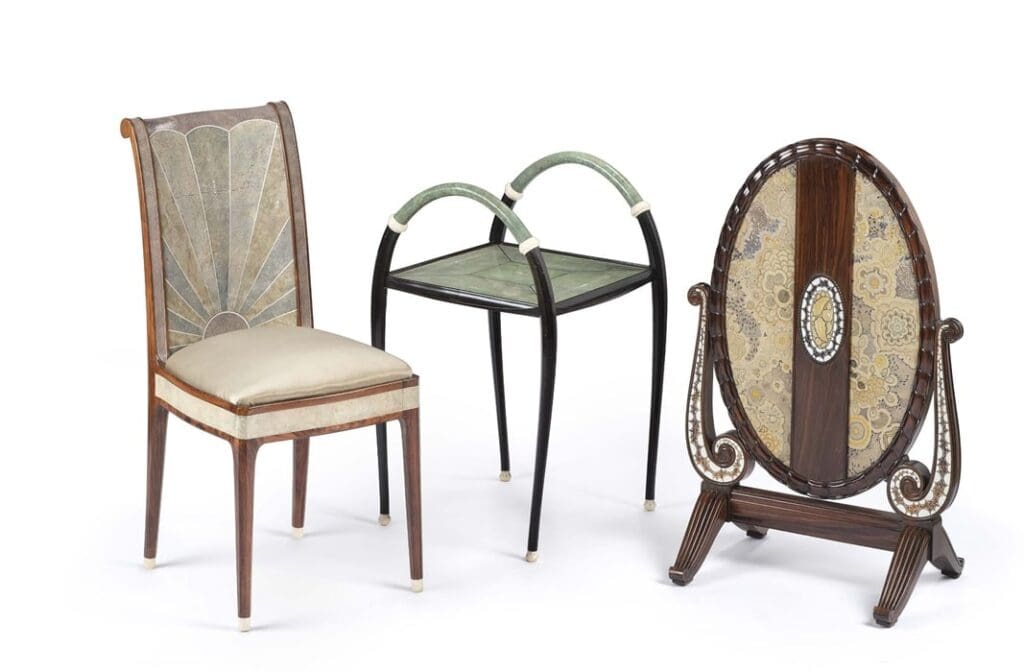
Chair, Paris, 1921, Rosewood, stingray, ivory, silk
Newspaper table, Paris, circa 1921, Ebony, shagreen, ivory
Van den Aker, cabinetmaker, Fire screen, Paris, circa 1923 Macassar ebony, engraved and patinated ivory, embroidered silk, © Les Arts Décoratifs / Christophe Dellière
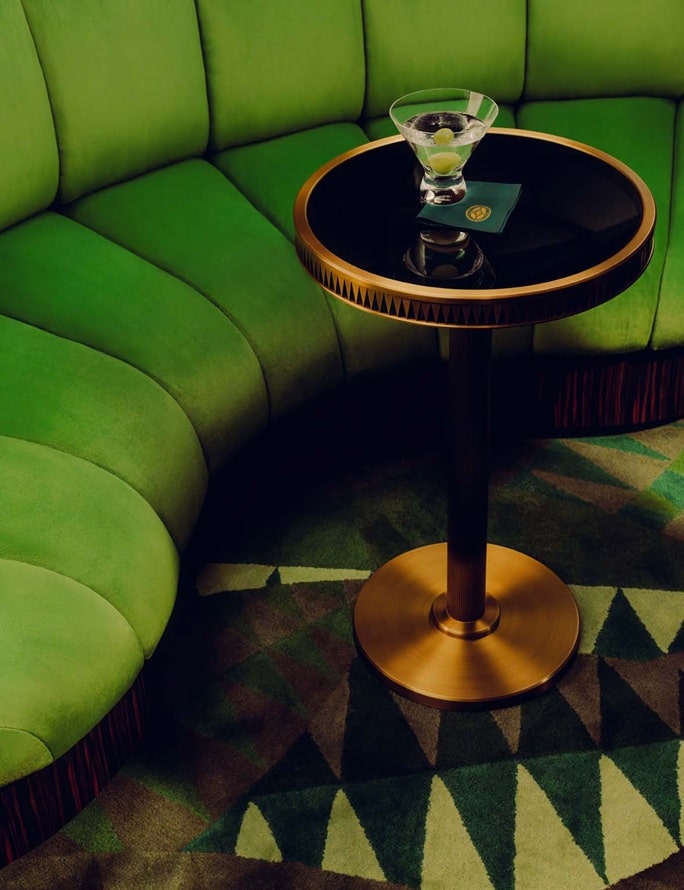
The Art Deco period was marked by a thirst for novelty, speed, and freedom, as well as an abundance of creativity. The style influenced many creative fields, including furniture, fashion, jewelry, graphic arts, architecture, and transportation. This exhibition explores the various Art Deco trends, ranging from Sonia Delaunay and Robert Mallet‑Stevens’s assertive geometric abstraction to Georges Bastard and Eugène Printz’s formal purity and Clément Mère and Albert‑Armand Rateau’s taste for decoration.
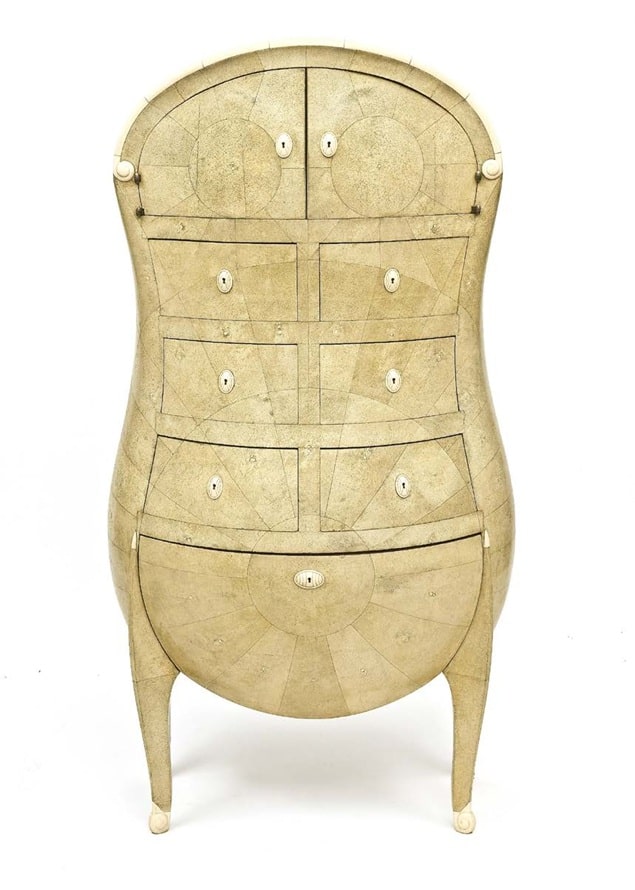
From its very beginnings, the Musée des Arts Décoratifs has played a central role in the recognition of Art Deco, hosting the salons of the Société des Artistes Décorateurs and building an exceptionally rich collection. The exhibition 1925‑2025. Cent Ans d’Art déco, draws on this remarkable collection, enriched by works on loan from major institutions and private collections. It presents iconic pieces, including: André Groult’s shagreen chiffonier, Jacques‑Émile Ruhlmann’s elegant designs, and Pierre Chareau’s impressive library desk designed for the French Embassy and reinstalled for this exhibition. The exhibition highlights three leading designers — Jacques‑Émile Ruhlmann, Eileen Gray, and Jean‑Michel Frank — each of whom embodies a unique facet of Art Deco.
Since the late 1960s, the museum has also been a pioneer in rediscovering the style, particularly with the Les Années 25 exhibition, which rekindled public and specialist interest. This revival continued in the decades that followed, driven in the 1970s by major figures such as Yves Saint Laurent, an Art Deco enthusiast, and his collaborator, decorator Jacques Grange. The museum offers Grange carte blanche within the exhibition.
The exhibition is organized around a vast chronological and thematic tour of the nave and galleries on the second and third floors of the museum. It traces the origins, apogee, development, and contemporary reinterpretations of Art Deco. Through more than a thousand works, it reveals the richness and topicality of a constantly evolving movement.
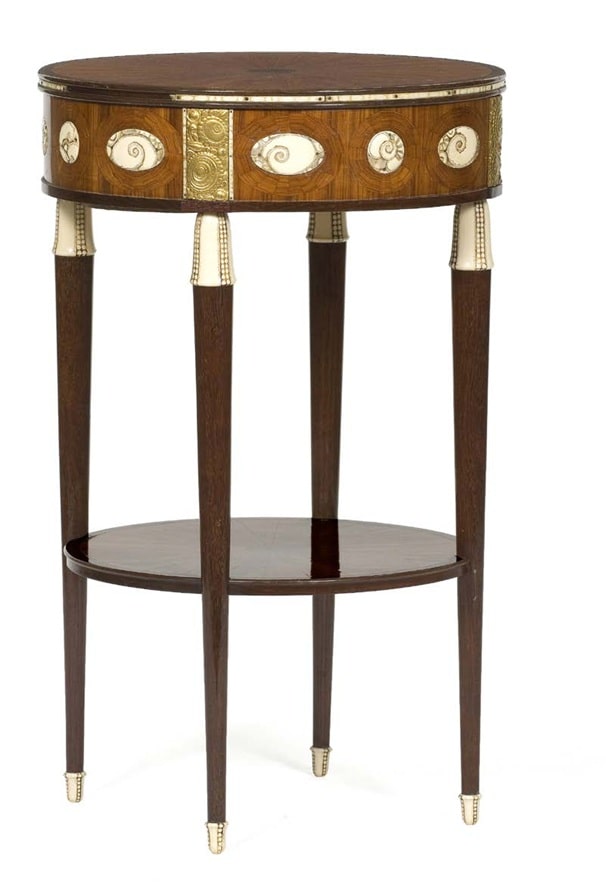
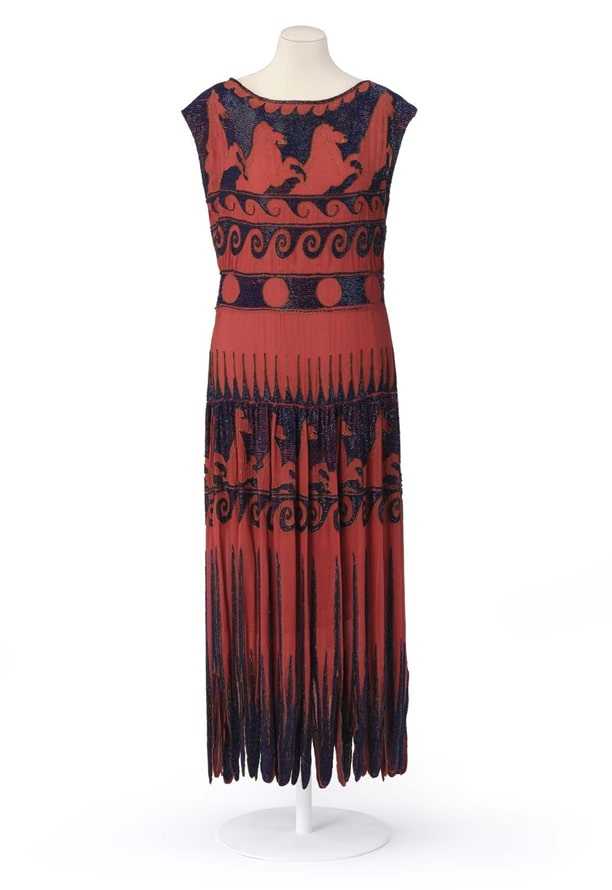
All areas of artistic creation and decoration are presented. Jean Dunand’s remarkable lacquerware is displayed alongside François Décorchemont’s glassware, tabletop items, and jewelry. The exhibition features strikingly modern pieces, including a series of brooches by Raymond Templier and Jean Desprès. The exhibition highlights the fundamental role of drawing through decorative projects, interior architecture, and furniture. Notable examples include Groult’s drawings for the bedroom of Madame in the French Embassy pavilion and the chiffonnier, one of the few remaining examples. The world of fashion and textile arts is represented by a cape designed by Madeleine Pangon, a dress with little horses designed by Madeleine Vionnet, a jacket designed by Sonia Delaunay, a dress designed by Jeanne Lanvin, textile drawings, and store window designs.
A symbol of refined travel and French savoir‑faire, the Orient Express enjoyed its golden age in the 1920s. Decorated by renowned artists like René Prou and René and Suzanne Lalique, the train became a rolling manifesto of the Art Deco aesthetic. One hundred years later, this myth is reborn. In the museum’s Nave, this exclusive exhibition features life‑size interior models of the future Orient Express reinvented by artistic director Maxime d’Angeac. The models are displayed alongside a 1926 Art Deco cabin from the museum’s collection. Drawing on the heritage of style and the world of craftsmanship, the project fuses excellent craftsmanship, technological innovation, and contemporary design to create the 21st‑century train. As in 1925, Art Deco inspires forward‑looking luxury in 2025.
This exceptional collection of Cartier pieces, some of which are being presented for the first to the public, is displayed in dialogue with the museum’s collections and illustrates the impact of this style on jewelry. The exhibition features more than 80 objects, including necklaces, tiaras, cases, watches, drawings, and archival documents, which showcase the formal inventiveness and symbolic richness of the house’s creations.
These pieces embody the aesthetics of Art Deco luxury, balancing rigorous geometry and sensual materials, oriental‑ inspired motifs, and technical innovation. They reflect the evolving tastes of a cosmopolitan, international clientele seeking distinction and modernity.
A century after its emergence, Art Deco continues to inspire with its modernity, elegance, and freedom of form. By bringing together perspectives from the past and present, the exhibition demonstrates the enduring relevance of this movement, which continues to resonate with contemporary aesthetic concerns and techniques. It is more than a tribute to the past; it invites us to rethink Art Deco as an ever‑fertile source of creation and innovation.
WHEN?
Exhibition period: Wednesday, 22. October 2025 until Sunday, 26. April 2026
Opening hours:
Tuesday until Friday: 11 am – 6 pm
WHERE?
Musée des Arts Décoratifs
107 rue de Rivoli
75001 Paris
COSTS?
Regular: 15 EUR
Reduced: 10 EUR
Free for under 26 years old