
From 2 November 2025 to 1 March 2026, the Diocesan Museum in Paderborn will be showing TRAPASSO – HINÜBERGEHEN, an exhibition that provides a space for new thoughts and perceptions on the final phase of life. As a partner of the exhibition, the Verbund katholischer Altenhilfe Paderborn e.V. (Association of Catholic Elderly Care in Paderborn) is offering an extensive accompanying programme for the exhibition with the PAULINE hospice and palliative care centre currently under construction, featuring readings, lectures, music and workshops.
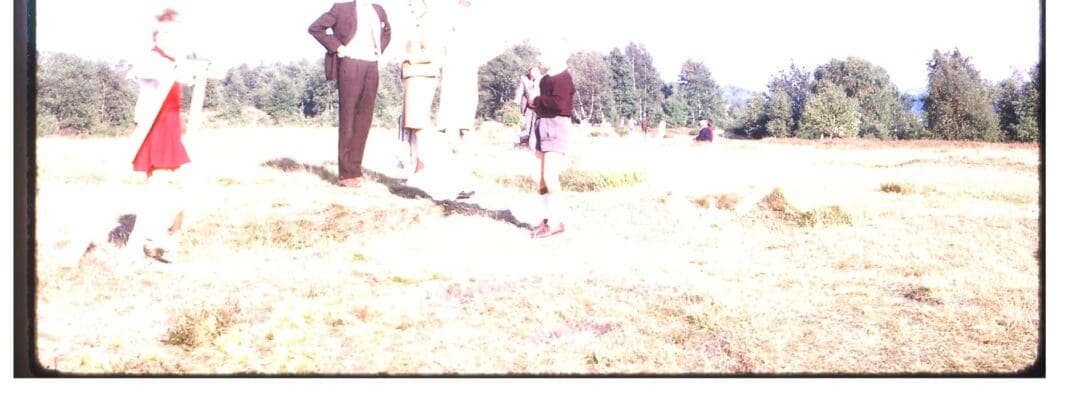
Image Above: Bienen Blatt 8. © Dagmar Boenigk
TRAPASSO – HINÜBERGEHEN marks the start of a new series: under the CONNECT# label, the Diocesan Museum will in future be organising exhibitions on socially relevant topics in collaboration with various partners from the city and the region.
The exhibition takes its name from the work ‘Trapasso’ by photo and video artist Christoph Brech. In Italian, Trapasso means ‘I am passing over (something)’, but also ‘I am dying’. ‘With this project, we want to raise awareness of the final phase of life, together with our partner, the emerging VKA Hospice and Palliative Care Centre PAULINE from the Catholic Association for Elderly Care in Paderborn,’ says curator Christiane Ruhmann. She has enlisted artists such as Christoph Brech, Dagmar Boenigk, Walter Schels and Beate Lakotta to engage in a dialogue with works from the museum’s collection. These include impressive medieval works such as the sculpture ‘Christ in Misery’, the panel painting ‘Death of Mary’ by the Master of Lisborn, and the artistically crafted portable altar from Paderborn Cathedral dating from around 1120. A total of around 40 exhibits are on display. These include a suitcase that the team at the PAULINE hospice and palliative care centre, currently under construction, has filled ‘for the passing over’ and which will be integrated into the exhibition. A participatory station focuses on one question: ‘Is there such a thing as an immortal soul?’
Hospices are places of life
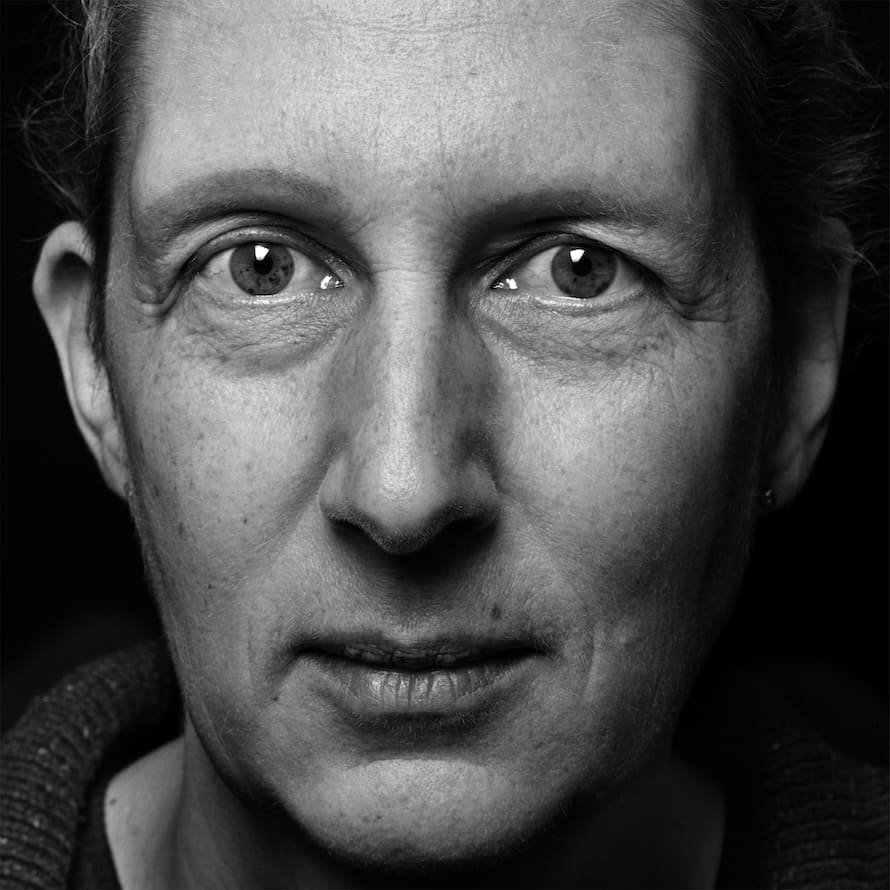
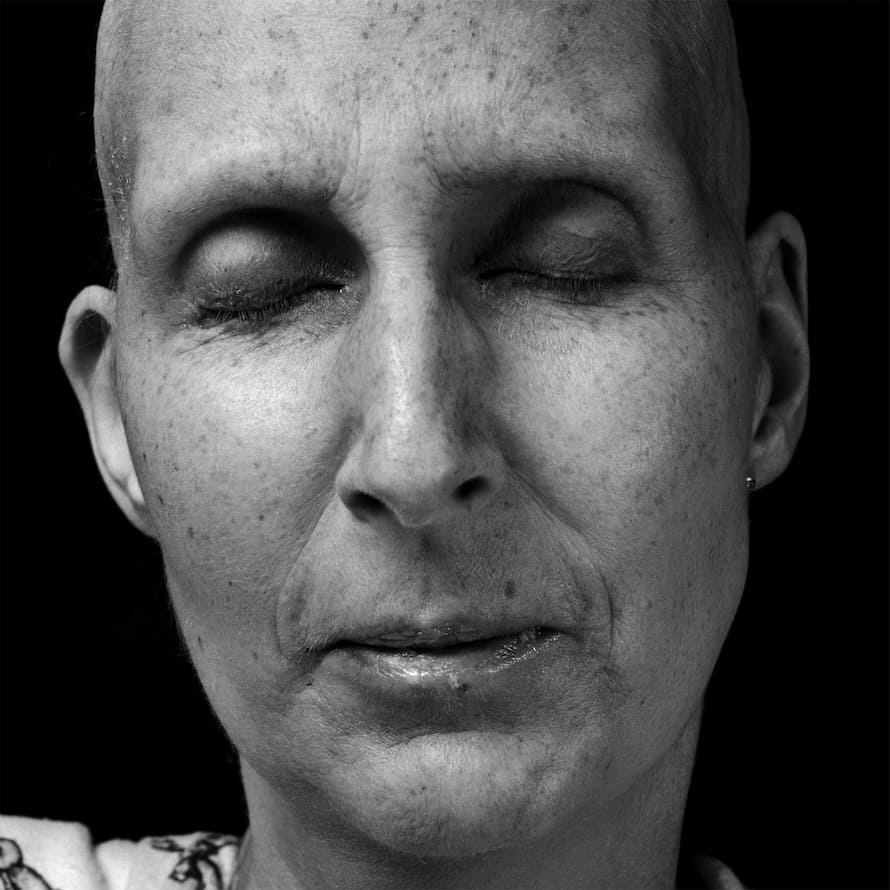
Photographer Walter Schels and journalist and author Beate Lakotta explore existential themes such as dying, transience and humanity in their work. Over a period of two years, they accompanied dying people in the final phase of their lives. Most of them spent their remaining time in hospices, places designed to enable the terminally ill to experience the last phase of their lives in a self-determined and conscious manner. With their permission, Schels took portraits of the patients – both before and immediately after their deaths – thus creating impressive moments of the ‘in-between’. Each portrait is accompanied by texts by Beate Lakotta, which give the dying a voice and reflect their fears, hopes and experiences.
The fading of the world
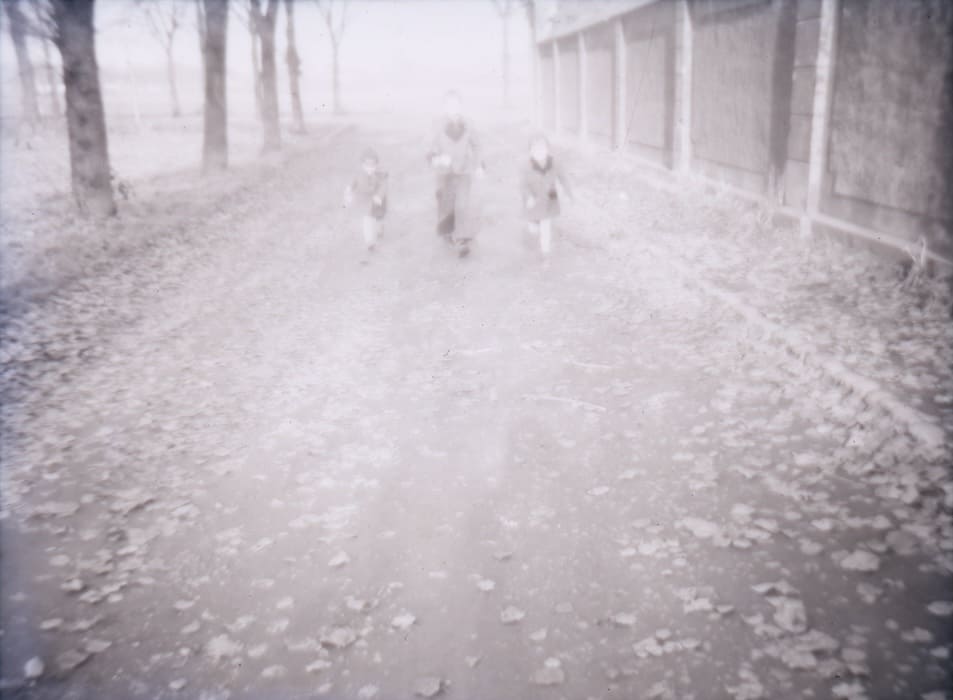
The first part of the exhibition is dedicated to fading, forgetting, but also to memories that break through despite everything. Here you will also find works by artist Dagmar Boenigk. Her works invite reflection on transience, identity, and perception. Together they form a visual poem consisting of floating, edited text fragments and partially covered family snapshots. In doing so, she impressively evokes the tentative, searching, and fading world in which people suffering from dementia find themselves in the final phase of their lives. Boenigk chooses Japanese paper, among other materials, to cover the photographs. A painting from the collection of the Diocesan Museum is also completely covered with this handmade, translucent material. Here, the Japanese paper protects its fragile paint layer, making it almost impossible to recognise what is depicted on it.
Transience and endurance
Christoph Brech is represented with three meditative video works. His work ‘The Wind that Shakes the Barley’ shows how memories of loved ones can manifest themselves, even when no space is given to them. To this end, he has placed stone memorials to unbaptised deceased children, which he found in the rugged Irish landscape, in the picture. His work ‘Trapasso’ shows medieval gravestones that have been used as flooring in a church for centuries. Many generations have walked over them, wearing down the reliefs and rendering them unrecognisable. Finally, in ‘Transito’, Brech’s camera records the dancing back and forth of a curtain blown by the wind near the floor in the same church. Again and again, we see the legs of churchgoers crossing the threshold that separates the sunlight from the darkness inside – restlessness from tranquillity, the present from the past.

Extensive accompanying programme
Under the motto ‘loved – supported – comforted’, a series of charity events is being held to raise funds for the new VKA Hospice and Palliative Care Centre PAULINE. The Diocesan Museum in Paderborn is supporting this initiative with the exhibition TRAPASSO – HINÜBERGEHEN. The Catholic Association for Elderly Care in Paderborn (Verbund katholischer Altenhilfe Paderborn e.V.) is contributing to the extensive accompanying programme for the exhibition with readings, lectures, music and workshops on topics such as ‘white mourning’ – the slow disappearance of dementia patients from the world – as well as lectures on assisted suicide, among other things. In addition, artist prints of the works of Benedictine monk Brother Stephan Oppermann OSB can be purchased in the museum shop, with 100% of the proceeds going to the VKA Hospice and Palliative Care Centre PAULINE, which is currently being built. Oppermann’s hand print entitled ‘Caput Mortuum’ is also on display in the exhibition. With the abstract interpenetration of strong colours, he addresses the duality of becoming and passing away.
Upcoming events (selection):
12. November 2025 | 6 – 8 pm
A day full of life – The new day hospice in Paderborn:
A lecture by Tanja Jochheim M.A. (Project Manager in the field of hospice and palliative care)
30. November 2025 | 2 – 4 pm
Companion in the darkness – as a doctor in a palliative care unit: Reading and author discussion
with Prof. Dr. Martin Weber, Mainz
7. December 2025 | 3 – 5 pm
Depression – a curable widespread disease: A lecture by PD Dr. med. Stefan Bender
The Diocesan Museum in Paderborn is the oldest in the German-speaking world. Founded in 1853, it houses one of the most extensive and significant collections of medieval to Baroque art in Germany, with a focus on sculpture and goldsmithing. Over the past 25 years, it has become known far beyond the region for its major art and cultural history exhibitions, which have brought together international loans in Paderborn.
The new VKA Hospice and Palliative Care Centre PAULINE, run by the Catholic Association for Elderly Care in Paderborn, is being built in the heart of Paderborn, nestled in the large park at the mother house of the Sisters of Christian Charity. Its aim is to provide sensitive and comprehensive support to seriously ill people and their relatives as they approach the end of life. The services offered range from day hospice and inpatient care to outpatient support and comprehensive counselling on ethical issues.
WHEN?
Exhibition dates: Sunday, 02. November 2025 until Sunday, 01. March 2026
Opening hours: Tuesday to Sunday, 10 am – 6 pm
WHERE?
Erzbischöfliches Diözesanmuseum und Domschatzkammer
Markt 17
33098 Paderborn
COST?
Admission: €4 / concessions €2, free admission for children under 12 years of age see dioezesanmuseum-paderborn.de
For readings/lectures/meetings as part of the TRAPASSO – HINÜBERGEHEN exhibition, there is a reduced admission fee of €2 + donation to the VKA Hospice and Palliative Care Centre PAULINE, which is currently under construction.