

The film series organized by the Scharf-Gerstenberg Collection to mark the 100th anniversary of the first Surrealist Manifesto of 1924 will continue in 2026: From January 28 to December 16, 2026, Cinema Surreal will show surrealist films about collecting, surrealist films from Paris, and masterpieces from the history of surrealist film every two weeks on Wednesdays at 6 p.m. Admission is free, and registration is not required.
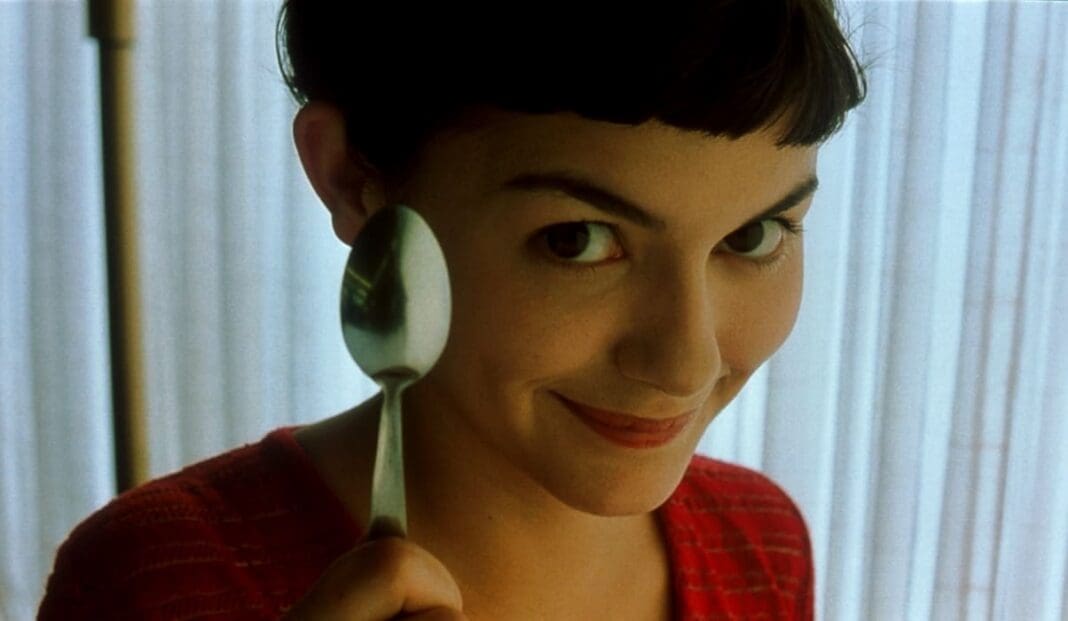
Image above: “The Fabulous World of Amélie,” by Jean-Pierre Jeunet, France 2001, 122 min, DF. © Prokino
Wednesday 28. January 2026, 6 pm
Innocence of Memories – Orhan Pamuk’s Museum and Istanbul
by Grant Gee, Turkey 2015, 97 min, OmU
If surrealism did not exist, it would have to be invented for Orhan Pamuk. In the novels of the Nobel Prize winner for literature, dreams and reality merge, the reality of the readers and the dreams of the author. “I believe in the future dissolution of these seemingly contradictory states of dream and reality into a kind of absolute reality, if one can say so: surrealism,” writes André Breton in his Surrealist Manifesto. Rarely is this implemented as consistently as in Orhan Pamuk’s 2008 novel The Museum of Innocence. A young man, Kemal, loves a woman, Füsun, but Füsun threatens to disappear from his life. Kemal collects everything that could remind him of her. 4,213 cigarette butts she smoked. Everything she touched or used. At the end of the novel, Kemal asks Orhan Pamuk to write a novel about her.
Every day, when he took his daughter to school, he would walk past a house and think. And he began to write the book. Later, he bought the house and turned it into a real museum with Kemal’s collection, which you can actually visit in Istanbul today. All the objects have become reality, but they refer to nothing more than a fictional reality.
The film Innocence of Memories does justice to Orhan Pamuk’s sensational fictional reality, quoting the novel in floating, dreamlike sequences and interweaving it with images of Istanbul and the real museum.
Wednesday, 18. February 2026, 6 pm
Peng. Of the moment and eternity
by Hartmut Seifert and Katja Schupp, Germany 2025, 108 min, DF

Peter Engelhardt, stage name “Peng,” is a renowned designer who sees himself as an artist. He collects everyday objects that he finds everywhere and that have special meaning for him. He had collected over 30,000 objects. But where to put them? “Is this art or can it be thrown away?” This saying comes from a bygone era, one in which Joseph Beuys lived, when he declared materials such as felt or fat to be art once he had held them in his hands. And why not?!
Peter Engelhardt collects everything, buys it if he has to, and the task is enormous. One moment he’s on the phone to the debt collection agency, the next he’s spending his last penny on a 50-year-old mannequin at the flea market. But where to put all these precious remnants of a society? “The last stop for now: a dilapidated industrial wasteland near Bingen, where rainwater and theft are the biggest enemies. Thus, preserving the collection—or rather, fighting against its destruction—in the old mine in Waldalgesheim became the life’s work of the now 78-year-old” (from the press release).
The documentary film “Peng. Von Augenblick und Ewigkeit” (Peng. Of the Moment and Eternity) tells the story of this unusual artist. And “when, at the end of the film, his oldest and best friend Monique answers all the many questions that have built up, the viewer stands smiling in front of his own (pre)judgments and throws them … overboard” (from the press release).
Peng and the film’s director will be present for a discussion after the screening.
Wednesday, 4. March 2026, 6 pm
Monsieur Killerstyle
by Quentin Dupieux, France 2019, 77 min, DF
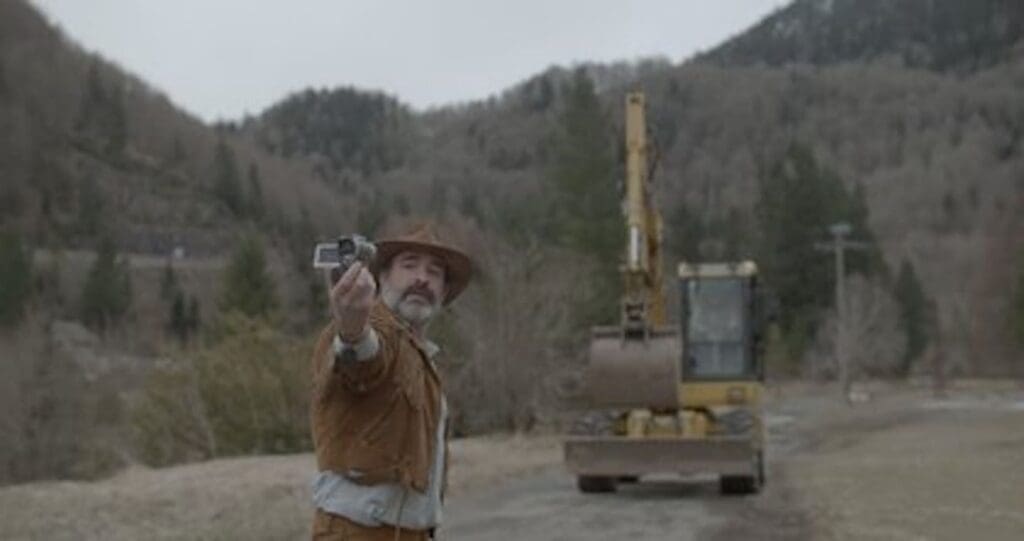
With this hilarious comedy film, Quentin Dupieux has created a social critique, a sharp psychological portrait of a man who unwittingly becomes a serial killer, and a witty critique of the media.
“Clothes make the man” (Gottfried Keller, 1874) still applies today. A man puts on a leather jacket and immediately feels incredibly valuable and important. And the leather jacket knows it too. “There must be no other jacket besides me,” it whispers to him. So he begins to collect other men’s jackets, and if someone is unwilling, he uses force.
A young, unemployed film editor begins shooting a movie about the man. The atmosphere becomes increasingly surreal and unreal. A leather jacket that talks, or a murderer who seems to have a cool, rational motive for his crime, are accepted with such matter-of-factness that their absurd actions seem completely normal.
That’s just a collector, right? And if you collect paintings, why not jackets too?! But in the end, the man meets a fate that is only fair, restoring balance to the world and its values.
Wednesday, 18. March 2026, 6 pm
The Art Detective
by Heiner Stadler, Germany 2001, 60 min, DF, with Vorfilm
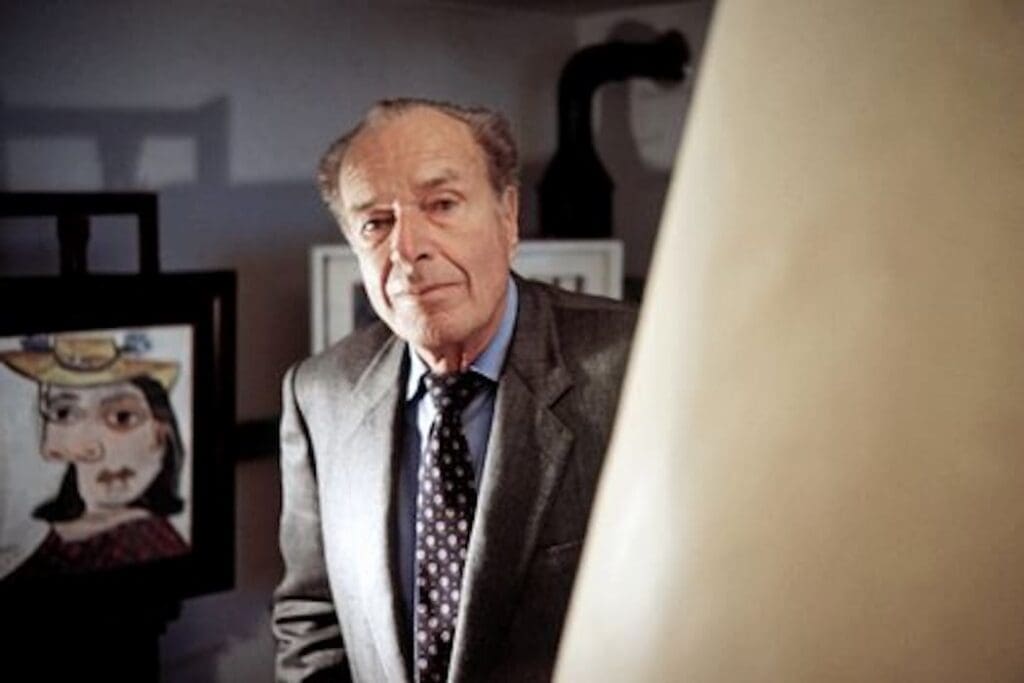
Art is often stolen: it is valuable and promises thieves immeasurable wealth; collectors believe they cannot live without a particular work of art; owning it means power. The Nazis robbed their Jewish fellow citizens of their possessions, colonial powers brought their art trophies back home, where they disappeared into museums.
In his documentary film, Heiner Stadler portrays a detective whose job is to recover art. “Clemens Toussaint is an art historian and detective. With criminalistic skill and extensive expertise, he tracks down works of art for their owners that were confiscated as Jewish property during the Nazi era or disappeared in the turmoil of the Russian Revolution. The film tells the story of the convoluted paths taken by important works of art in the last century. The story leads from Germany to the USA, France, Spain, Holland, Switzerland, Russia, and Japan” (from the press release).
Wednesday, 8. April 2026, 6 pm
King Kong’s fist
by Heiner Stadler, Germany 1985, 80 min, DF

Variety, the world’s most important cinema magazine, wrote on February 13, 1985: “Anyone who has seen King Kong … will laugh themselves to death when they see this debut work by a graduate of the Munich Film School.” Heiner Stadler had made a feature film about a film journalist who sees a film by a lost director at the Berlinale. He is said to have gone to Hollywood in the 1920s. The journalist discovers that the director designed King Kong’s fist as a set builder. Then his trail goes cold, but since the journalist has already sold the story, he decides to simply make it up.
King Kong’s Fist is great fun, an example of surrealist films of the 1980s, and a testament to Heiner Stadler’s ingenious interweaving of reality and fiction in many of his films.
Anyone who was famous in West Berlin at the time makes a cameo appearance in King Kong’s Fist. That’s what makes this film so much fun: no one else has managed to portray old West Berlin with such amusing detachment and humanity. The editor-in-chief of Der Tagesspiegel, directors Wim Wenders and Doris Dörrie, legendary film producer Bernd Eichinger, founder of Hamburg’s Abaton cinema Werner Grassmann, film critics Ponkie and Peggy Parnass, and even world-famous actors such as Liv Ullmann and John Cassavetes.
Wednesday, 22. April 2026, 6 pm
Been to the museum, strongest impressions…
by Heiner Stadler, Germany 1999, 18 min, DF
At the beginning of the 20th century, more and more looted art from German and European colonies found its way into Berlin museums. The art world was enthusiastic about the apparent primal power of these works. Long before restitution was on everyone’s lips, Heiner Stadler, one of the leading documentary filmmakers of the late 20th century, set out to find out where this art came from and what had become of the people there.
So Surreal: Behind the Masks
by Neil Diamond, Joanne Robertson, Canada 2024, 88 min, OmenglU
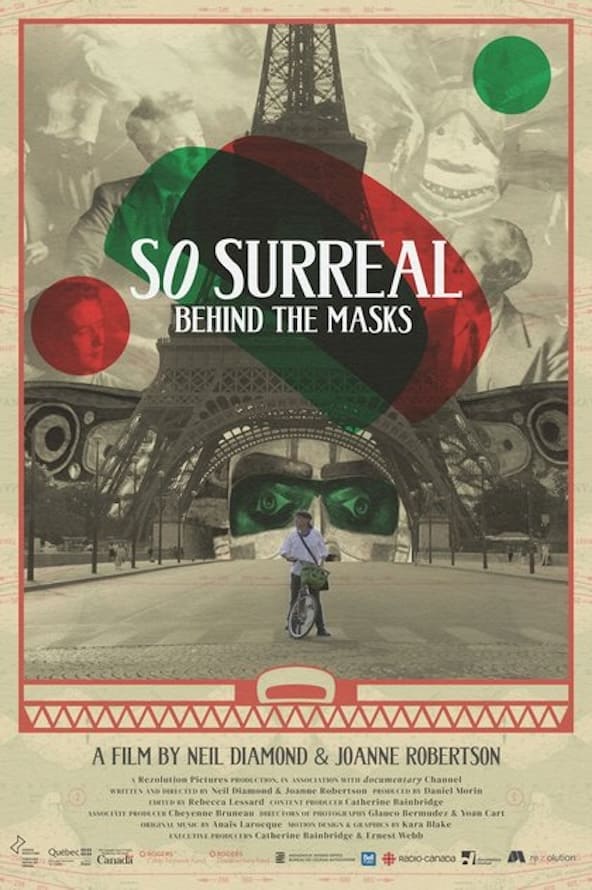
The potlatch was a ceremony practiced by indigenous peoples on the northwest coast of the United States and Canada. During this ceremony, gifts were distributed to consolidate social status and celebrate births, weddings, or deaths.
From 1885 to 1951, the indigenous potlatch ceremony was banned under Canadian law. Those who defied the ban were arrested, and masks and ceremonial objects were confiscated. The Kwakwaka’wakw Nation has made it its mission to track down these sacred objects. In some cases, the masks traveled across the country and eventually to Europe, where they found their way into museums and private art collections and into the hands of surrealists such as Max Ernst, André Breton, and Joan Miró. “So Surreal: Behind the Masks” traces the fascinating fusion of Yup’ik sensibility with the Western avant-garde movement and demonstrates the enormous influence of indigenous art…
The highly entertaining film by Neil Diamond (Reel Injun, 2009) and Joanne Robertson is part crime thriller, part art documentary. Set alternately in Alert Bay, New York, and Paris, it offers an unusual and little-known perspective on art history, while highlighting the important work of redressing cultural genocide by Canadian and American authorities. This lively and dynamic film is an outstanding achievement” (International Film Festival of Ottawa).
Wednesday, 6. May 2026, 6 pm
The Lions by the River Tigris
by Zaradasht Ahmed, Norw./Irak/Nether. 2025, 90 min, OmenglU

“It’s beautiful here, let’s play,” says Fakhri, holding out a small speaker to Fadil, the violinist. But there is no audience. The two men are standing in the ruins of Mosul. Three years of occupation by the terrorist organization Islamic State have almost completely destroyed the old town. … Along with the buildings, the 8,000-year history and culture of Iraq’s second-largest city seemed to have been wiped out forever. Slowly, life is returning. Art treasures are being restored, theater and music are back, and so is Fakhri’s small private museum … With a steady hand, Zaradasht Ahmed tells a deeply human story in which he weaves together the darkest and brightest sides of humanity” (DOK Leipzig 2026).
The terrible backdrop to the documentary is the brutality with which the whole world is currently being engulfed in ever new wars. It is no longer soldiers fighting soldiers on imaginary fronts, which in itself is completely absurd. No, deliberate action is being taken against all the inhabitants of a country who are not soldiers. Women, children, old people, people who cannot defend themselves, and it is not weapons, tanks, or warplanes that are being destroyed, but houses. The film shows something that is lamented by the media at the beginning of every war, but as soon as the powerful have won the war, the suffering of the population is no longer even noticed.
Wednesday, 20. May 2026, 6 pm
Paris qui dort
by René Clair, France 1925, 59 min, OmenglU, mit Vorfilm
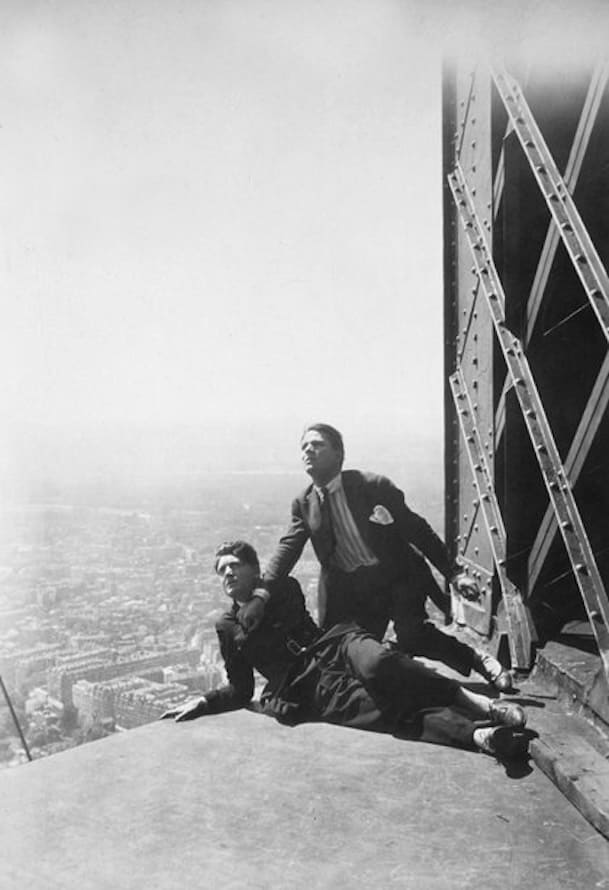
René Clair is arguably the most lyrical director among the filmmakers of the early 20th century. In 1924, he shot the Dadaist short film Entr’acte, which is still considered one of the most important contributions to early cinema. The following year, he made Paris Sleeps. A young man finds himself in a city where all movement has ceased. Nothing and no one moves anymore. At first, he finds it amusing. He finds a frozen thief still holding the stolen pocket watch in his hands and considers stealing from the thief. But then he begins to realize what it really means when an entire city stands still, all wheels are at a standstill, but above all, all people are silent, with no one to talk to, no one to exchange ideas with, even if it’s just a conversation about this strange situation. What is it anyway? Is it a virus, is it cosmic rays? Sooner or later, the man will find out what is behind this oppressive phenomenon. And of course, at some point, Paris will wake up again. René Clair’s film is a parable about what we really need—not power, not violence, but mutual recognition and mutual attention.
What is remarkable, however, is how masterfully René Clair manages to use the new medium in the early days of film, ultimately with the same skill that the best directors of our time have at their disposal.
Wednesday, 3. June 2026, 6 pm
The discreet charm of the bourgeoisie
by Luis Buñuel, France/Italy/Spain 1972, 102 min, DF
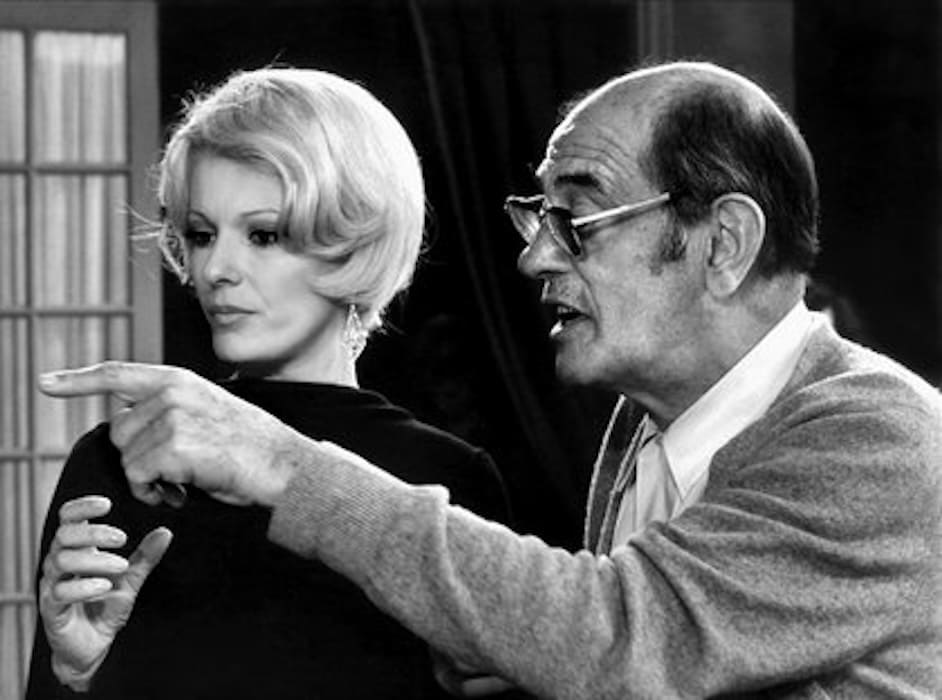
Paris is the birthplace of surrealism. The first surrealist film, “The Shell and the Priest,” was made in 1927 by Germaine Dulac. However, Luis Buñuel was to become one of the most important directors of surrealist cinema. In 1929, he made “An Andalusian Dog” together with Salvador Dalí, and from then on he worked tirelessly as a director of surrealism until 1977. Luis Buñuel died in 1983 at the age of 83. He had made over 34 films.
“The Discreet Charm of the Bourgeoisie” is one of his last films. Six self-centered representatives of the bourgeoisie try to meet for dinner, but their plans are constantly thwarted by events that are as absurd as they are. Sometimes the guests arrive on the wrong day, sometimes the hosts have sex with each other, whereupon the other guests leave after waiting in vain for 20 minutes, sometimes the host casually shoots someone. It is a monument to Buñuel’s mockery of the decadent, amoral bourgeoisie, developed in pure surrealist film style, right up to a scene where one protagonist dreams that another protagonist has dreamed something… and wakes up. Reality and dream intermingle, just as Breton had postulated in the Surrealist Manifesto in 1924.
Wednesday, 17. June 2026, 6 pm
Delicatessen
by Jean-Pierre Jeunet, Marc Caro, France 1991, 99 min, DF

If René Clair was one of the first surrealists in film history with “Paris Sleeps,” Jean-Pierre Jeunet is a representative of the third generation, shooting his films in the 21st century with the same elegance as René Clair. Delicatessen is a dark dystopia that tells a terrible story with sharp humor. But this story takes place entirely in our imagination, without ever turning into images of bloody horror. Everything is as if by chance. In an impoverished Parisian suburb, a master butcher who owns an apartment building has taken it upon himself to provide his tenants with a daily ration of meat—if they pay their rent on time. After all, he is a butcher. To this end, he constantly hires new janitors, who end up in his tenants’ cooking pots. Until his daughter falls in love with the newest janitor…
The story is carried by its whimsicality and the many bizarre residents of the house. There is the woman who invents the most unusual machines to take her own life, but never succeeds; there is the insect researcher who makes himself comfortable in a damp basement dungeon full of beetles, and the elderly lady who knits an endless sweater, the yarn of which immediately unravels and rewinds as she knits. And despite the gloomy life, wit and charm are always at the heart of this film, which won four Césars.
Wednesday, 1. July 2026, 6 pm
The Fabulous World of Amélie
by Jean-Pierre Jeunet, France 2001, 122 min, DF
After his dark dystopia “Delicatessen,” Jean-Pierre Jeunet made a light summer comedy. The setting is once again the big city, but this time it’s bright and cheerful Paris, only its inhabitants are just as broken as the protagonists in the film “Delicatessen.”
There is Amélie, who is completely isolated from other children and people by her parents out of concern that she might be ill and die. In fact, her mother herself meets an abstruse death when she is killed by a suicidal woman who throws herself to her death. Her father then raises his daughter alone, burdened by all his fears, until she leaves him. She wants to make other people happy, but after her isolated childhood, she is far too shy and vulnerable and cannot interact with other people. The only person she talks to is the man with brittle bones, who cannot leave his apartment and spends his days copying a single painting by Renoir. Over and over again. Always the same one. Or the man Amélie falls in love with. He collects discarded passport photos and carefully sticks them into a precious photo album. Then he loses the photo album somewhere on the street. A tragic fate.
But Amélie will make all the people she cares about happy. Including herself. Despite all the surreal, abstruse obstacles, her world is still simply… fabulous.
Wednesday, 26. August 2026, 6 pm
The Weary Death
by Fritz Lang, Germany 1921, 83 min, DF
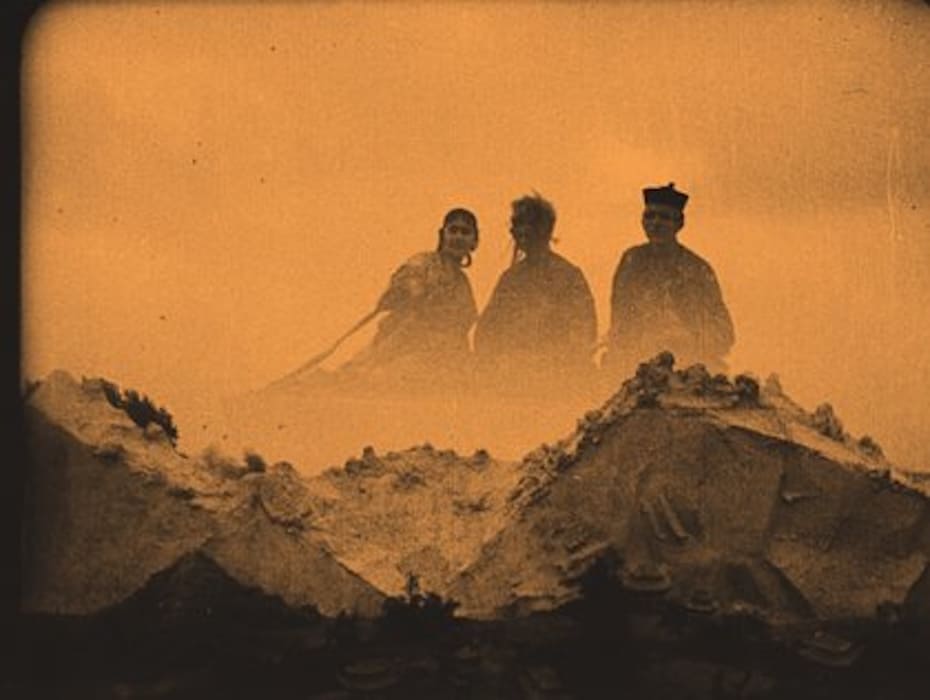
Fritz Lang is one of the great German directors who also made it in Hollywood. He shot one of the most famous German silent films – “Metropolis” – and then quickly made a name for himself in sound film with “Dr. Mabuse, the Gambler” and “M – A City Searches for a Murderer.” In 1933, he began his career in Hollywood, where he became an expert in typical American blockbusters. He made spy films, Westerns, and crime films in the “black series” genre.
Fritz Lang simply has a knack for making films that appeal to cinema-goers. “Der müde Tod” (The Weary Death) from 1921 is one such film. Death is tired of his difficult task, and when he has to tear apart a young couple newly in love, he gives the surviving young woman the chance to bring her beloved husband back. The film is actually a reworking of the ancient myth of Orpheus and Eurydice, a theme that the surrealist Jean Cocteau would also explore in his film “Orpheus.”
In Fritz Lang’s film, the young woman’s death presents only an apparent challenge: if she can save a life, her lover will return. Death gives her three chances, which Fritz Lang sets in exotic locations: the Orient, ancient Venice, and ancient China. But the woman tries in vain to redeem her man until Death gives her a fourth task, which she manages to solve in a melancholic way.
Wednesday, 9. September 2026, 6 pm
The Cabinet of Dr. Caligari
by Robert Wiene, Germany 1922, 72 min, DF, with Vorfilm
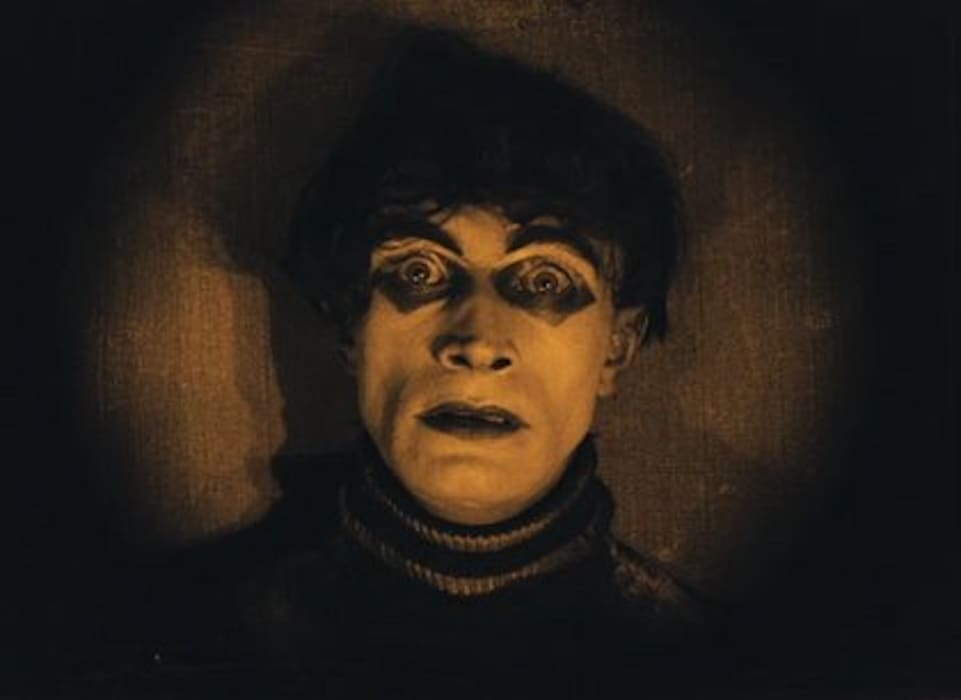
At the fair, the shady Dr. Caligari presents the young Cesare, who suffers from a strange sleeping sickness, as an attraction. In a trance, he can predict the future. At night, however, he sneaks through the city and commits gruesome murders. Franzis suspects who is committing the murders, guided by the hypnotic power of Dr. Caligari. He pursues Caligari, but when he finds him in the city’s mental hospital, he makes a gruesome discovery: the insane Dr. Caligari is the director! And then the viewer learns that Franzis, who told the story of Dr. Caligari, is himself an inmate of the clinic! This expressionist silent film is considered a milestone in film history.
When reality and dreams overlap, surrealism emerges. To the point of madness. Wiene consistently visualizes mental states using the medium of film. The sets are painted, the houses so crooked that no one could live in them, streets flee into the completely unreal sky, but the actors act in this bizarre world as if it were completely normal, not painted, but simply existing, a world of madness to which one must simply adapt.
Even the intertitles are distorted and bathed in bright, glowing colors, just like the entire film. It’s as if the audience is supposed to be immersed in madness as well.
Wednesday, 23. September 2026, 6 pm
Pandora and the Flying Dutchman
by Albert Lewin, UK 1951, 123 min, DF
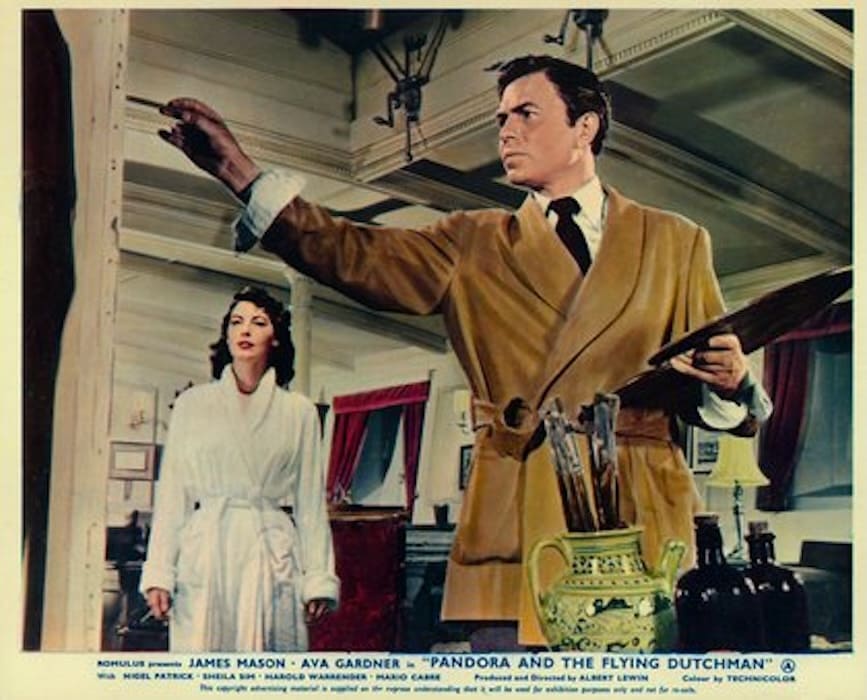
A great romantic film from the 1950s starring two beautiful actors: Ava Gardner and James Mason. The myths surrounding Pandora and the Flying Dutchman are as old as humanity itself. Here they feature in a feature film set in the glamorous Spain of the 1930s. A magnificent film in rich Technicolor, entirely in the Hollywood style of the 1950s. A film that allows you to dream yourself into great stories.
Near a small Spanish coastal town, the bodies of a man and a woman wash ashore, still holding hands in death. The woman, named Pandora, was a sought-after nightclub singer whom all men fell for, but who only bored them. She was going to marry the race car driver… out of boredom. The other body is a Dutchman. The locals have known him for a long time. Every seven years, he would appear off the coast, go ashore, drink wine with the women, and then disappear again for a long time, as if driven by some compulsion.
Old stories tell of the Flying Dutchman, who is doomed to sail the world’s oceans until Judgment Day because he stabbed his wife in a fit of rage. He will only be redeemed if a woman is willing to die for love of him.
And Pandora? She was created from clay at Zeus’ behest. Pandora is his revenge after Prometheus stole fire from the gods and gave it to mankind. She carries a jar with her that contains all the evils of humanity. Anyone who dares to open it…
Wednesday, 7. October 2026, 6 pm
Last year in Marienbad
by Alain Resnais, France/Italy1961, 94 min, DF
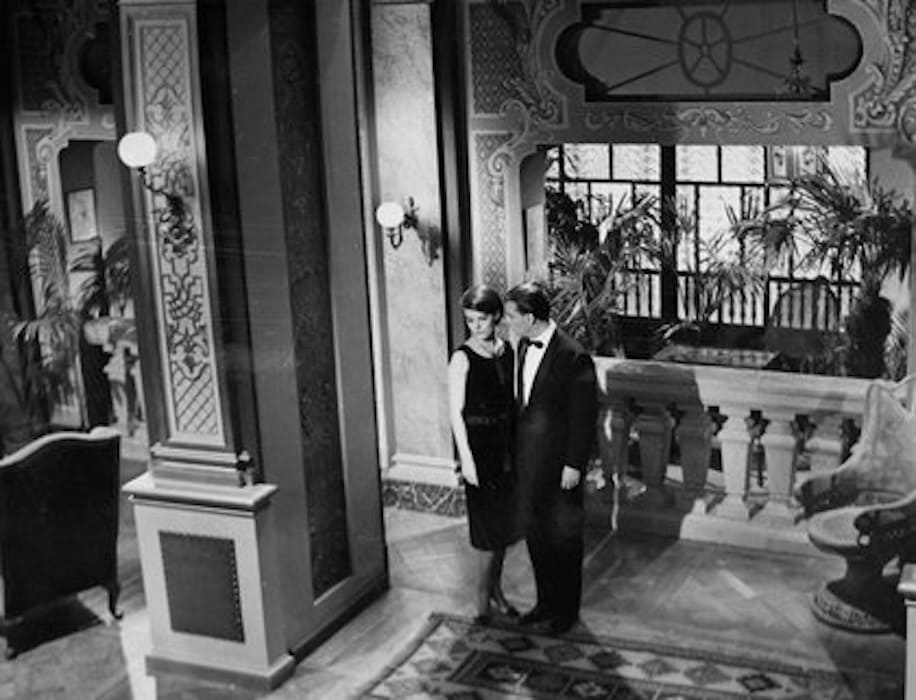
Last Year at Marienbad is rightly considered one of the most beautiful films of the early 1960s. A man tells a woman that he met her a year ago here in Marienbad and how he has longed for her throughout the year. A fleeting moment in a flirtation that we don’t even know actually took place. The woman can’t remember. An elegant film with costumes designed by Coco Chanel, directed by the innovative Alain Resnais and written by Alain Robbe-Grillet. In the end, the woman follows the man. Such a beautiful yet fleeting moment – not even the director and screenwriter agreed on the plot. Resnais believed that the man and woman had actually met, while Robbe-Grillet was convinced that the man only wanted to persuade the woman that they had met, just as one might say to a woman one wants to get to know, “I know you from somewhere.”
Resnais and Robbe-Grillet shared a love for the Nouveau Roman, which had been developed in France in the 1950s. The Nouveau Roman strives to blend reality and fictional reality; a novel should not be considered a fictional dream of the past, but rather become part of the readers’ everyday reality. Robbe-Grillet is considered the most important representative of this development, Alain Resnais the director who successfully attempted to transfer the Nouveau Roman to the medium of film.
Wednesday, 21. October 2026, 6 pm
Tausendschönchen
by Věra Chytilová, Czechia 1966, 74 min, OmU

Věra Chytilová was a Czech feminist film director. She is the most important representative of the Czech “New Wave,” which emerged in the 1960s and also includes “Tausendschönchen” (Daisy).
“Tausendschönchen” is another name for daisies. And these daisies are the giggling accomplices Marie I and Marie II. They agree that the world has become bad, and therefore want to be bad themselves. And so they happily roam Prague like flower power girls, making fun of everything that is sacred to bourgeois society. Stiff suits, formal dinners, and working from 9 to 5. And it’s just fun to watch them do it. The chaos culminates in a wild food fight, in which the friends wreak havoc at a banquet for party officials. This irreverent carnival of excess was the opposite of the state ideology, which glorified the productivity of workers and promised them a bright future. “Tausendschönchen” was probably too free and was banned for its portrayal of hedonism and food waste.
In the credits, the director mocks the ban and dedicates her film to all those politicians who fly into a rage over nothing more than a trampled dessert, while the real political and social evils are quite different, much greater, and much more important.
Wednesday, 4. November 2026, 6 pm
The Call of Cthulhu
by Andrew Leman, USA 2005, 47 min, engl OF, with Vorfilm
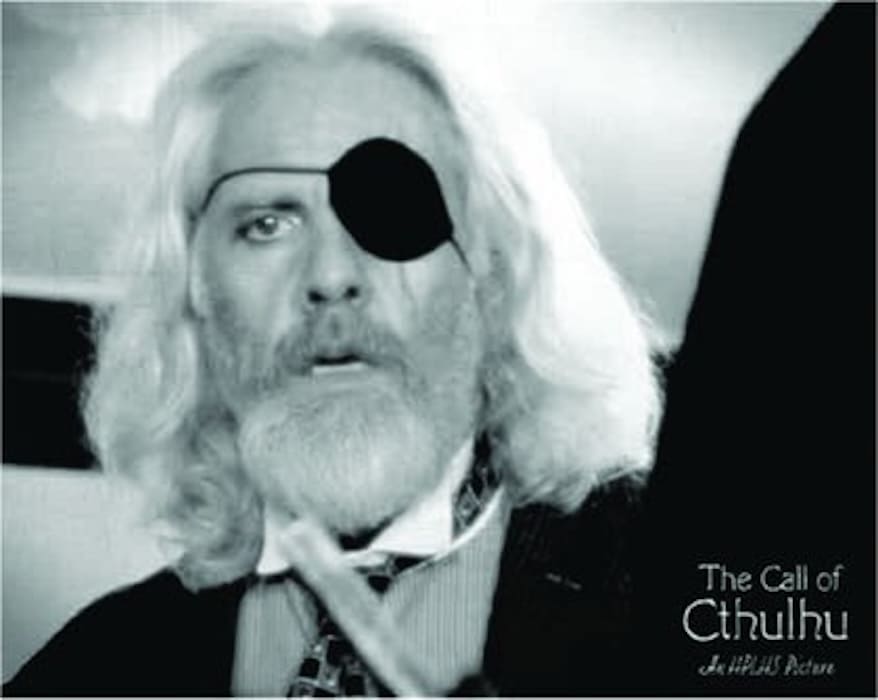
H. P. Lovecraft is the author of the short story “The Call of Cthulhu.” Born in 1890, he began writing horror stories in the 1920s, some of which describe the universe surrounding Cthulhu. Lovecraft remained unknown during his lifetime; it was only after his death in 1937 that people began to take an interest in him, and today he is considered one of the founders of the modern horror genre. The H. P. Lovecraft Historical Society was founded in 1984. In 2005, it produced the film “The Call of Cthulhu,” based on Lovecraft’s most famous short story. In order to remain authentic to the author’s style, it was decided to make a silent film in the original format of the 1920s.
Anthropologist Thurston finds documents in his great-uncle’s estate about a strange cult, the Cthulhu cult. Cthulhu, it is said, ruled the Earth eons ago and has since been in a death-like sleep, while the cult’s followers await his resurrection. On February 28, 1925, a severe earthquake is said to have lifted the sunken city of R’lyeh in the Pacific Ocean to the surface. A captain named Johansen is said to have entered the city, where the laws of physics do not apply, and unintentionally awakened Cthulhu. Soon after, the city sank back into the Pacific in a severe storm and Cthulhu fell back into sleep. But all over the world, followers of the cult have joined forces and are rampaging across the land.
Wednesday, 18. November 2026, 6 pm
Heart of a Dog
by Laurie Anderson, USA 2015, 75 min, engl OF

Laurie Anderson, musician and video artist, made the surreal documentary film “Heart of a Dog” in 2015. In it, she deals with the death of her mother, her husband Lou Reed, and, last but not least, her beloved dog Lolabelle. According to Buddhist belief, humans, like dogs, must pass through the “bardo,” a preliminary stage of salvation or rebirth, after death. They should be allowed to pass through the bardo unhindered so that they are not disturbed during the transition: “I have now found the meaning of death. It is the letting go of love” (Laurie Anderson).
Heart of a Dog is an experimental film that attempts to trace the last days and hours of a beloved being’s passing using drawings and animations by Laurie Anderson, employing every form of media memory, and to recount the confused yet calm emotional world of Buddhist Laurie Anderson. Expressionistic sketches, animated ink drawings, text passages, home movies, and newly shot films, associative editing techniques, cross-fades, and double exposures create a dreamlike, surreal atmosphere behind which Laurie Anderson, as a congenial narrator, reveals her feelings, her experiences, and her encounters with Buddhist teachings. Laurie Anderson wants to convey to us that there is a way out of grief.
Wednesday, 2. December 2026, 6 pm
Cloclo and I
by Stefano Knuchel, Switzerland 2016, 105 min, OmU
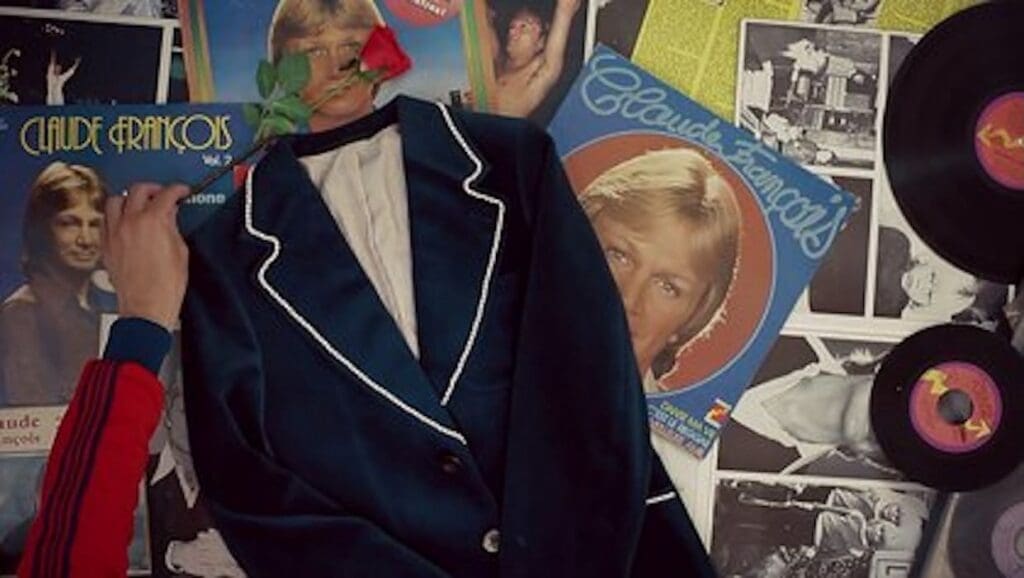
What is 395 years old and has survived alcoholism, prison, drugs, fraud, and depression? My family!
When Stefano Knuchel was a child, his family was wealthy and lived in a spacious villa in Ticino. Life seemed like one endless party. Stefano dreamed of becoming like his idol, French pop star Claude François. His parents ran a motel with a nightclub, which his mother managed with great panache. Until a highway made the motel redundant. From then on, his father provided for his family through illegal real estate deals. Until the deals were exposed and the family had to flee headlong. They moved restlessly throughout Europe. For Stefano, it was like an endless vacation, no school, always in the sun, always on his own, without friends, and always with the bare essentials packed in case the police showed up. But then, on their way through France, his father was arrested. Everything was lost. His mother moved back to Ticino with the children. With iron discipline, she earned a living for the family in a night bar, got divorced, found a new partner, and eventually Stefano made peace with his parents.
Stefano Knuchel recounts this life story with calm detachment and dry humor, using ever-changing images that are half surreal, half documentary, half contemporary history. He never loses himself in self-pity; his life seems like an eternal dream that will ultimately give it meaning.
Wednesday, 16. December 2026, 6 pm
A Useful Ghost
by Ratchapoom Boonbunchachoke, Thailand/France/Germany/Singapur 2025, 130 min, DF

With dry humor, this debut film from Thailand tells the love story between a man and a household appliance. Strange things are happening at March’s family’s factory. First, an accident at work causes the products manufactured there to become possessed by a ghost, then his deceased wife Nat reappears in the form of a vacuum cleaner. To convince the rest of the family of her existence, Nat tries to prove herself useful to everyone. But while the couple’s feelings remain undeterred by questions of life and death, the family’s resistance grows. The film tells the story of the everyday nature of the ghosts around us in a way that is as quirky as it is sensitive, while also touching on Thailand’s political history” (Filmfest Hamburg).
The ghost in the vacuum cleaner alludes to the legend of Mae Nak, a ghost woman who is widespread in Thailand and has been adapted many times for theater, cinema, and television. Here, she enters household appliances in a modern, humorous version. The residents of Bangkok are repeatedly urged not to leave their homes, to wear masks, and to use air filters due to smog. Air filters like those in vacuum cleaners. It is only logical that the anti-dust devices are now fighting back. A Useful Ghost is crazy fun that should not be missed, right up to the showdown between the refrigerator and the vacuum cleaner, accompanied by lively film music.