
The museums on Berlin’s Museum Island—the Alte Nationalgalerie, the Altes Museum, the Bode-Museum, the James Simon Gallery, and the Neues Museum—published their annual program for special exhibitions in 2026 in December. This is because 2026 represents a special milestone for Museum Island: it will celebrate its 200th anniversary. Here you will find an overview of all planned exhibitions throughout the year. The museums reserve the right to make changes, of course. The Pergamon Museum is not included, as it is currently undergoing restoration in accordance with monument preservation guidelines and will be expanded to include a new entrance pavilion in the courtyard of honor, with work expected to continue until spring 2027.
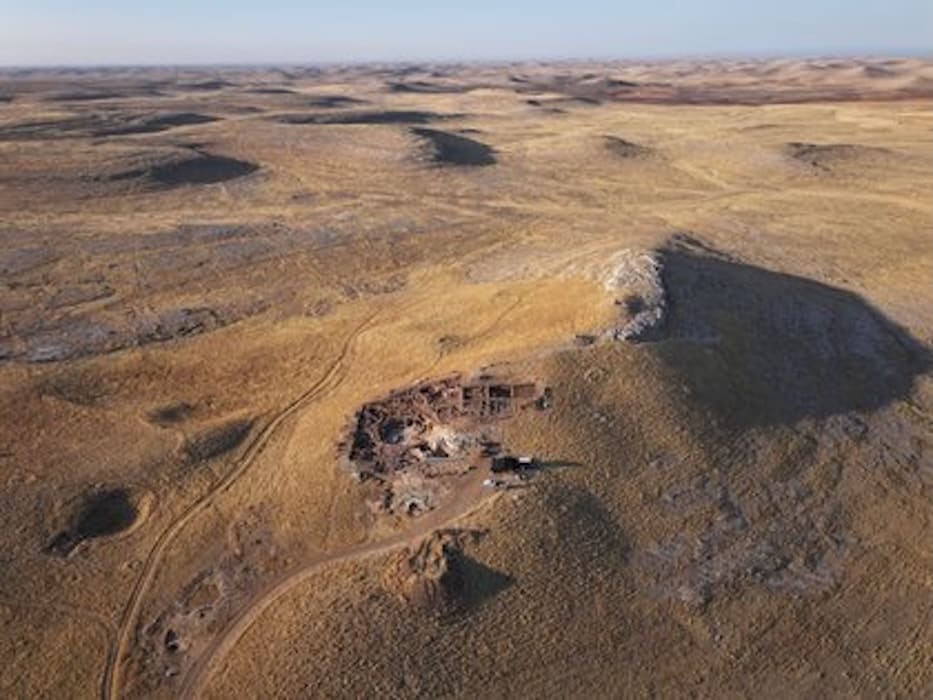
Image above: Luftbild von Karahantepe (Province Şanlıurfa, Türkiye) © Karahantepe Project Archive/Yusuf Aslan
James-Simon-Galerie: Built Community. Göbeklitepe, Taş Tepeler, and Life 12,000 Years Ago
6. February – 19. July 2026
The special exhibition at the Museum of the Ancient Near East focuses on art and sculptures from the first settled cultures in southeastern Türkiye. There, people created monumental stone structures and populated them with spectacular stone sculptures. Curated in collaboration with Istanbul University, the exhibition presents the sculptures, many of which are being shown abroad for the first time, together with architectural reconstructions, media, and photos by Spanish photo artist Isabel Muñoz.
Altes Museum: Giulia Andreani visits the Old Museum
27. February – 13. September 2026
As part of her first solo institutional exhibition in Germany, which will open the Hamburger Bahnhof’s anniversary program in 2026, artist Giulia Andreani is presenting new paintings. Two of the works are inspired by Etruscan objects from the Antikensammlung collection. They will be presented as an intervention on the upper floor of the Altes Museum within the Etruscan exhibition.
Neues Museum: Destiny in the stars – the beginnings of the zodiac
21. March 2026 – 10. January 2027
“What is your zodiac sign?” Even today, in the age of science, this question is still often asked. The zodiac has fascinated people since ancient times. It unites humans and the cosmos, heaven and earth, astronomy and astrology, science and faith, tradition and innovation, certainty and uncertainty, harmony and dissonance. But what exactly is the zodiac? An oracle that generates signs for the future? A mirror that provides insights into the psyche? A projection screen for our quest for knowledge and security? A coordinate system that makes the movement of the planets calculable? A visible expression of heavenly harmony? Or all of these things at once? And where does it come from, how did it spread across the world, what was it used for, and how was it represented?
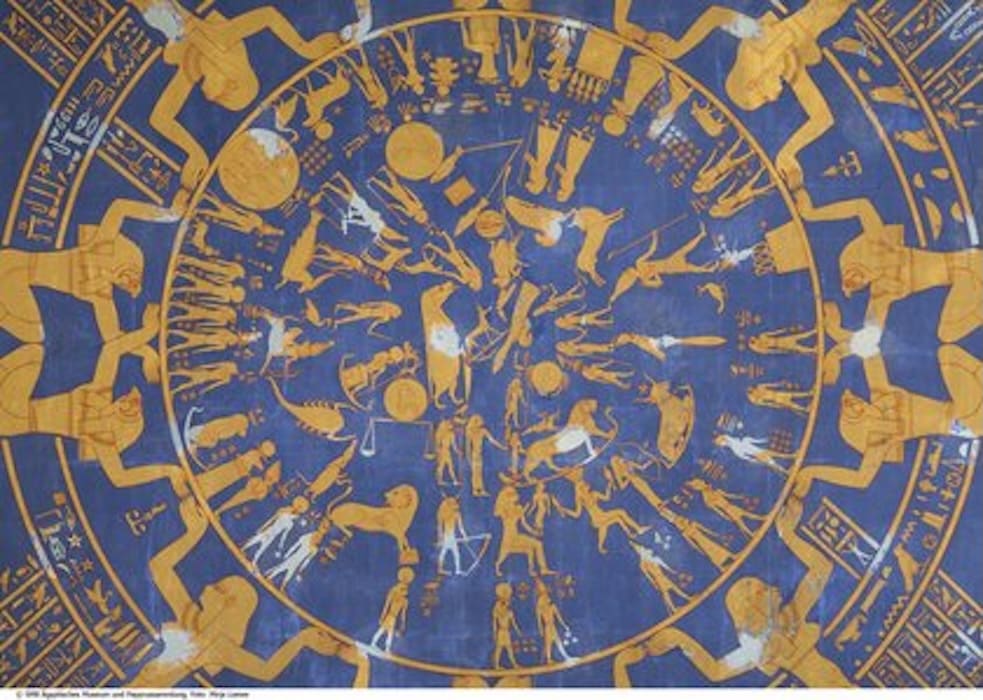
The exhibition presents the ancient zodiac from a contemporary scientific and social perspective in several thematic areas. Using ancient artifacts from Berlin museums, including some that have never been exhibited before, it takes visitors on a multicultural journey through space and time, from Babylonia to Egypt, Greece, and Rome (ca. 400 BC–400 AD), and explains the zodiac against the backdrop of its significance today.
Alte Nationalgalerie
On 22. March 1876, the National Gallery was ceremoniously opened as the third museum on the Spree Island. In 2026, the building will therefore be the focus of the five-year celebrations marking the 200th anniversary of Berlin’s Museum Island.
Alte Nationalgalerie: Skandal! Mors Imperator – Hermione von Preuschen
22. March – 15. November 2026
A spectacular painting caused a sensation in Berlin in 1887: “Mors Imperator” (translated: “Death is the ruler”), painted by the artist Hermione von Preuschen (1854–1918). The work was considered an insult to the emperor: Kaiser Wilhelm I was already 90 years old when it was created and died the following year. Although the emperor announced that he had no objection to the painting, it was rejected by the jury of the Royal Academy of Arts. The painter then exhibited the monumental painting on her own initiative in Berlin. The show was a huge success with the public. The Alte Nationalgalerie is now showing this painting, long believed to be lost, to the public for the first time and introducing the influential artist of that time to today’s audience in a cabinet exhibition.
Alte Nationalgalerie: Cassirer and the Breakthrough of Impressionism
22. May – 27. September 2026
In 2026, the Alte Nationalgalerie will honor Paul Cassirer (1871–1926), one of the most important art dealers of his time. With an exceptionally dense and continuous exhibition program, the Berlin-based gallery owner played a key role in promoting French Impressionism in Germany. Artists such as Edgar Degas, Paul Cézanne, Édouard Manet, Claude Monet, and Auguste Renoir first gained wider attention in German-speaking countries through his efforts. By presenting their works, Cassirer had a lasting impact on the German cultural landscape and sparked passionate public debate. Through his mediation, numerous key works found their way into important German collections and museums, including the holdings of the National Gallery.
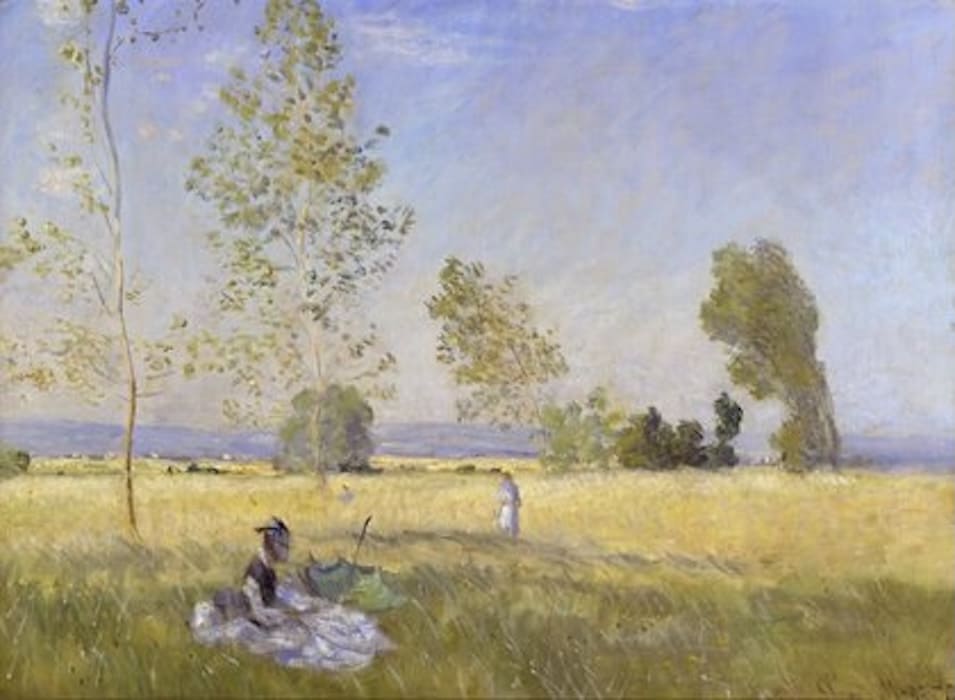
Cassirer did not limit his involvement to promoting French art alone. He was equally committed to German Impressionism and supported the Berlin Secession, including artists such as Max Liebermann, Lovis Corinth, and Max Slevogt. At the same time, he promoted Edvard Munch and August Gaul, important pioneers of classical modernism, while Ernst Barlach, Ernst Ludwig Kirchner, and Paula Modersohn-Becker, representatives of the young avant-garde, also found their way into his gallery’s program.
The exhibition showcases Paul Cassirer’s impressive commitment to art through more than 100 outstanding works of Impressionism and classical modernism.
Alte Nationalgalerie: InterNationalgalerie#1 – National Museum Warsaw
19. June 2026 – 13. January 2027
In 1876, the Prussian king ceremoniously opened the National Gallery on Museum Island. Contrary to the inscription on the pediment, “To German Art,” the collection was international from the outset and grew to become one of the most important German collections of French avant-garde art. In its new series “InterNationalgalerie,” the Alte Nationalgalerie will continuously invite national galleries and museums from around the world over the next few years to be present with a showcase in the building and to introduce themselves to international and Berlin audiences along particularly current themes and questions. The National Museum in Warsaw will kick off the series. The presentation will take place on the first exhibition floor.
Bode-Museum: Broken into Space. Sculpture and Photography in Dialogue (AT)
July – October 2026
The exhibition opens up new perspectives on this three-dimensional art form. It demonstrates that photographs of sculptures always represent subjective interpretations and sharpens the eye for the intentions behind them. By directly juxtaposing historical and contemporary photographs with the sculptures they depict, the exhibition brings to life the different visual worlds and meanings created by photography. An interactive section and accompanying audio interviews with photographers and archivists invite visitors to actively experience the dialogue between sculpture and photography. The exhibition was created in cooperation with students at the Institute for Art and Visual History at Humboldt University in Berlin.
James Simon Gallery: Colors of the Past. Images from Iranian Archaeology (AT)
September 2026 – February 2027
The exhibition sheds light on archaeological research in Tepe Hissar, Rayy, Luristan, and Persepolis in Iran in the 1930s through the lens of developing color photography technologies. The images come from the archive of German-American archaeologist Erich F. Schmidt (1897–1964), a passionate photographer and pioneer of aerial archaeology. The photographs offer a new perspective on the landscape of Iran, its people, and its monuments. Their colorfulness creates a striking contrast between research and everyday life. The presentation is complemented by a newly discovered documentary film that impressively captures Schmidt’s work in the field and early conservation measures.
James-Simon-Galerie: Dschingis Khan – The World of the Mongols Beginning
October 2026 – End of April 2027
2027 marks the 800th anniversary of the death of Genghis Khan, founder of the Mongol Empire. To mark this occasion, the Museum of Prehistory and Early History is dedicating a major exhibition to this central figure. How was the leader of a small nomadic people of outstanding horsemen and archers able to create an empire the likes of which the world had never seen before? The effects of Mongol expansion shaped Europe and Asia and determined the course of history for centuries to come.
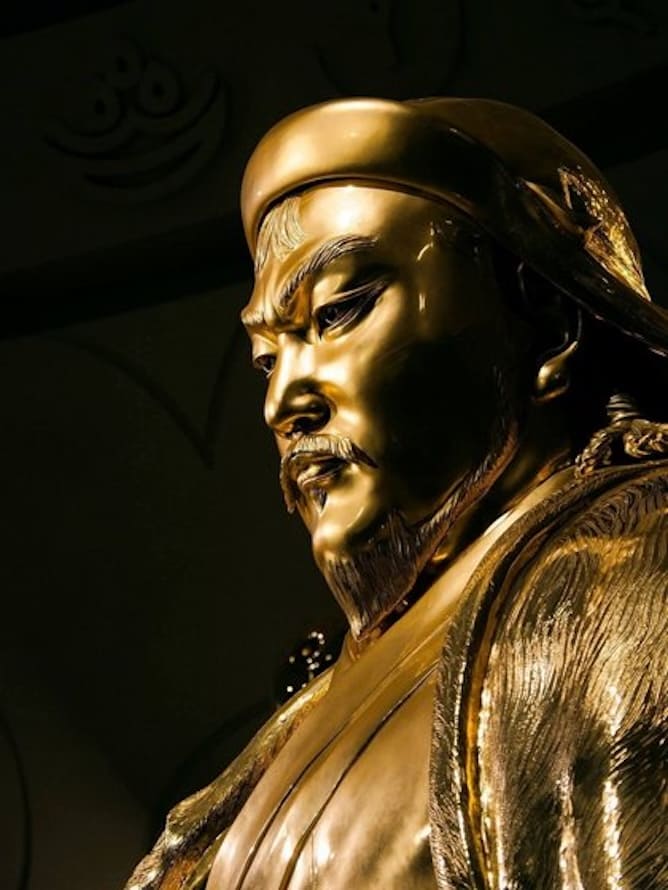
The Genghis Khan National Museum is providing outstanding objects, including numerous new archaeological finds that have never before been seen in an exhibition outside Mongolia. Loans from Poland and Romania, as well as from the Berlin State Library and the collections of the Berlin State Museums, expand the picture of this era. The opening of the exhibition in Berlin in October 2026 will take place in the presence of the Mongolian president and the German president.
Alte Nationalgalerie: Across Time. 19th-century encounters with 20th- and 21st-century works from the National Galerie collection
14. October 2026 – 28. February 2027
In 1876, the National Gallery was opened as a museum for contemporary art. Today, under the name Alte Nationalgalerie, it is the main building of the National Gallery and the museum for art of the long 19th century. All six buildings of the National Gallery are united by a common collection, from the Old National Gallery to the New National Gallery to the National Gallery of the Present – Hamburger Bahnhof. In its anniversary year, the Old National Gallery offers selective encounters between works from the 20th and 21st centuries and 19th-century art on all three floors, inviting visitors to engage in associative viewing.
Bode-Museum: Sound Body – Variations on a Theme of Art. A musical intervention at the Bode-Museum
24. November 2026 – 7. March 2027
A special exhibition by the Sculpture Collection and Museum of Byzantine Art, the Hamburger Bahnhof – National Gallery of Contemporary Art – Berlin State Museums and the Musical Instrument Museum of the State Institute for Music Research – Prussian Cultural Heritage Foundation The exhibition “Klangkörper” (Sound Bodies) traces the sound of selected objects in the Bode Museum – from Coptic textiles and medieval angel choirs to Antonio Canova’s “Dancer.” A collaboration between the Sculpture Collection and the Museum of Byzantine Art with the Hamburger Bahnhof and the Musical Instrument Museum, the intervention explores the dialogue between plastic art, sound, and movement. Historical and modern musical instruments are placed in relation to works of art in which music is depicted. This creates fascinating juxtapositions, unexpected insights, and sensory experiences that make art visible and audible.
WHEN?
Throughout 2026, partly into 2027
WHERE?
Museumsinsel Berlin
10178 Berlin-Mitte