




The major exhibition “Krasner and Pollock: Past Continuous” at the Metropolitan Museum of Art (Met) in fall 2026 traces the parallel careers of Lee Krasner and Jackson Pollock, exploring the distinct yet interconnected working methods of these two artistic colleagues and life partners. On view from October 4, 2026, to January 31, 2027, the exhibition is the first major New York presentation, and the first major exhibition at the museum dedicated to either Lee Krasner or Jackson Pollock in over 20 years. It introduces their work to a new generation while simultaneously highlighting their enduring influence on modern and contemporary art.
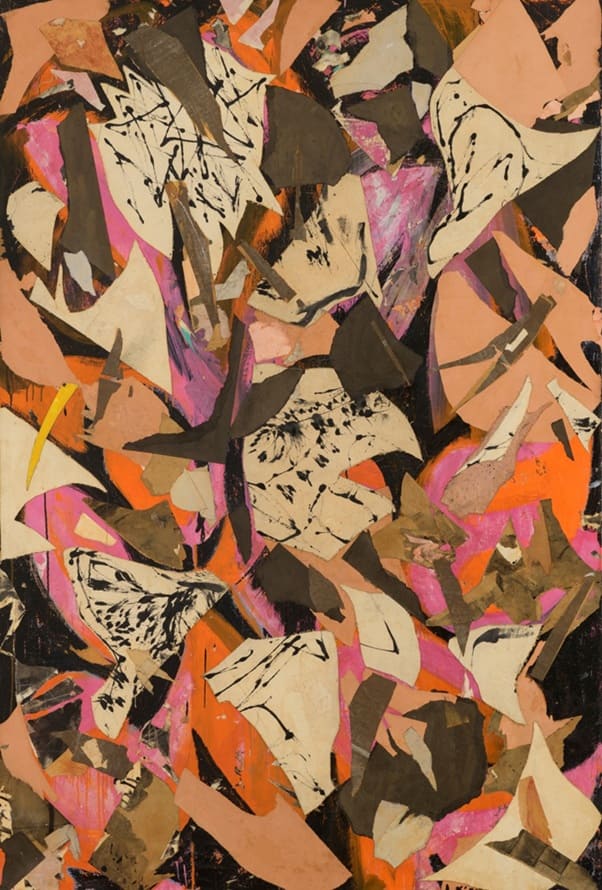
Image above: Lee Krasner (American, 1908–1984), Bald Eagle, 1955, Oil, paper, and canvas collage on linen, 77 × 51 1/2 in. (195.6 × 130.8 cm), ASOM Collection © 2026 Pollock-Krasner Foundation / Artists Rights Society (ARS), New York
Lee Krasner (1908–1984) and Jackson Pollock (1912–1956) were among the defining figures of American Abstract Expressionism and belonged to the generation of artists who made New York the new center of modern art in the 1940s. Lenore “Lee” Krasner, born Lena Krassner in Brooklyn to Jewish-Ukrainian immigrants, received comprehensive artistic training in New York. She studied under Hans Hofmann, among others, whose introduction to the European avant-garde profoundly influenced her approach to abstraction. Jackson Pollock was born in Cody, Wyoming, and grew up in various regions of the American West, shaped by the landscape, his family’s migration experiences, and an environment far removed from established art centers. After moving to New York, he studied with Thomas Hart Benton and engaged intensively with American Regionalism, Mexican mural painting, and Surrealism. These influences later led to the development of his radically experimental style of painting.
Krasner and Pollock were emerging artists in New York when they met in 1942 at an exhibition organized by the artist John Graham. They married in 1945 and moved to Springs, Long Island, where they remained close until Pollock’s death in 1956. Their life together was characterized by intense artistic exchange and mutual critical support, which significantly influenced both of their artistic development. Pollock’s body of work secured him early international recognition, while the nearly three decades that Krasner outlived him became the most formative and productive years of her own career, during which she firmly established her artistic position.
The exhibition, whose subtitle “Past Continuous” is borrowed from a 1976 painting by Krasner, traces parallel trajectories of life and work, initially shaped by lived experience and later overlaid by memory. It highlights the breadth and art historical significance of Krasner’s work while simultaneously offering an in-depth exploration of Pollock’s multifaceted and complex oeuvre.
“With its unique concept and scope, the exhibition ‘Krasner and Pollock: Past Continuous’ underscores the Met’s commitment to re-examining modern art through rigorous research and fresh perspectives,” said Max Hollein, Marina Kellen French Director and Chief Executive Officer of the Metropolitan Museum of Art. “By considering each artist individually while highlighting their significant relationship, the exhibition places Krasner’s and Pollock’s work within a broader cultural and artistic context—an approach central to the mission of the Met’s Department of Modern and Contemporary Art and the vision of the future Oscar L. Tang and H.M. Agnes Hsu-Tang Wing, opening in 2030. This project affirms Krasner and Pollock not only as defining figures of their time but also as artists whose work continues to shape and inspire future generations.”
“Krasner and Pollock: Past Continuous is based on the premise that these artists were equals, life partners, giants of art history, and revolutionaries who redefined abstraction,” says David Breslin, Leonard A. Lauder Curator of Modern and Contemporary Art at the Metropolitan Museum of Art. “Both found a partner who prioritized art over life; and both sought an art that, while rooted in historical connections, also promised freedom and radical possibilities in a world forever altered by war. The exhibition explores intertwined lives, but also how distinct artistic directions emerge from shared experiences.”
The exhibition “Krasner and Pollock: Past Continuous” traces the lives and works of both artists. It illuminates both their differences and their interactions, with some galleries presenting the artists together and others separately. Krasner and Pollock were shaped by their different upbringings and training. Krasner adopted and developed the principles of the European avant-garde, particularly those of Pablo Picasso, Henri Matisse, and Piet Mondrian. Her training with Hans Hofmann was crucial to her development. Pollock’s diverse influences included Thomas Hart Benton and American Regionalism, Mexican mural painting traditions, Surrealism, and even his own family of artists. Their early careers unfold as complementary divergences, tracing different currents of American Modernism that would ultimately converge in the break with Abstract Expressionism.
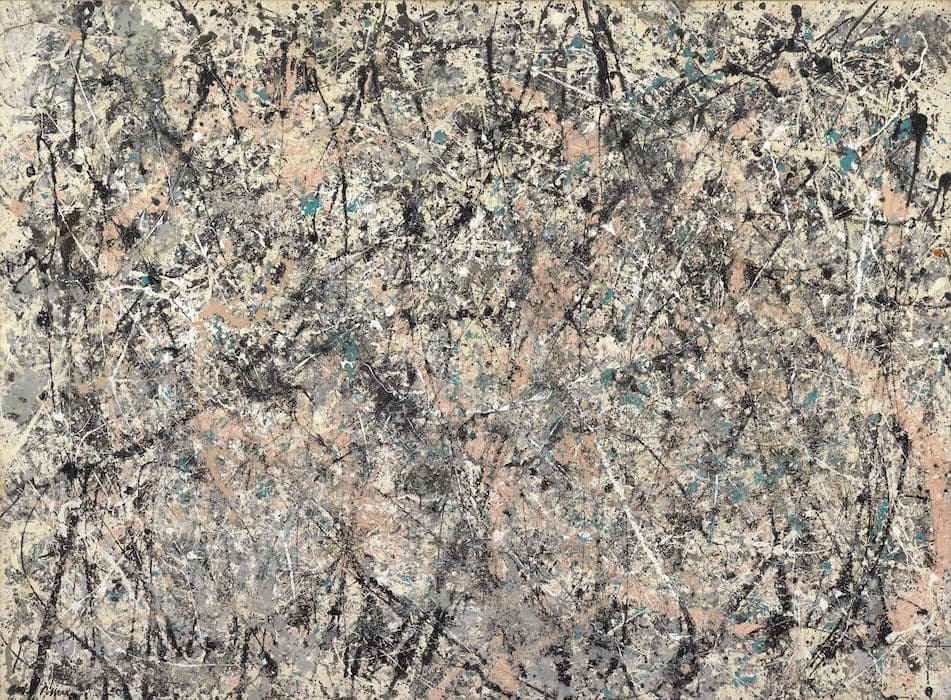
For Pollock, the breakthrough came with the “drip” technique, a radical painting method that flourished in a short but productive period from 1946 to 1951. Krasner’s multifaceted oeuvre was characterized by incessant explorations of abstraction, often inspired by her ongoing interest in the possibilities of nature and color. This manifested itself in bold collages, gestural canvases, and intensely colored hard-edge paintings.
Historically, Pollock’s fame has overshadowed Krasner’s. In 1949, LIFE magazine asked whether Pollock was “the greatest living painter in the United States.” His early death and the posthumous media attention further amplified his fame and overshadowed critical appraisals of Krasner’s contributions. Today, the works of both artists are rightly recognized as key to the innovations in art from the mid-20th century onward. This exhibition continues and deepens this reassessment.
“The exhibition ‘Krasner and Pollock: Past Continuous’ does not view these artists as a single story, but rather as two artistic practices that developed in parallel over a longer period,” said Brinda Kumar, curator of the Department of Modern and Contemporary Art at the Metropolitan Museum of Art. “The exhibition explores how Krasner and Pollock shared a common desire to explore the possibilities of abstraction—through changes in scale, material, and form—and how these explorations evolved in different ways.”
Exhibition concept + lenders
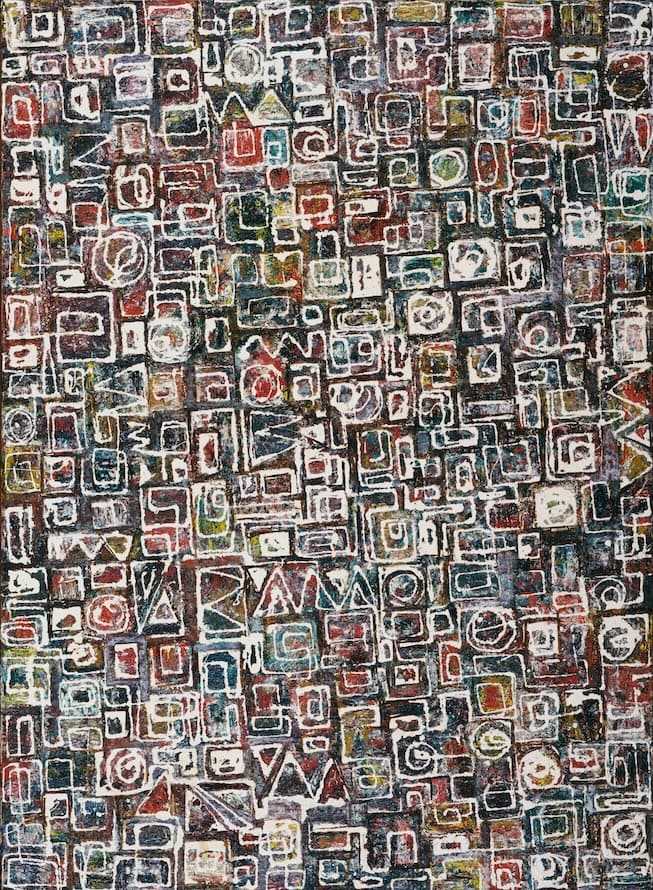
Divided into twelve chapters, the exhibition “Krasner and Pollock: Past Continuous” spans from the 1930s through the post-war period to the artists’ deaths, highlighting moments of convergence and difference. The exhibition design, partly inspired by historical spaces and installations, emphasizes the exchange between different eras and artistic practices while simultaneously allowing for individual appreciation of each artist’s work: from Krasner’s “Little Images” series and Pollock’s drip paintings of the late 1940s to his monumental canvases of the 1950s and Krasner’s “Umber” and “Earth Green” series.
The exhibition traces these ongoing dialogues – Pollock’s late return to earlier motifs in the mid-1950s and Krasner’s intensive engagement with artists such as Klee, Picasso, Mondrian, and Matisse in the 1960s and 1970s. This presentation will reveal two artists engaged in a constant process of dialogue with each other, with themselves, and with the cultural, political, and aesthetic challenges of their time.
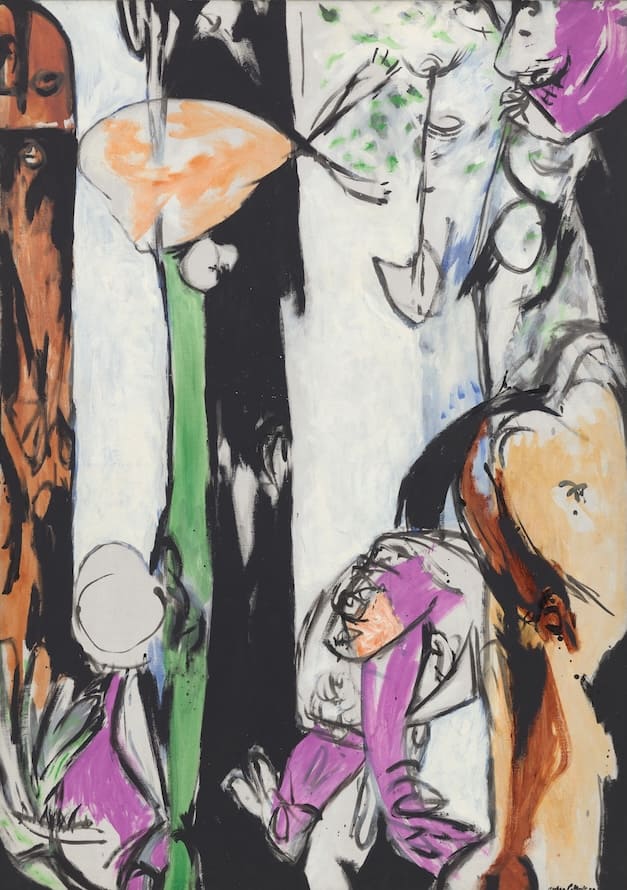
© 2026 Pollock – Krasner Foundation / Artists Rights Society (ARS), New York
The exhibition presents works from the Metropolitan Museum of Art’s collection as well as rarely seen loans from over 80 U.S. and international lenders. In total, more than 120 paintings, works on paper, and documents are brought together to shed new light on the careers of Krasner and Pollock—both individually and in their dynamic relationship to each other and their shared artistic context. Major institutional lenders include the Peggy Guggenheim Collection, MoMA, the Whitney Museum of American Art, Tate, the National Gallery of Art, the National Gallery of Victoria, the Centre Pompidou, the Buffalo AKG Art Museum, the Dallas Museum of Art, the Art Institute of Chicago, and SFMoMA. The exhibition also includes several rarely seen works from important private collections.
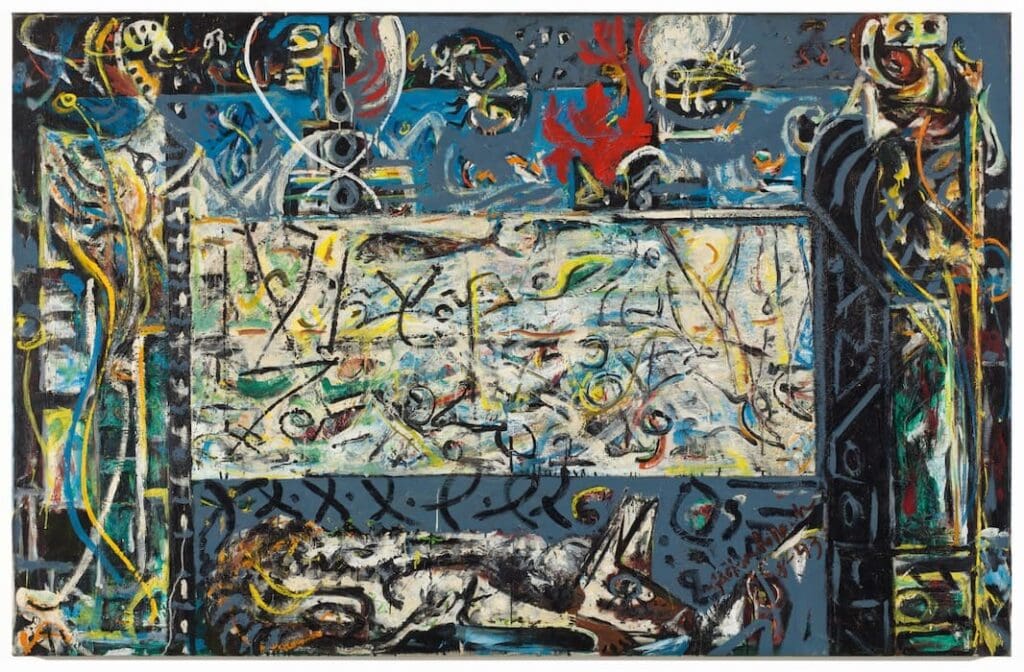
A series of seminal works forms the core of the exhibition, which illuminates the two artists’ engagement with their respective working methods. These include Lee Krasner’s Composition (1949), The Seasons (1957), The Eye is the First Circle (1960) and Combat (1965), as well as Jackson Pollock’s Stenographic Figure (1942), Guardians of the Secret (1943), Number 1, 1950 (Lavender Mist) (1950) and The Deep (1953).
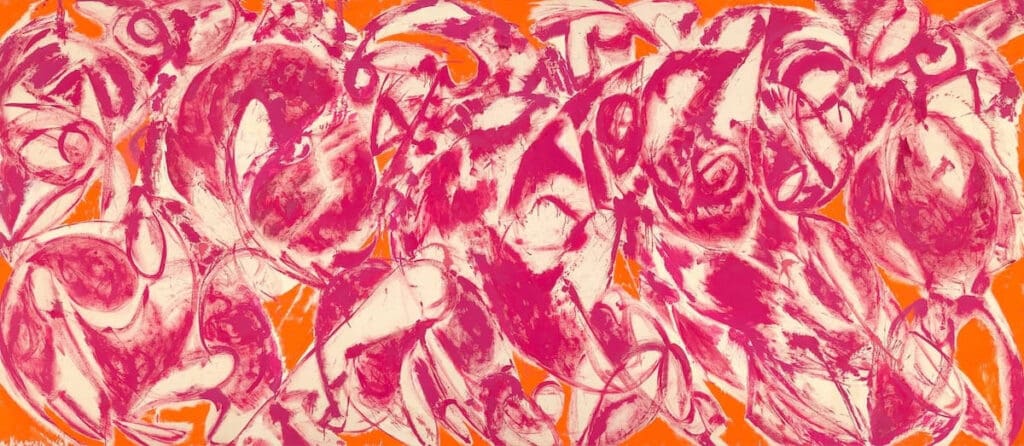
Two previous exhibitions, Krasner/Pollock: A Working Relationship (co-organized by Guild Hall and Grey Art Gallery, 1981) and Lee Krasner-Jackson Pollock: Artist Couples, Artist Friends (Kunstmuseum Bern, 1989–90), focused on the approximately 15-year overlap in the artists’ lives, from their meeting in 1941 until Pollock’s death in 1956. The current exhibition, Krasner and Pollock: Past Continuous, is the first exhibition to consider the work of both artists together in its entire chronological development.
The role of the Metropolitan Museum of Art
The Metropolitan Museum of Art has long been of great importance to Krasner and Pollock. Pollock first exhibited a painting at the Met in 1943, as part of a World War II relief exhibition. Toward the end of the decade, he was among the artists of “The Irascibles,” a group that sharply criticized the museum’s then-prevailing attitude toward contemporary art. Shortly after Pollock’s death, the Met acquired his seminal painting “Autumn Rhythm (Number 30)” (1950). The Met’s collection of Lee Krasner’s work—from her earliest self-portraits to her late masterpiece “Rising Green” (1972)—includes significant lifetime gifts from the artist to the museum. The Met also hosted Krasner’s memorial service in 1984. “Krasner and Pollock: Past Continuous” builds on this history and is the museum’s first major exhibition dedicated to either artist. The exhibition offers a focused overview and traces the development of their artistic works. It opens up new perspectives on two of the most influential figures in 20th-century art.
The exhibition underscores the Metropolitan Museum of Art’s commitment to presenting artists whose work continues to shape art production and understanding. Krasner’s and Pollock’s contributions to modernism and their intensive exploration of the possibilities of painting remain groundbreaking for contemporary artists. Leading up to the opening of the Tang Wing for Modern and Contemporary Art in 2030, “Krasner and Pollock: Past Continuous” presents a curatorial approach that reinterprets canonical narratives and connects 20th-century innovations with the concerns of today’s artists and their audiences.
Exhibition catalog
The accompanying catalogue, “Krasner and Pollock: Past Continuous,” expands upon the project’s central themes with newly commissioned texts. Essays by the curators, as well as by Johanna Fateman, Prudence Peiffer, and Matthew Holman, explore various aspects, including Krasner and Pollock’s closely intertwined work as an artistic couple, their strategies of abstraction in the 1950s, and the transatlantic reception of their work. The artist Amy Sillman also offers a contemporary painter’s perspective on their artistic breakthrough and legacy. The volume further includes an illustrated, interconnected chronology and reflections by leading contemporary artists that underscore the enduring impact of Krasner and Pollock’s work across generations.
The catalogue is made possible by the Pollock-Krasner Foundation.
Curators
The exhibition “Krasner and Pollock: Past Continuous” was curated by David Breslin, Leonard A. Lauder Curator in Charge, and Brinda Kumar, Associate Curator, with support from CJ Salapare, Research Associate, all from the Department of Modern and Contemporary Art at the Metropolitan Museum of Art.
WHEN?
Exhibition: Sunday, 4. October 2026 – Sunday, 31. January 2027
WHERE?
Metropolitan Museum of Art
Fifth Avenue
NY 10028
New York City





 in fall 2026 traces the parallel ...Cultural news, art exhibitions + art events to discover.)