

With Dimensions of Freedom, the Kunsthalle St. Annen is dedicating itself from 23rd May 2026 for the first time comprehensively to the work of Else Alfelt and Carl-Henning Pedersen, two central positions of European post-war modernism and important representatives of the CoBrA movement.
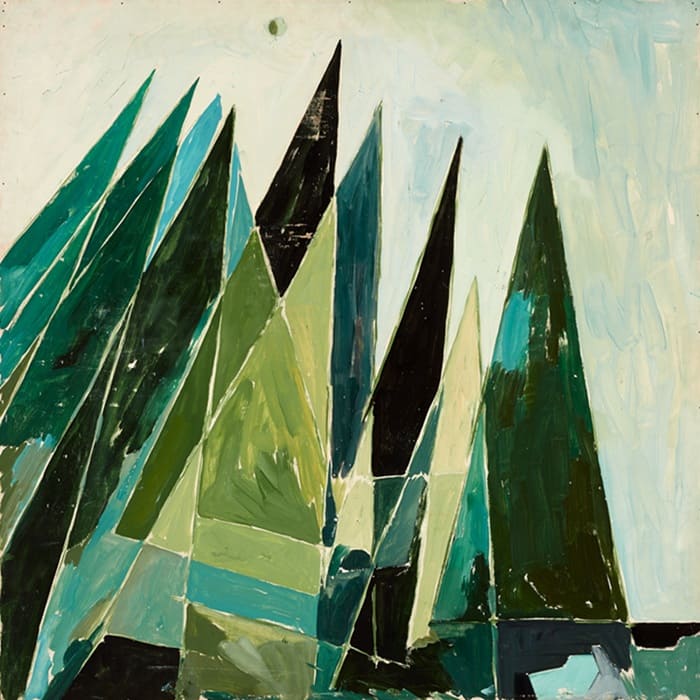
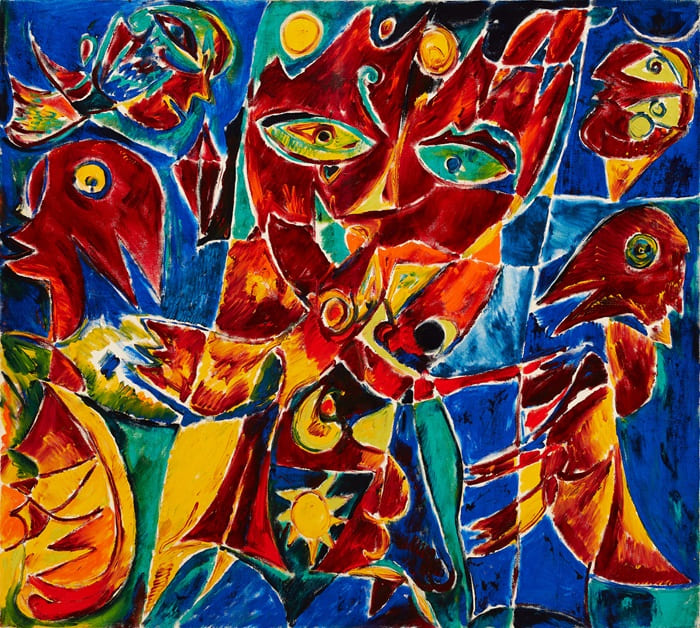
Image avobe: Spidser der rækker mod himlen (Points Reaching to Heaven), 1949, oil on veneer, 102 x 102 cm © VG-Bild Kunst, Bonn 2026, Carl-Henning Pedersen & Else Alfelts Museum, photo: Ralf T. Søndergaard
More than 150 works spanning four decades trace the development of a visual language that emerged from resistance, radical artistic self-empowerment, and collective creativity. The exhibition explores the diverse dimensions of freedom, from artistic practice to political and social engagement, and on to spiritual innovations.
The meeting of Else Alfelt and Carl-Henning Pedersen marked the beginning of an intense artistic and personal partnership. Both rejected academic traditions early on and joined the avant-garde artist groups Høst and Helhesten, who actively opposed Nazi ideology during the German occupation of Denmark and expressed solidarity with the condemned works of so-called “degenerate art.”
In 1948, both artists became part of the international CoBrA movement, which, in the aftermath of the traumas of World War II, championed an art form free from societal and academic constraints. As a founding member, Pedersen, with his gestural and expressive style influenced by Norse mythology, folklore, and children’s drawings, had a lasting impact on the movement. Alfelt, on the other hand, remained true to her own visual and formal language. Her works translate nature, spirituality, and cosmic concepts into reduced and crystalline pictorial spaces of mountains, moons, and suns, consciously distinct from the CoBrA aesthetic.
For decades, Alfelt’s work was overshadowed by that of her male colleagues. Recurring sexist attributions and structural exclusion exemplify the precarious position of female artists within the supposedly progressive and avant-garde networks of postwar modernism.
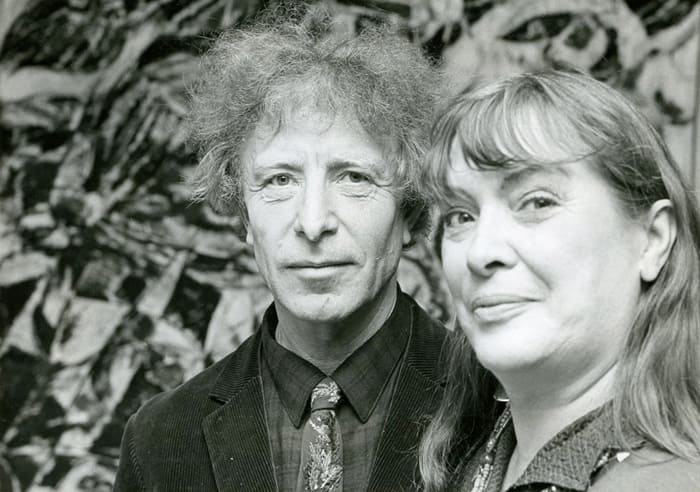
The artistic relationship between the couple, characterized by mutual influence and support, appears all the more significant today. Pedersen repeatedly emphasized Alfelt’s fundamental role in his own turn to the visual arts. International stays, including in Iceland, Italy, India, and Japan, broadened their subject matter and led to continuous formal and thematic transformations. The exhibition concludes with Pedersen’s late work, which, for over three decades after Alfelt’s death, drew on and reflected this artistic connection.
For the Kunsthalle St. Annen, the exhibition holds particular significance in terms of its collection history and cultural policy. With its focus on German and Scandinavian post-war art, as well as its geographical location in the German-Danish border region, the presentation is also an expression of the historical and cultural interconnectedness of both countries. Thus, the exhibition also becomes a statement in support of cross-border cultural cooperation, a concept deeply rooted in the work of both artists.
The first large-scale international retrospective was developed in collaboration with the Carl-Henning Pedersen Foundation, its chairman Finn Poulsen, the former director of the ARKEN Museum Christian Gether, and the Institute for Cultural Exchange.
A multifaceted educational program will accompany the exhibition, which views it as an open space for thought and experience. Multilingual tours, workshops, and participatory formats within the exhibition aim to lower barriers and open up new perspectives on questions of freedom, creativity, and collective practice.
WHEN?
Exhibition: Saturday, 23. May – Sunday, 25. October 2026
Opening: Friday, 22. May 2026, 10 am
WHERE?
Kunsthalle St. Annen
St. Annen-Str. 15
23552 Lübeck