



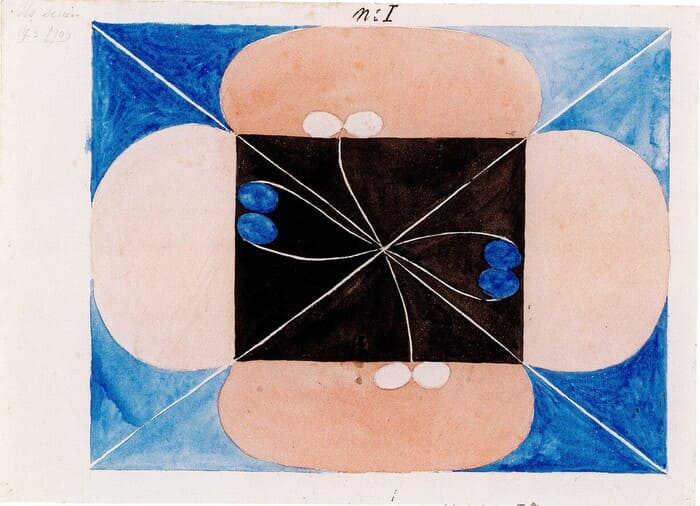

In spring 2026, the Grand Palais and the Centre Pompidou will dedicate a groundbreaking exhibition to Hilma af Klint (1862–1944), an artist whose work challenges the chronology of modern art. Long before established figures of abstraction such as Wassily Kandinsky or Kazimir Malevich, Hilma af Klint created, beginning in 1906, paintings of exceptional boldness that combined geometry, flat areas of vivid color, and organic motifs, anticipating the major movements of the twentieth century; for this occasion, the Grand Palais and the Centre Pompidou present, for the first time in France, the cycle of Temple Paintings (1906–1915), her major body of work, including the famous monumental series The Ten Largest, which demonstrates the visionary power of an artist resolutely ahead of her time.
Image Above: Les Petites Aquarelles, n° 1,1908, aquarelle et crayon sur papier, 26 × 36 cm, HaK085. By courtesy of the Hilma af Klint Foundation – photo The Moderna Museet, Stockholm
Trained at the Royal Swedish Academy of Fine Arts, Hilma af Klint led a double artistic life: a conventional one with traditional figurative works, and a secret one with a resolutely avant-garde production. Influenced by her involvement in the Theosophical Society, she drew the freedom of her inspiration from séances held within a group of women with whom she shared the same utopian vision. Spirals, circles, and radiating forms reflect a search for cosmic harmony and the invisible forces that govern the world, giving her works a universal and timeless dimension. Hilma af Klint chose not to reveal her abstract work to her contemporaries and stipulated in her will that her works should remain sealed for twenty years after her death, which contributed to the delayed recognition of her work. It was not until 1986, during the exhibition The Spiritual in Art: Abstract Painting 1890–1985 in Los Angeles, that her abstract paintings were presented to the general public for the first time, marking the beginning of her international renown.
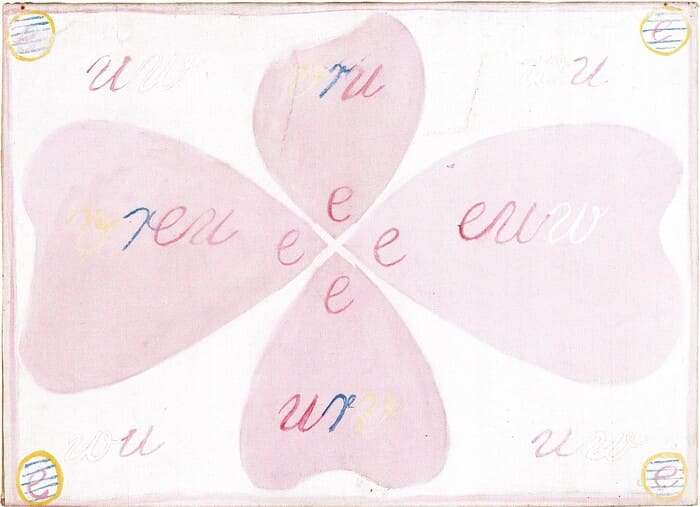
To date, no major monographic exhibition of Hilma af Klint has been presented in France, even though her work has undergone a strong re-evaluation in recent years, particularly within a broader reassessment of the role of women in the field of artistic modernity. Hilma af Klint still remains rarely seen in French museums, while the rest of the world now regards her as an essential figure of modern art and of the historical beginnings of abstraction.
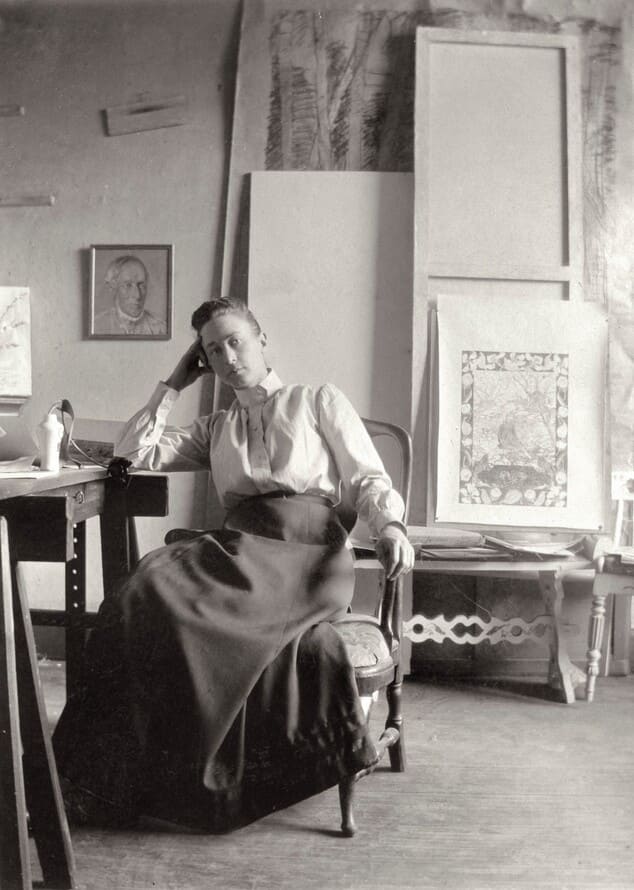
Beyond a retrospective tribute, the exhibition highlights the multiple sources of inspiration behind her work—esotericism, folklore and folk art, and scientific culture—and questions how art history has long overlooked women artists and their contributions to foundational movements. Hilma af Klint appears here as a key figure capable of transcending the boundaries between art, science, and spirituality, and of continuing to inspire new generations. It offers a unique opportunity to discover an artist who, while deeply rooted in her own time, seemed to be in dialogue with the future.
WHEN?
Exhibitions dates: Wensday, 6. May to Sunday, 30. August 2026
WHERE?
Grand Palais – Galeries 8, 3 Avenue du Général Eisenhower, 75008 Paris, France
Centre Pompidou, Place Georges-Pompidou, 75004 Paris, France




, an artist whose work challenges the chronology of modern art. Long before established figures of abstraction such as Wassily Kandinsky or Kazimir Malevich, Hilma af Klint created, beginning in 1906, paintings of exceptional boldness that combined geometry, flat areas of vivid color, and organic motifs, anticipating the major movements of the twentieth century; for this occasion, the Grand Palais and the Centre Pompidou present, for the first time in France, the cycle of Temple Paintings (1906–1915), her major body of work, including the famous monumental series The Ten Largest, which demonstrates the visionary power of an artist resolutely ahead of her time. DEEDS. Cultural news, art exhibitions + art events to discover.)