

From a Königsberg amber board game box dating from 1607, Queen Luise’s dressing gown from 1806, and the poster for the “40 Years of the GDR” exhibition in East Berlin, to an IKEA bunk bed from a refugee shelter in Kassel in 2015 the collection of the German Historical Museum comprises approximately one million objects of German history. From May 8, 2026, to October 31, 2027, the DHM will present a selection of around 200 items including holdings never before exhibited, surprising discoveries, and recent acquisitions. Housed in the Pei Building, the exhibition “Objects. History. Stories: A Look into the Collection” offers insights into the practice of collecting and examines the featured exhibits regarding their origins and significance.
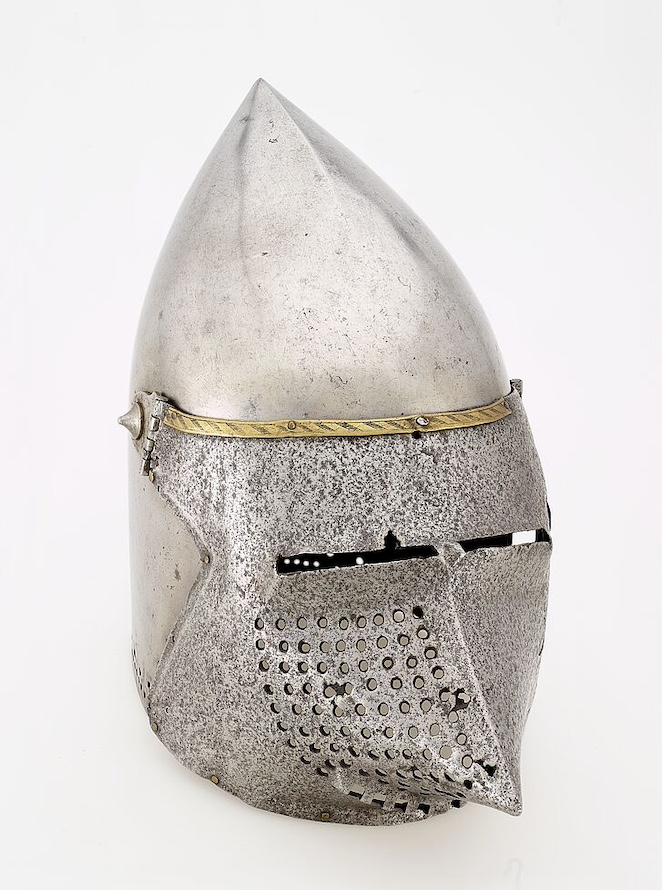
Image Caption: Hundsgugel, Norditalien, um 1360, Eisen, Messing © Deutsches Historisches Museum
Raphael Gross, President of the Foundation of the German Historical Museum: “The exhibition seeks to use selected objects to illustrate how we engage with our collection. This also includes reflecting on the different layers from which the collection emerged. What perspectives shaped collecting practices at different times, and how did the objects on display come into our possession? These questions are of central importance to us as a historical museum.”
Wolfgang Cortjaens, Curator and Head of the Department of Applied Arts and Graphics: “The exhibition brings together objects from different eras from the Middle Ages to the very recent past. Precious artifacts are displayed alongside everyday items, beautiful works beside objects that may appear inconspicuous or even banal. This form of presentation was a deliberate curatorial decision, because the juxtaposition of apparent opposites invites closer observation. It allows visitors to focus more intensely on the objects themselves, on the stories and layers of meaning they contain, and on their significance as historical witnesses.”
In the first section of the exhibition, curator and Head of Applied Arts and Graphics Wolfgang Cortjaens examines the DHM collection itself, which over the course of its 150 year history has become a historical artifact in its own right. The exhibition tour follows five defining periods in the institution’s complex history between 1883 and 2006. Originally built in the early 18th century as a representative arsenal for the Prussian kings, the Zeughaus became home to the “Hall of Fame of the Brandenburg. Prussian Army” in 1883. During the 20th century, the building was first appropriated by the Nazi regime as an army museum, then temporarily administered by the Allied forces after World War II, and from 1952 onward served as the central socialist history museum of the GDR the Museum of German History. Following German reunification in 1990, the German Historical Museum, founded three years earlier in West Berlin, took over the Zeughaus and its collections. Since 2003, the postmodern exhibition hall designed by Chinese American architect I. M. Pei has complemented the Baroque building complex.
This section of the exhibition presents objects and groups of objects that represent the collecting priorities and historical narratives of their respective periods: a Prussian infantry uniform coat; a Japanese samurai armor presented to Adolf Hitler by the Imperial Military Reservists’ Association; a socialist table centerpiece given by North Vietnam to the GDR as a state gift; and the first German-language printing of the United States Declaration of Independence. Exhibits always carried political significance as well; the practice of collecting was never arbitrary.
The collection exhibition approaches history from a particular perspective: history is often understood as a sequence of events and transformations over time. Yet it also tells a story of change through space. For this reason, the second section of the exhibition focuses on places, sites, and regions. Selected object histories address contested territories, global trade, colonization, and the exploration of new spaces, as well as vanished places, borders, flight, and exile. The exhibition does not follow a strict chronology, but instead deliberately places different eras into dialogue with one another.
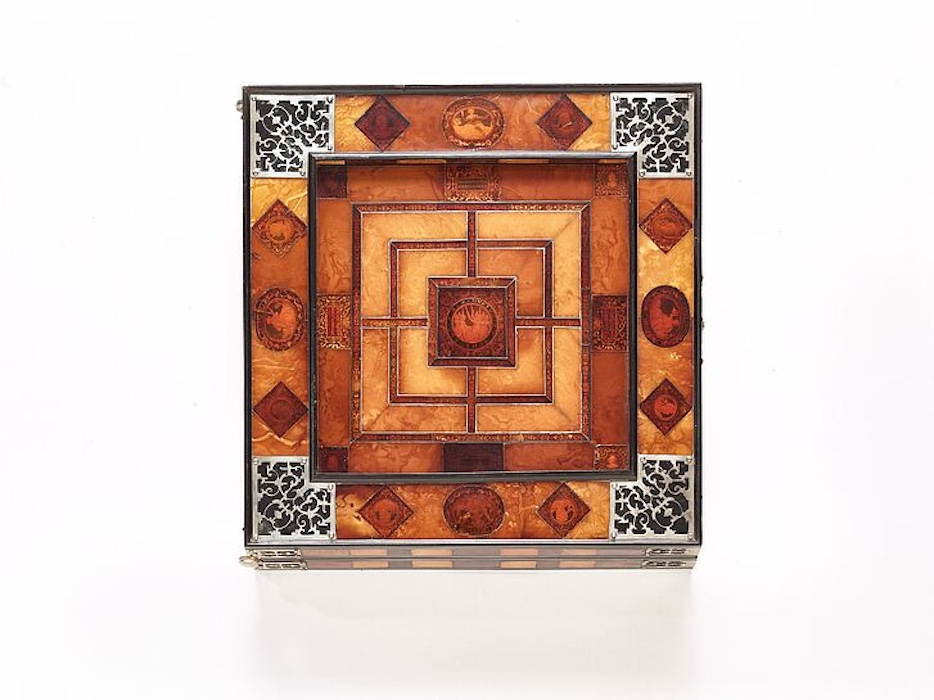
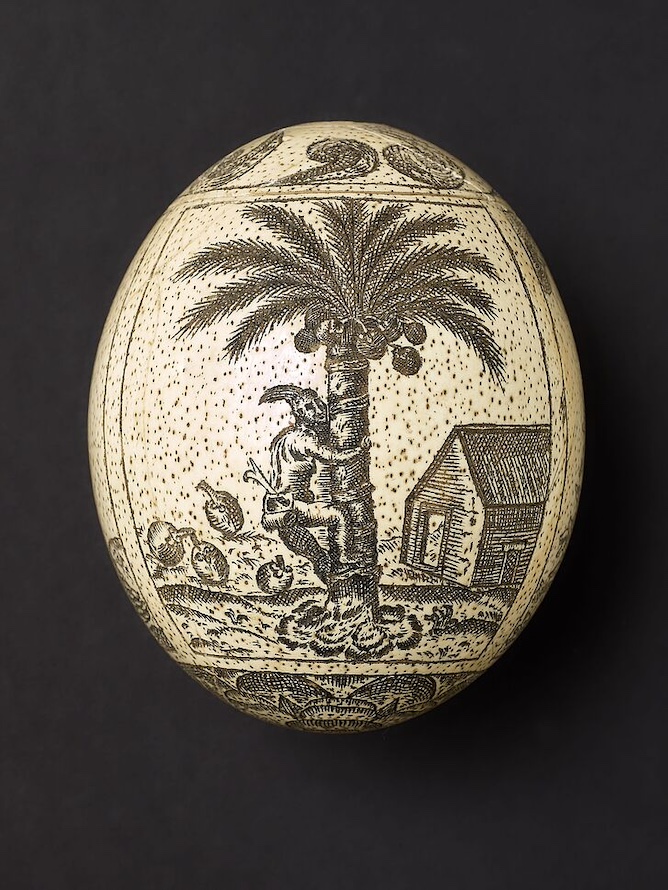
Among the exhibits are outstanding cabinet of curiosities objects, including a “guestbook made of glass” a welcome cup engraved with 30 names, dates, and mottos belonging to the Counts of Oettingen, offering a unique testimony to the religious conflicts of the Reformation era. A two-volume Luther Bible printed on parchment in 1535 points to tensions between Catholics and Protestants while also reflecting territorial claims to power. A precious game box for Nine Men’s Morris, Chess, and Tric-Trac, crafted in 1607 for the English queen Anne of Denmark, illustrates the dynastic and economic interconnections of the Baltic region. An exceptionally rare ostrich egg engraved with figurative scenes tells the story of the struggle for dominance in 17th-century global trade, closely tied to the colonialism of the early modern era.
Heavy mining equipment and the gear of a miner from the Prosper-Haniel coal mine in Bottrop Germany’s last active hard coal mine, which closed in 2018 stand as symbols of the transformation of both an industrial sector and an entire region. Photography is represented through a collection of rare vintage photographs from the early 20th century depicting journeymen and journeywomen celebrating the rituals of the Walz as a subversive countermodel to bourgeois conformity.
The exhibition concludes with two object histories that could hardly be more different, yet both tell stories of displacement and “object migration”: on the one hand, a complete Biedermeier interior that underwent a long and complex odyssey after its owner fled during World War II, ultimately returning to Berlin in 2023 just a few hundred meters from its original location; on the other hand, an IKEA bed frame converted into a bunk bed from a refugee shelter established in Kassel in 2015, covered with children’s drawings depicting the life-threatening journey across the sea.
The exhibition is designed to be inclusive and largely barrier-free. A cartographic guidance system allows visitors to trace the origins and migration paths of selected objects and groups of objects. Interviews feature eyewitnesses as well as scholars from the Collections Department. Multimedia interpretation stations, inclusive learning stations, and an audio guide in German and English complement the exhibition tour. A public program further explores and expands upon the exhibition themes throughout its run. In June 2026, Deutscher Kunstverlag will publish the conference volume Playful Alliances: Amber Politics and Courtly Culture in the Early Modern Period, dedicated to one of the exhibited objects the game box for Nine Men’s Morris, Chess, and Tric-Trac.
WHEN?
Exhibition Dates: Friday, 8. May until Sunday, 31. October 2027
WHERE?
Deutsches Historisches Museum
Unter den Linden 2
10117 Berlin