

The exhibition “Museum in Motion: A Collection for the 21st Century,” presented as part of the reopening of the Rieckhallen, features ten large-scale works from the past 25 years, including several new acquisitions being shown to the public for the first time. These works raise questions about the future of a museum of contemporary art. The Rieckhallen, with approximately 3,000 m² of exhibition space, were repurchased by the State of Berlin in 2022, thereby saving them from demolition. They expand the Museum Hamburger Bahnhof – National Gallery of Contemporary Art.
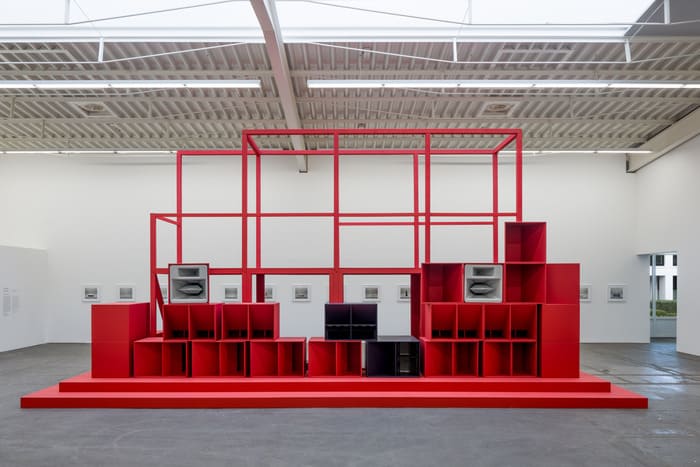
Image Above: Exhibition view “Museum in Motion. A Collection for the 21st Century”, Hamburger Bahnhof – Nationalgalerie der Gegenwart, from 6.9.2024 pictured: Cevdet Erek, Bergama Stereo – Berlin Fragment, 2019-2024 © Nationalgalerie – Staatliche Museen zu Berlin / Jacopo La Forgia
A key focus of the collection at the Hamburger Bahnhof – Nationalgalerie der Gegenwart is on large-scale sculptures, installations, and media art. Thanks to the permanent securing of the Rieckhallen in 2022, these works can now be exhibited in the gallery’s unique exhibition spaces and supplemented with new acquisitions. The works on display include sculptural installations by Elmgreen & Dragset, Cevdet Erek, Anne Imhof, Jasmin Werner, and David Zink Yi; photographic works by Elmgreen & Dragset, Manaf Halbouni, and Ricarda Roggan; and light and media art by Maurizio Nannucci and Jeremy Shaw.
“Museum in Motion” presents large-scale installations, sculptures, and photo series from the collection of the Hamburger Bahnhof – Nationalgalerie der Gegenwart, as well as from the Federal Art Collection, as part of a recently agreed-upon long-term strategic partnership. The works explore the changing role of museums of contemporary art and raise the question of how museums must adapt to the challenges of the present and the future. The exhibition title itself suggests that museums are dynamic institutions that are constantly evolving. In a changing society, art also evolves, a fact reflected in the close connection between artists, museums, and their environment. A museum of contemporary art is an integral part of society, promotes cultural production, and must continually adapt to technological advances and demographic shifts. With this presentation of its collection, the Hamburger Bahnhof looks to the future to actively address these challenges.
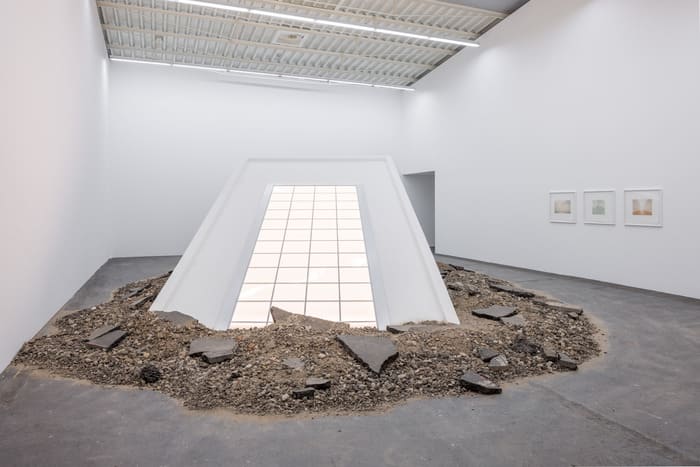
The exhibition opens with the sculpture “Protruding Gallery / Powerless Structures, Fig. 223” (2024) by Elmgreen & Dragset. This work depicts an art space that either rises from the ground or sinks into it. In the series “Deutsche Museen” (2025), the artist duo also examines spatial structures and the institution of the museum.
© Nationalgalerie – Staatliche Museen zu Berlin / Jacopo La Forgia
Cultural-historical references and the question of the shifting significance of artworks and objects preserved in museums are explored in “Bergama Stereo – Berlin Fragment” (2019–2024) by Cevdet Erek and “Apokryphen” (since 2013) by Ricarda Roggan. Manaf Halbouni’s work “Go Home” (2019) raises the question of how a museum can function as an open house for an increasingly diverse society and which artists find a place in its collection.
David Zink Yi’s work “Neusilber” (2009) could not be produced using the material from which it takes its name, pointing to the inadequacy of museum categorization and hierarchies in representing the complex world. Maurizio Nannucci’s neon tube works “Idea” and “Time” (both 1997) address parameters for the conception and production of artworks. Since the manufacture of neon tubes is being discontinued for environmental reasons, museums face the challenge of developing new technologies to preserve these works for future generations.
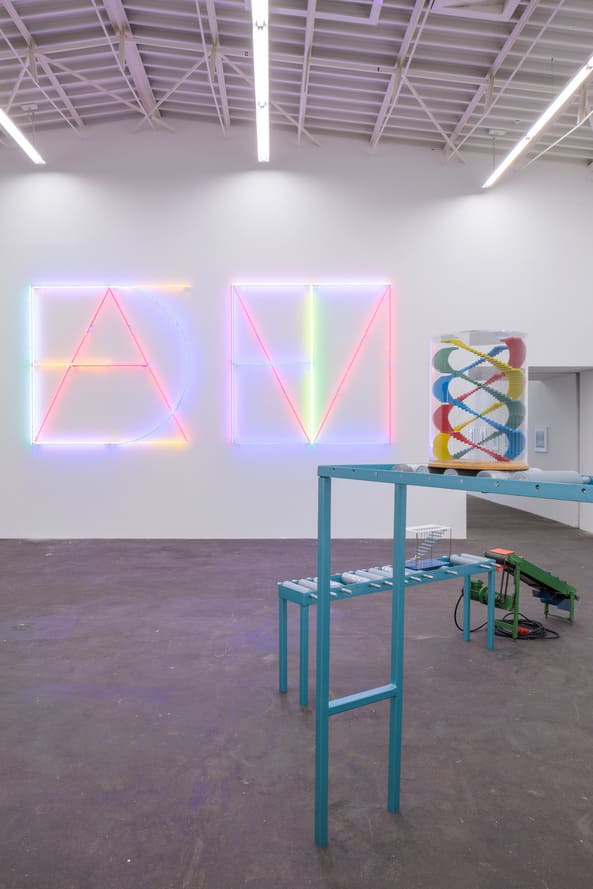
© Nationalgalerie – Staatliche Museen zu Berlin / Jacopo La Forgia
Anne Imhof’s sculpture “Room IV” (2021) presents the museum with the challenge of showcasing both the past and the present of the work, which was originally part of a performance setting. Jasmin Werner’s ensemble, consisting of four sculptures and three staircase models, combines industrial and architectural symbols with art-historical references and emphasizes the cyclical nature of the creative process as well as art history, as it is transmitted through museums.
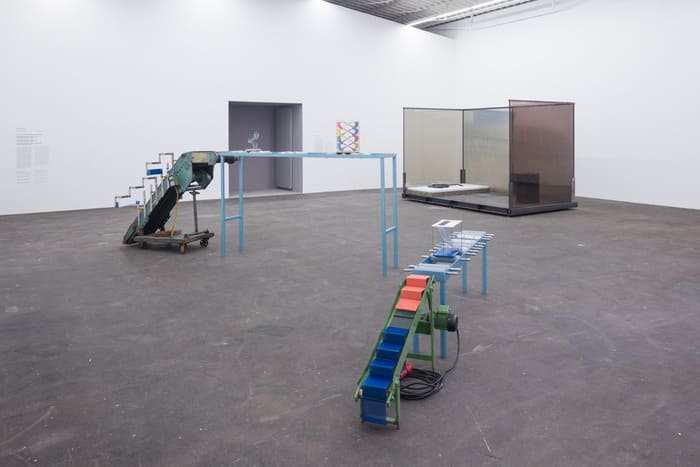
© Nationalgalerie – Staatliche Museen zu Berlin / Jacopo La Forgia
The exhibition concludes with Jeremy Shaw’s expansive video and sound installation “Phase Shifting Index” (2020). On seven screens, female protagonists from fictional subcultures are shown performing ritualistic, dance-like movements that ultimately merge into a collective ecstatic experience. Just as Shaw’s works depict an altered state of consciousness, museums can be places where visitors’ perceptions are expanded.
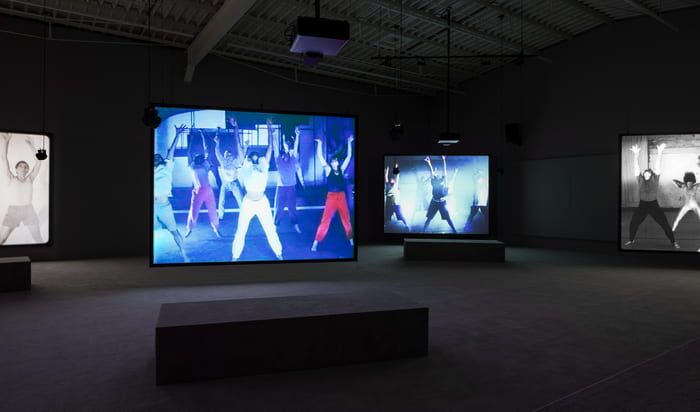
The collection presentation features new works by Cevdet Erek, Elmgreen & Dragset, and Anne Imhof, made possible through the support of the Friends of the National Gallery and generous donors, as well as the Förderverein Hamburger Bahnhof International Companions, founded in 2023. In addition, Jeremy Shaw’s video installation will be added to the collection on the occasion of this presentation.
When?
Exhibition dates: Friday, 6. September, 2024 – Sunday, 26. July 2026
Where?
Hamburger Bahnhof – Nationalgalerie der Gegenwart Invalidenstraße 50-51
10557 Berlin Germany