

The Albertinum of the Staatliche Kunstsammlungen Dresden (Dresden State Art Collections) presents The Great Drama: Auguste Rodin and the Battle over Modernism (31 October 2026 – 22 August 2027), bringing its collection of works by Auguste Rodin and French and Belgian sculpture from around 1900 back into the public eye for the first time in decades. Unparalleled in Germany, the collection comprises some 70 sculptures, including works of monumental proportions, which enter into dialogue with 24 paintings, as well as photographs, medals, plaques and historical documents. Many of these works have not been on public display since 1939. The exhibition reveals how Dresden’s collection became one of the most innovative and significant collections of European modern art – and how fiercely this new art was contested.
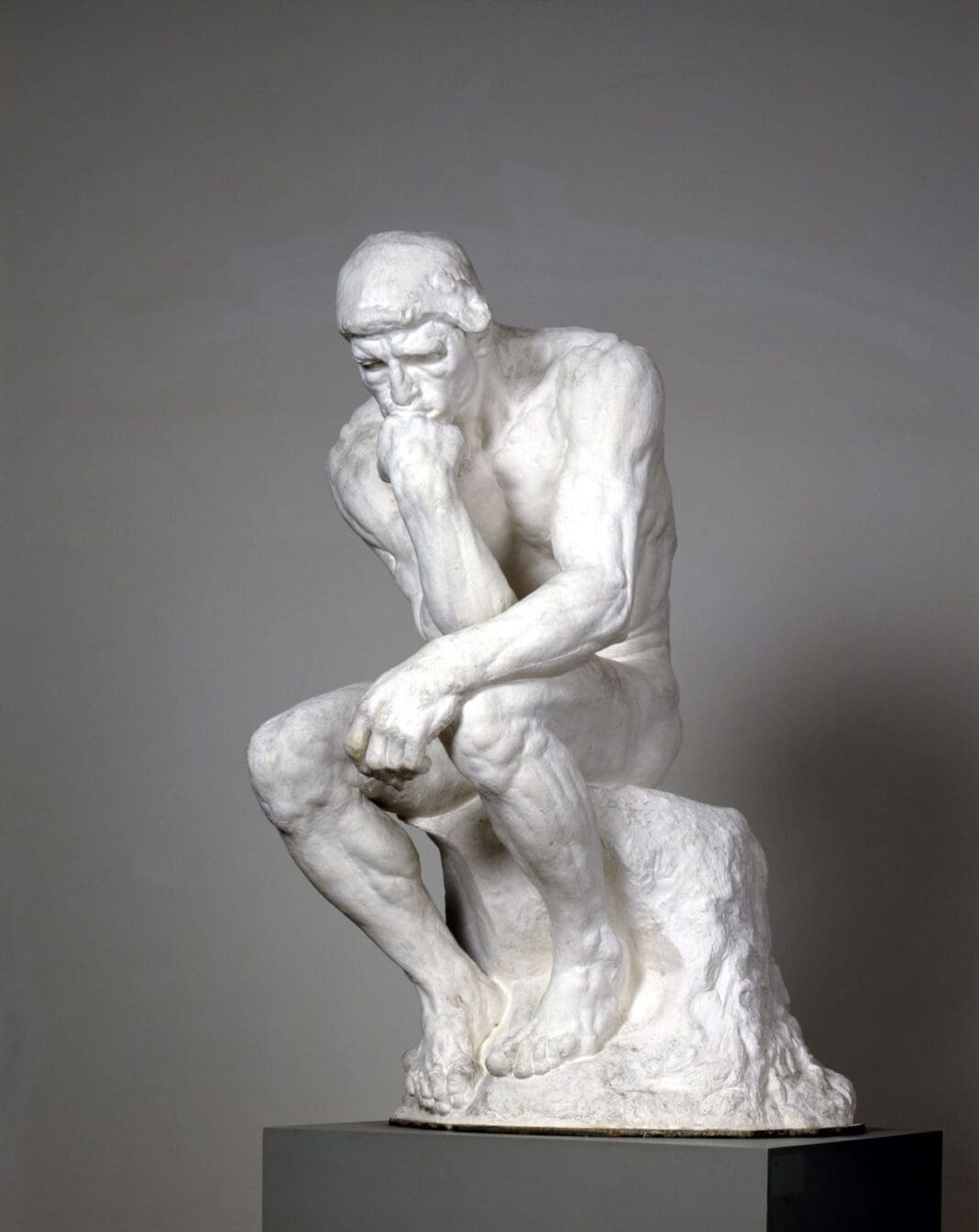
Image above: Auguste Rodin, The Thinker, 1881–83 © Albertinum | Sculpture Collection from 1800, Staatliche Kunstsammlungen Dresden. Photo: Werner Lieberknecht
At the heart of the exhibition lies the story of an extraordinary collection and the man who established it. Georg Treu (1843–1921), the visionary director of the Albertinum’s Sculpture Collection, sought to demonstrate “what is being achieved in the art of sculpture throughout the world in our time.” From 1894 onwards, he established direct contact with artists and began systematically acquiring contemporary works, setting his museum on a course towards modernism. His collecting strategy was pioneering, marking a fundamental shift in the Albertinum’s conception of its own purpose.
Paris was the centre of the avant-garde. It was here that the great World’s Fair took place, and here that artists such as Emanuel Frémiet lived and worked. Frémiet’s spectacular sculpture Gorilla Carrying Off a Woman marked the beginning of Dresden’s collection of French and Belgian avant-garde sculpture. In 1894, Georg Treu acquired Auguste Rodin’s The Age of Bronze and The Man with the Broken Nose, the first works by the great French sculptor ever to enter a German museum. By 1912, the Sculpture Collection held 20 works by Rodin, making it the largest collection of his sculptures in Germany. It was also the most unusual, consisting predominantly of plaster casts – a medium in which Rodin worked extensively and through which the radical modernity of his art becomes particularly apparent.
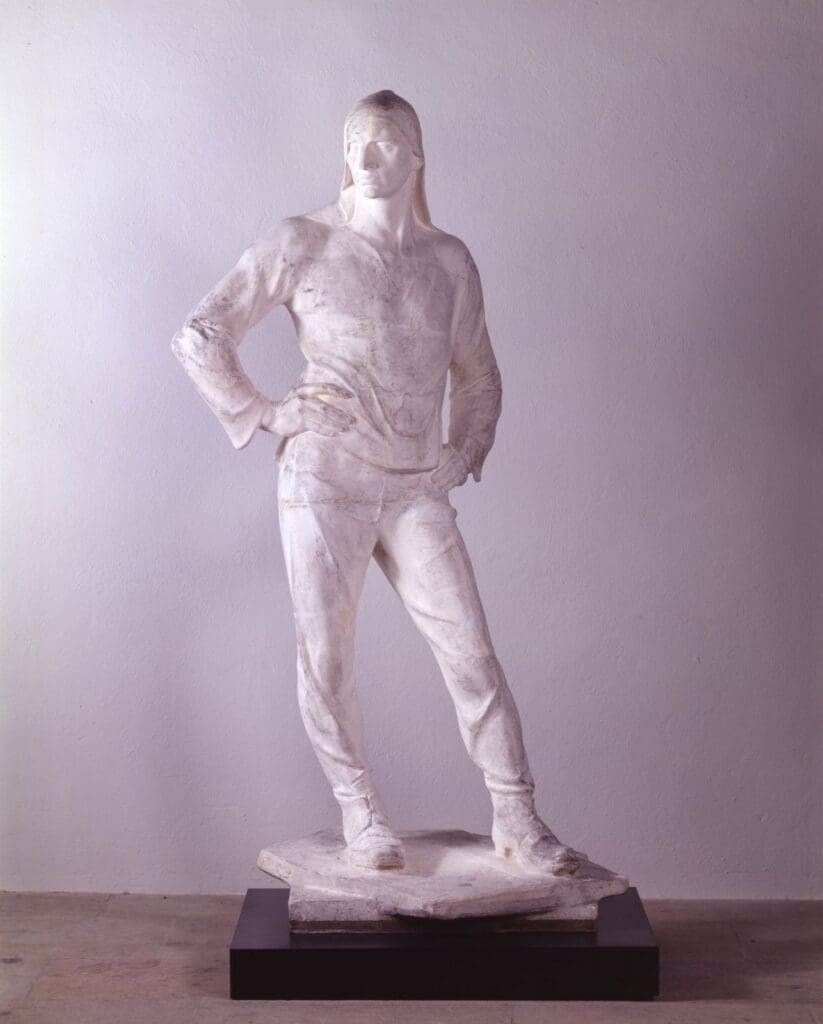
The path towards modernism also brought new subjects and forms of expression. The human figure, and the realities of everyday life, moved to the forefront. Some artists turned their attention to the modern world of work. Among them was Constantin Meunier, a protégé of Georg Treu, whose first major solo exhibition in Dresden in 1897 marked the beginning of his career as a sculptor. His world-famous The Dock Worker is on display, alongside Alexandre Charpentier’s monumental relief depicting bakers at work. Measuring three by four metres and made of coloured stoneware, the work is being exhibited for the first time since the museum closed as a result of the war in 1939.
One of the exhibition’s highlights is a cast of Albert Bartholomé’s celebrated Monument aux morts. The original, measuring nine metres in width and 3.5 metres in height, stands as a memorial to the dead in Paris’s Père-Lachaise Cemetery. The acquisition of the cast by director Georg Treu sparked the so-called “Dresden Sculptors’ Dispute”: on 6 January 1901, 34 sculptors published a protest in the Dresdner Anzeiger, denouncing what they described as a “pathological obsession with all things foreign”. The controversy was driven less by questions of artistic merit than by resentment over the fact that public acquisition
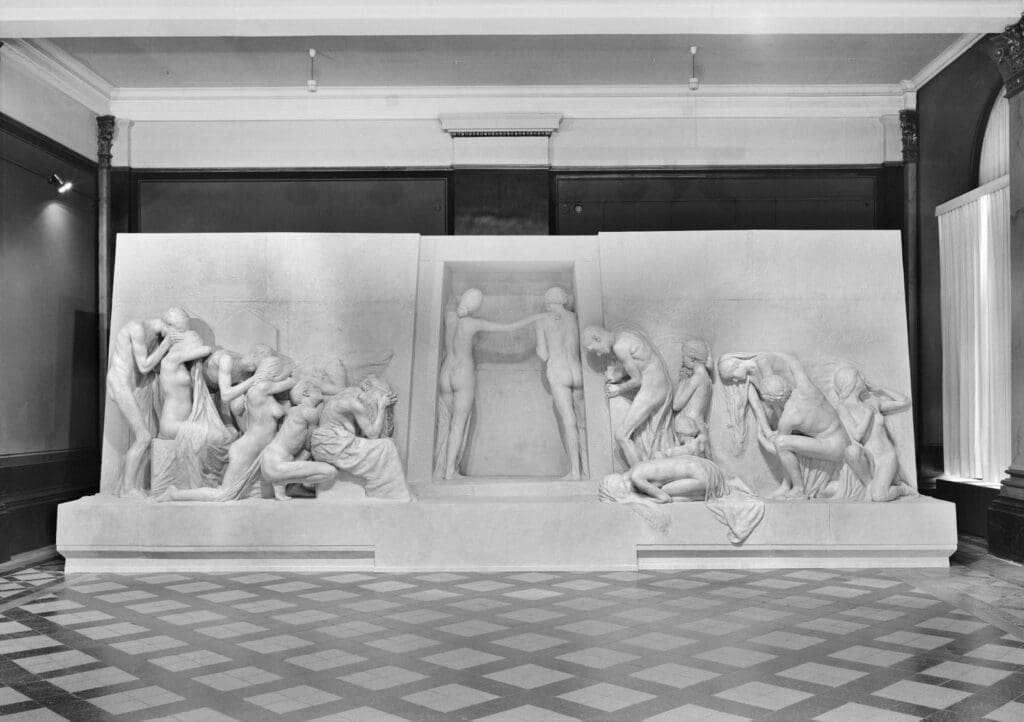
The Great Drama brings together a substantial proportion of the sculptures acquired more than 130 years ago, many of which have remained out of public view ever since. The exhibition’s title is to be taken quite literally: some of the works are monumental in scale, while the controversies surrounding their acquisition were, at times, no less dramatic.
Yet the drama also resides in the subjects themselves, which speak of the profound social transformations of the Industrial Age and a changing perception of humanity. Bodies, gestures and facial expressions convey inner emotional states, reflecting a new interest in the human psyche. The drama of individual lives and social injustice, of human needs, ideals and hopes, finds expression in these works with a poignancy that resonates as powerfully today as it did then.
In preparation for this major exhibition at the Albertinum, the artworks underwent extensive restoration and scholarly examination. National and international experts analysed a wealth of archival material that had previously been digitised. Their findings will be brought together in a catalogue, scheduled for publication by Sandstein Verlag in May 2027. The publication will also constitute the first comprehensive inventory of the Albertinum’s entire collection of French and Belgian sculpture.
An extensive programme of accompanying events complements the exhibition. Alongside public tours and curator-led guided visits in German and French, there are activities designed for families and visitors with disabilities. Workshops invite children and adults to try their hand at modelling reliefs or casting plaster.
On 11 March 2027, Vocalkonzert Dresden will present a concert in which the audience moves through the exhibition.
“Best of Drama: Which sculpture moved you? Which work could still provoke controversy today? And which remains particularly relevant to our own times?” These are the questions visitors will be invited to consider at the end of the exhibition. Their responses may even take the form of drawings.
WHEN?
Saturday, 31 October 2026 – Sunday, 22 August 2027
Opening hours
Tuesday, Wednesday, Friday to Sunday: 11 am – 5 pm
Thursday: 11 am – 8 pm
WHERE?
Albertinum
Tzschirnerplatz 2
01067 Dresden-Altstadt
Germany
ADMISSION
Regular admission: €14
Reduced admission: €10.50
School pupils under 20: €2
Children below school age: Free admission
Groups of 10 or more: €12.50 per person
Evening admission: €8 regular / €6 reduced