
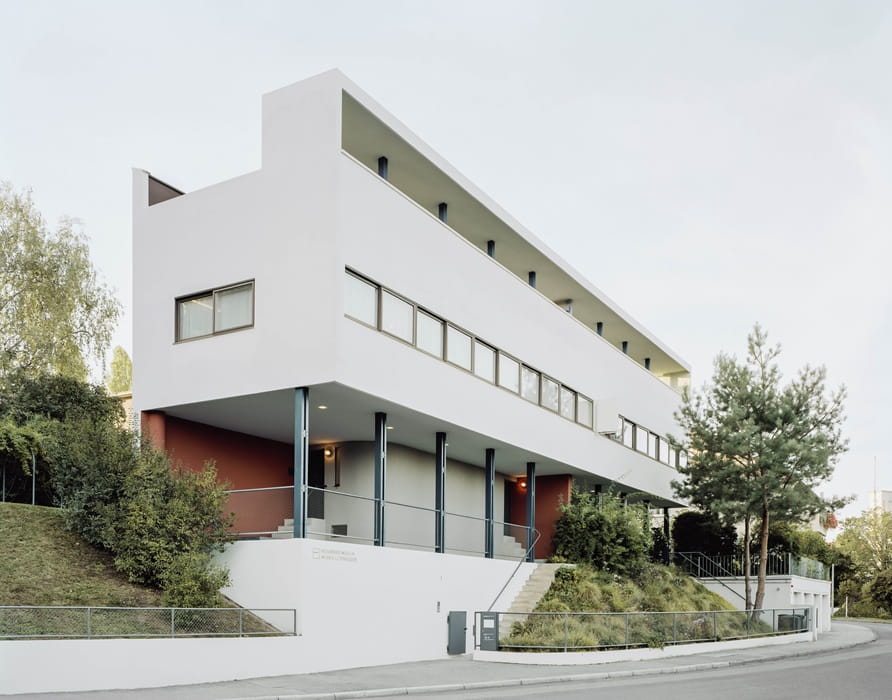

What began almost 100 years ago as a visionary experiment is now regarded as a milestone in the history of architecture: the construction of the Weissenhofsiedlung. For the past 20 years, the Weissenhof Museum, housed in the Le Corbusier Building, has been showcasing the history of this extraordinary place and demonstrating why the ideas of modernist architecture remain relevant to this day.
Image above: Doppelhaus Le Corbusier, Stuttgart © Brigida González/ Weissenhofmuseum im Haus Le Corbusier.
For 20 years, the Weissenhof Museum has been an integral part of Stuttgart’s museum and cultural landscape. It is housed in a semi-detached house designed by Le Corbusier and Pierre Jeanneret in 1927. Following its extensive restoration in accordance with heritage conservation principles between 2003 and 2005, the building opened as a museum in 2006. To this day, it remains the only house in the Weissenhof Estate that is open to the public.
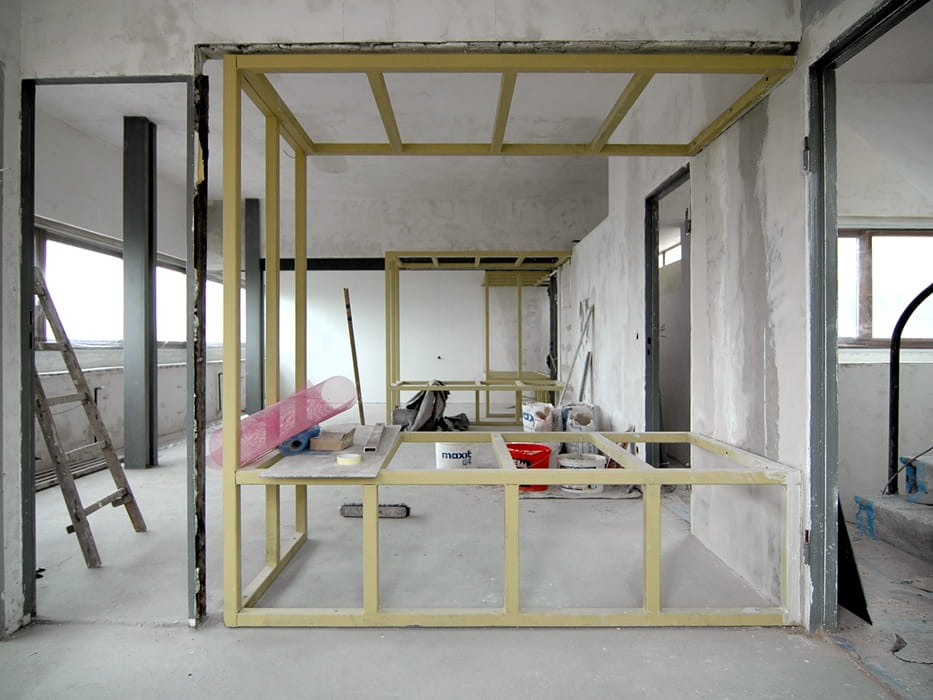
The museum’s unique quality lies in its location: visitors experience architecture not merely through plans, photographs or models, but can discover the spaces, proportions and the original concept of the house first-hand as they walk through the building. In the left-hand half of the semi-detached house, the museum presents the history of the Weissenhofsiedlung. In the right-hand half, visitors explore Le Corbusier’s design for a ‘transformable living space’ as it was reconstructed in 1927. The museum is run by the association ‘Freunde der Weissenhofsiedlung e.V.’.
Architectural history in dialogue with the present
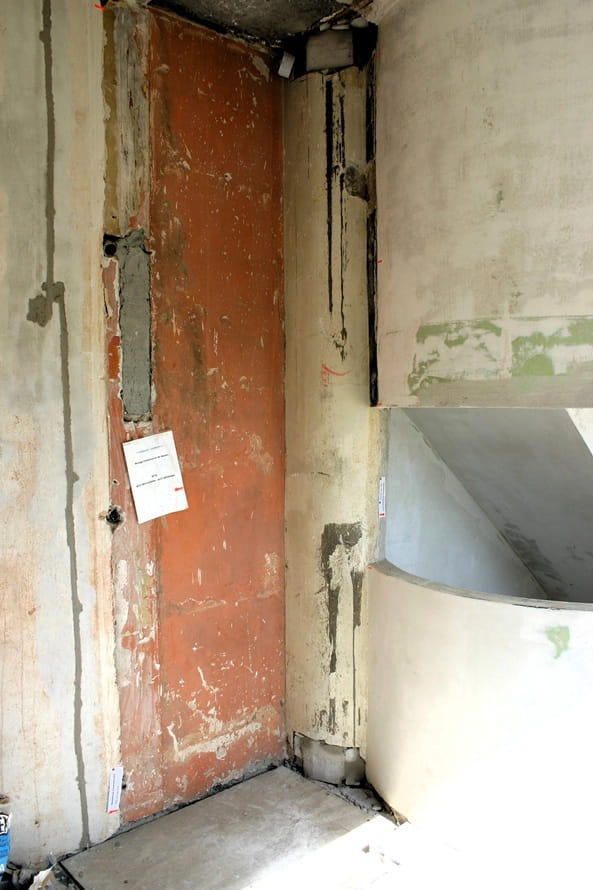
When it opened in 2006, the semi-detached house designed by Le Corbusier and Pierre Jeanneret became permanently accessible as a museum. Since then, the Weissenhof Museum has welcomed around 500,000 visitors from Stuttgart, Germany and all over the world.
At the same time, the museum has been active far beyond the scope of its permanent exhibition: special exhibitions, lectures, discussions, concerts, guided tours and collaborations have repeatedly opened up new perspectives on the Weissenhof Estate. In doing so, the focus has extended far beyond the historical architecture:
Exhibitions such as ‘How to Build? How to Live? How to live?’ placed the Weissenhof Estate in the context of other European Werkbund estates and demonstrated how new forms of living were being considered on an international scale. Art, photography and contemporary architecture have also regularly found their place at the Weissenhof. In 2021, for example, the temporary installation ‘brāhha’ explored the traces of war and the history of the site. In 2024, the Weissenhof was part of the ‘Villa Massimo zu Gast in Stuttgart’ festival, which brought together architecture, visual arts, literature and music. In 2026, an exhibition was dedicated to the photographer Otto Lossen, whose photographs played a key role in shaping the international perception of the Weissenhof Estate.
A museum in the heart of Stuttgart
An integral part of the Weissenhof Museum’s identity is its role as a key element of the city’s cultural life. During the ‘Long Night of Museums’, the museum regularly stays open late into the night, whilst at the ‘Killesberg Summer Festival’ it joins forces with neighbouring institutions to offer a cultural programme for the public. On ‘Open Monument Day’ too, the museum invites visitors to rediscover the Weissenhof Estate with guided tours and free admission.
In 2016, the significance of the Weissenhof was underlined by a special international honour: Le Corbusier’s semi-detached house, together with the neighbouring detached house, was recognised as part of the transnational UNESCO World Heritage Site ‘The Architectural Work of Le Corbusier – An Outstanding Contribution to the Modern Age’. Further recognition followed in 2020: the European Commission awarded the Werkbund estates in Germany, Poland, the Czech Republic and Austria the European Heritage Label.
20 years of the museum, almost 100 years of the Weissenhof
To mark its 20th anniversary, the Weissenhof Museum is not only looking back, but also looking ahead. For the questions that modernist architects grappled with almost 100 years ago are more relevant than ever: How do we want to live? How can architecture respond to social change? And how can good design be reconciled with the demands of a changing city?
“The upcoming anniversary in 2027 is an opportunity for us to position the Weissenhof even more firmly as a vibrant hub for architectural education. We want to further develop our programme, reach new target groups and promote dialogue on architecture and living. The Weissenhof.Forum opens up new possibilities for this. At the same time, the Le Corbusier House remains the highlight of any visit to the Weissenhof, as it allows visitors to experience the ideas of Modernism first-hand,” says Verena Lebherz, Director of the Weissenhof Museum at the Le Corbusier House.
Special guided tour
“20 Years of the Weissenhof Museum – An Anniversary Tour”
Sunday, 18 October 2026, 10.00 am
For 20 years, the Weissenhof Museum in Haus Le Corbusier has been a special place to discover the history of the Weissenhof Estate and the work of the architect Le Corbusier. To mark this anniversary, the museum is hosting a guided tour that takes you behind the scenes.
On a tour of the Le Corbusier House, you will learn about the fortunate circumstances two decades ago that helped bring the museum into being, why archaeologists and building researchers prepared the restoration, and how this internationally renowned institution has developed since then.
The tour will be led by Friedemann Gschwind, the former initiator and project manager for the City of Stuttgart; Arne Fentzloff, who, with his practice ARCHITEKTUR 109, carried out the heritage-sensitive restoration on behalf of the Wüstenrot Foundation; and Anja Krämer, who took over as director of the Weissenhof Museum in 2006.
This 45-minute anniversary tour offers the opportunity to discover the Weissenhof Museum from a new perspective and to hear stories that are not usually told during the regular museum tour.
Speakers
Friedemann Gschwind, Chair of the Advisory Board, Friends of the Weissenhof Estate e.V. Arne Fentzloff, Director, Friends of the Weissenhof Estate e.V./ARCHITEKTUR 109 Anja Krämer, Deputy Director, Weissenhof Museum in the Le Corbusier House
WHEN?
Sunday, 18 October 2026
WHERE?
Weissenhofmuseum im Haus Le Corbusier
Freunde der Weissenhofsiedlung e.V.
Rathenaustraße 1
D–70191 Stuttgart