

The exhibition I LIKE Contradictions at the Falckenberg Collection offers a fresh perspective on the work of Daniel Spoerri (1930–2024) and the enduring relevance of his artistic thinking. After his first career as a classical dancer, Spoerri co-founded the Nouveau Réalistes group in Paris in 1960 together with Yves Klein, Jean Tinguely, and other fellow artists, becoming a defining figure of object art. Spoerri rose to fame with his snare-pictures (Fallenbilder), in which he glued down fleeting everyday scenes – remnants of a feast with plates, glasses, and food scraps – turning them into assemblages and, in a playful yet subversive way, elevating them to art – or anti-art. This exhibition, the last one developed in close consultation with Harald Falckenberg, presents a comprehensive overview of Spoerri’s work from 1959 to 2018, including lesser-known series, across four floors. Placing his art in direct dialogue with works from the Falckenberg Collection – American and German “counterculture artists” ranging from Ray Johnson to Jonathan Meese, the show situates Spoerri’s oeuvre within a broader cultural and political avant-garde that, since the 1960s, has challenged conventions in art, life, and society.
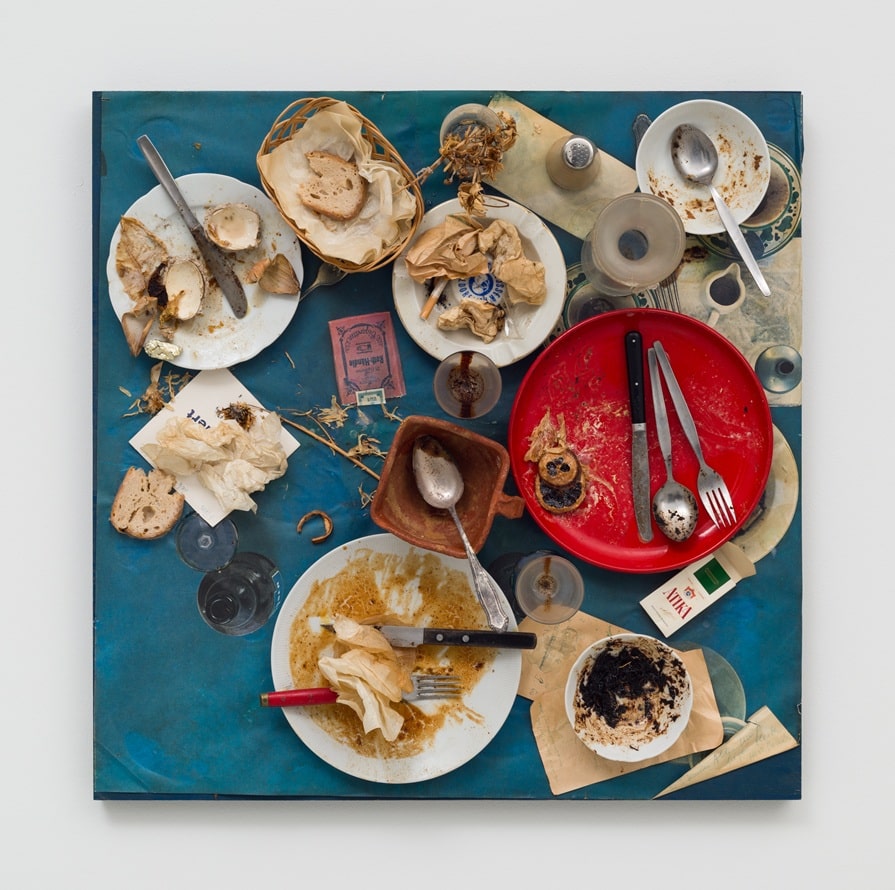
Image above: Daniel Spoerri, Restaurant Spoerri, 16. November 1972, 1972 Assemblage auf bemalter Hartfaserplatte (Tableau-piège) | Assemblage on painted fiber board, 70 x 70 x 24 cm, © VG Bild-Kunst, Bonn, 2025. Courtesy Galerie LEVY.
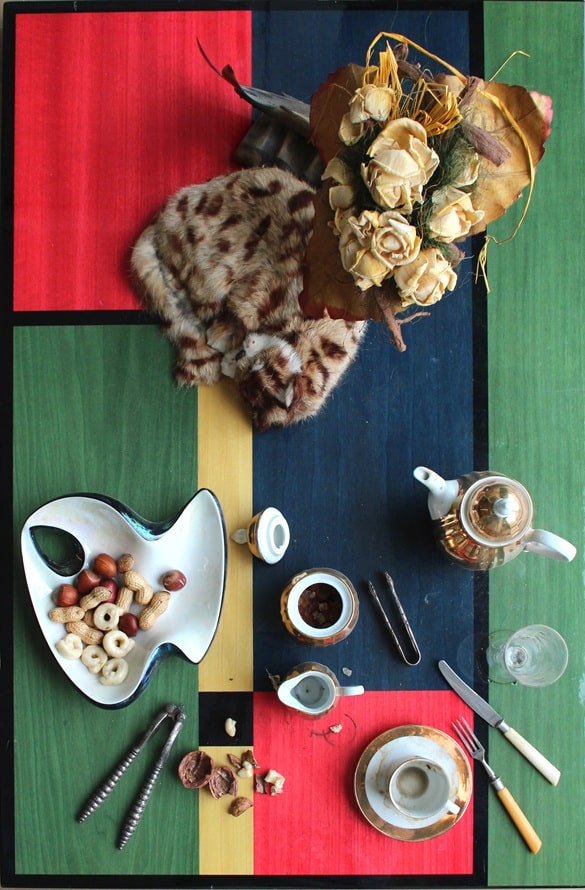
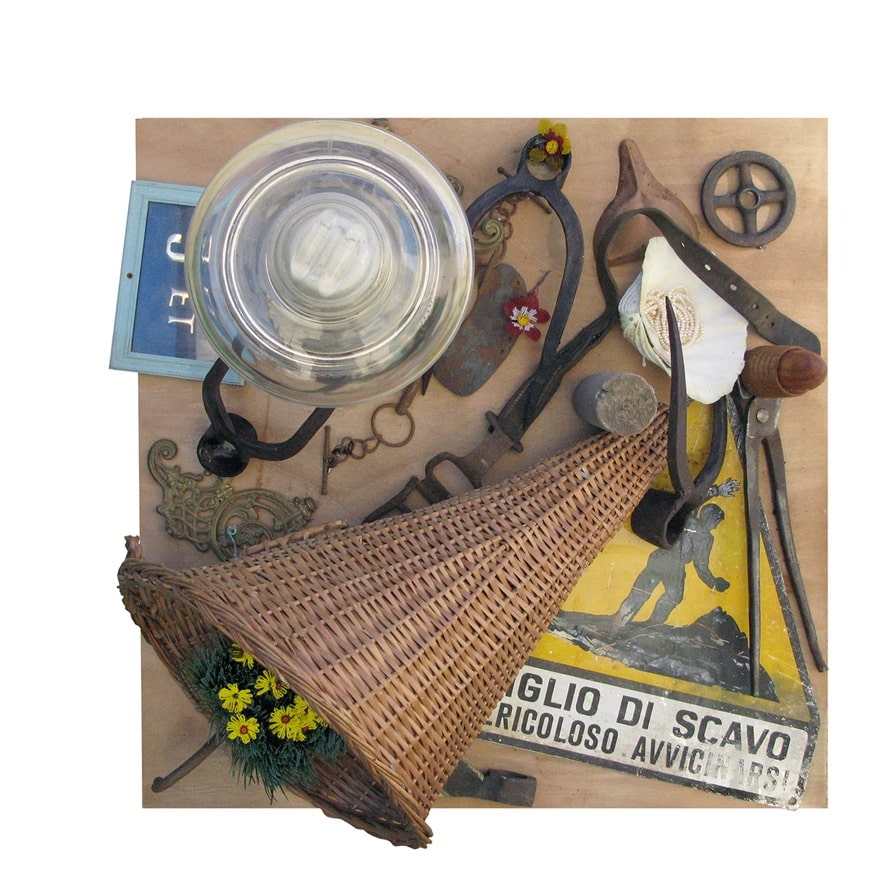
In contrast to abstract art and building on the 1960s readymades and Neo-Dada, Daniel Spoerri created a distinct art genre with his snare-pictures – much like later with Eat Art, which he is credited with founding. He took random situations – snapshots of immediate reality – and fixed them unchanged onto their base, creating a sort of “anti-still life.” The horizontal was turned vertical, and the result was declared a work of art.
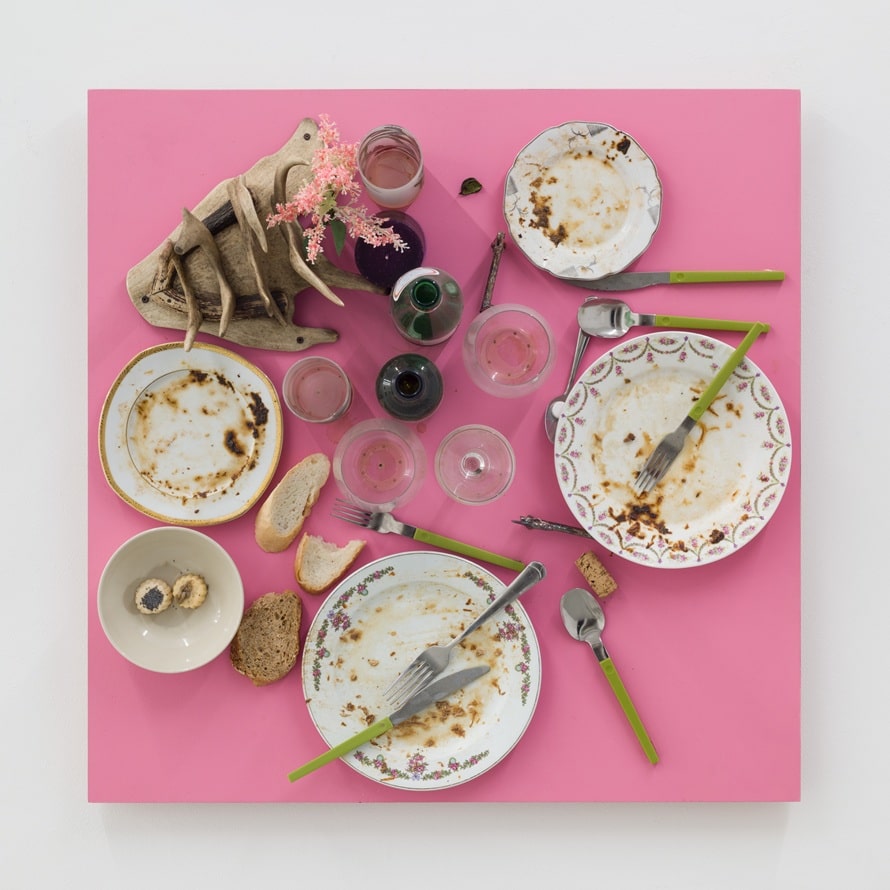
In so doing, Spoerri, himself a self-taught artist, also questioned the very concept of authorship: his works emerged from collaboration with the people who had just been sitting and eating at the respective tables. Bread crumbs, cigarette butts, and used napkins formed idiosyncratic portraits of society – far removed from the beautiful and the sublime, and from bourgeois notions of good taste. This attitude, with its humor and sense of the grotesque, resonated with Harald Falckenberg’s own understanding of art.
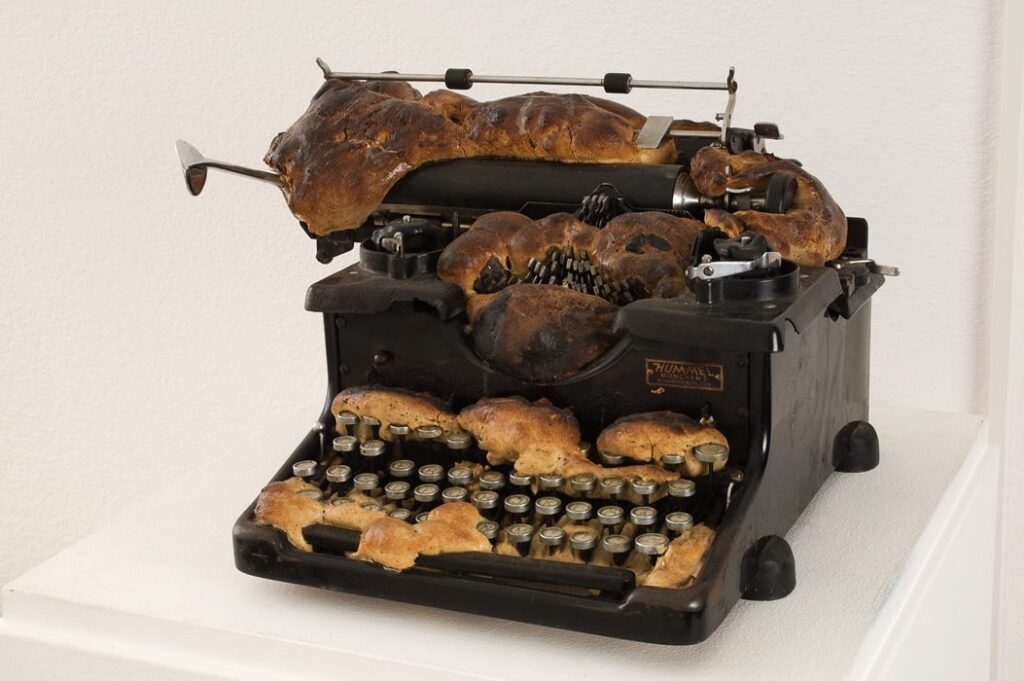
The exhibition features rarely shown series by Spoerri, such as the Bread-Dough Objects (Brotteigobjekte) created from 1972 onward, and the Murder Investigations (Morduntersuchungen), assemblages responding to photographs from police archives in which any object might become a corpus delicti.
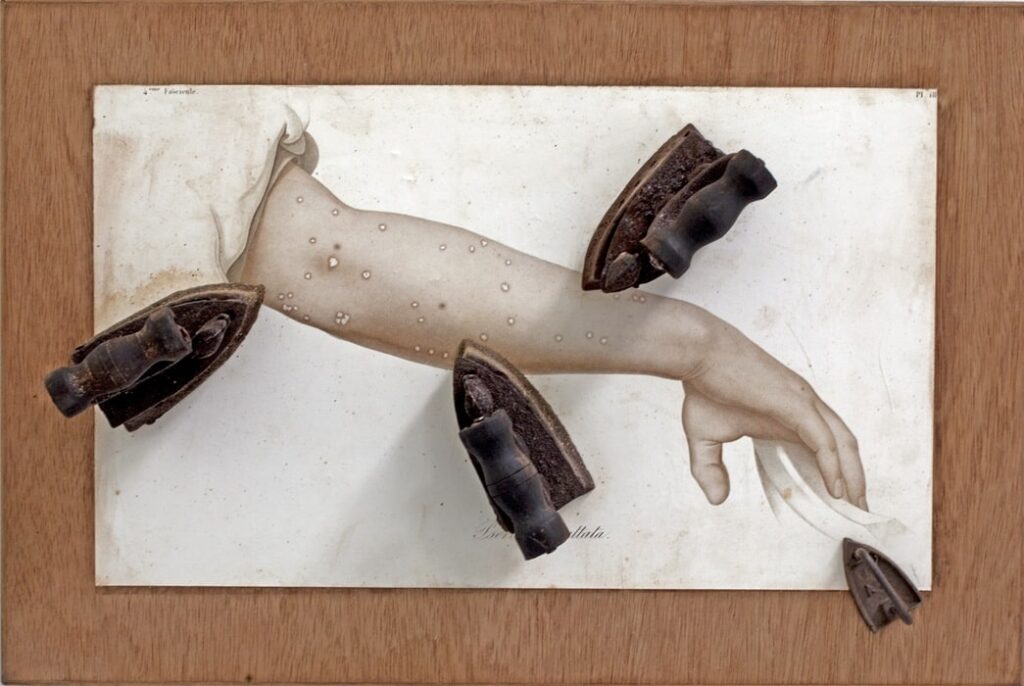
Also on view are more recent textile works from the Threadbare Oracles series (Fadenscheinige Orakel, from 2014 onward), in which the artist cut apart and reassembled found wall hangings embroidered with sayings, creating entirely new layers of meaning. Irony and wordplay are a hallmark of Spoerri’s work, exemplified by his “word snares” (“Wortfallen,” 1964) developed together with Robert Filliou.
In dialogue with works from the Falckenberg Collection, rich connections become apparent between Spoerri’s artistic approach and the anti-consumerist, socio-critical art found in the collection. The work of Gianfranco Baruchello and that of Dieter Roth bear aesthetic and conceptual affinities with Spoerri’s practice.
Their works highlight the interdisciplinary interweaving that positions Spoerri’s art in the midst of an experimental, often subversive counterculture – a culture that developed across national borders between Fluxus, Nouveau Réalisme, and Conceptual Art. Spoerri’s signature play with everyday materials, his critical interrogation of the concept of the art object, and his ironic engagement with the notion of authorship also inform the work of Mark Dion, Astrid Klein, Mariella Mosler, Markus Schinwald, Thomas Grünfeld, and John Miller – making his lasting influence on subsequent generations of artists readily apparent.
The exhibition is also a tribute to the long-standing collaboration with Harald Falckenberg (1943– 2023). It is the final show whose concept was developed in close consultation with the visionary collector.
It is curated for Deichtorhallen Hamburg by Dirk Luckow and Goesta Diercks, in collaboration with Barbara Räderscheidt, Director of the Ausstellungshaus Spoerri (Spoerri Exhibition House) in Hadersdorf am Kamp (Lower Austria), and Thomas Levy of the Levy Gallery in Hamburg, a long-time friend and supporter of Spoerri. The exhibition is organized in cooperation with Artoma Kunst- und Kulturmanagement GmbH, Hamburg.
About the artist
Daniel Spoerri was born Daniel Isaac Feinstein in 1930 in Galați, Romania. In 1942, he fled with his mother and five siblings from the Nazis to Zurich. He worked as a stage designer and dancer before turning, as a self-taught artist, to the visual arts in the 1950s. His first snare-picture was created in 1959, with many more to follow – now housed in major art collections worldwide. A passionate cook, Spoerri often invited people to meals – he loved to celebrate and bring people together.
In 1968, he opened the Restaurant Spoerri in Düsseldorf and his Eat Art Gallery, where he regularly organized exhibitions of works by various artists working with food. In the restaurant, a number of snare-pictures were created after meals were served. In Hamburg, in 1978, he designed the stage set for Peter Zadek’s production of Shakespeare’s The Winter’s Tale. In the sculpture park Il Giardino di Daniel Spoerri in Tuscany, he assembled 115 installations by more than 50 different artists. This year, Daniel Spoerri would have turned 95.
WHEN?
Opening: Friday, 26. September 2025, from 7 pm
Exhibition period: Saturday, 27. September 2025 until Sunday, 26. April 2026
Opening hours:
Sunday: noon – 5 pm
As part of guided tours on Saturdays: noon + 3 pm
WHERE?
Sammlung Falckenberg, in den Phoenix-Hallen
Wilstorfer Str. 71, Tor 2
21073 Hamburg-Harburg
COSTS?
Sunday: Regular: 11 EUR, Reduced: 7 EUR
Guided tours on Saturdays: Regular: 16 EUR, Reduced: 13 EUR