


How can loneliness be conceived in a present of permanent transmission? From 13th to 20th December 2025, the exhibition Human and Nature in Times of Loneliness brought together international artistic positions in Quedlinburg that examined the relationship between humans, the environment and communication under conditions of technological densification and ecological exhaustion. Curator Zuleykha Ibad looks back on the project.
Image above: Curator Zuleykha Ibad, Photo © Lali Binyatova
In December 2025, the exhibition Human and Nature in Times of Loneliness was held in Quedlinburg. Over a period of eight days, works by Benjamin Claux, Vincent Jondeau, Clara Juan, Ilyas Grunt and Oliver Juan were brought together. The project was organised by I-opener e.V., whose art director is Oliver Juan. It was supported by the city of Quedlinburg and the federal programme Demokratie leben! (Live Democracy!), and supplemented by a public programme with regional partners.
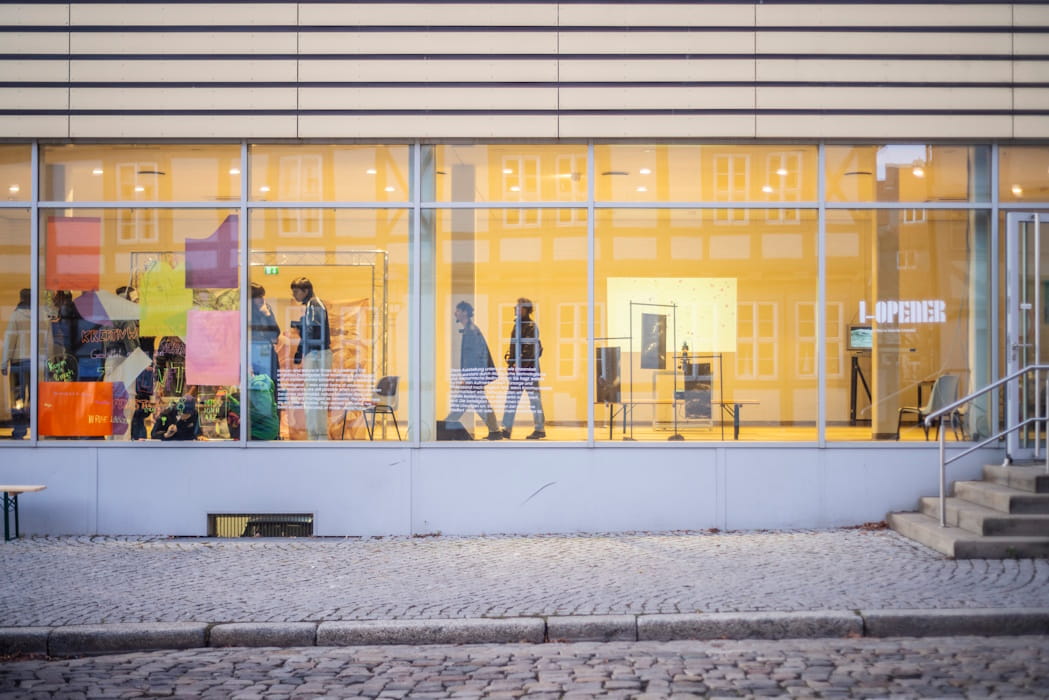
The exhibition was designed as a concentrated format, limited in time and deliberately open to the public. Installations, video works, drawings and interactive digital works formed the core of the presentation. In parallel, an educational and events programme was developed, comprising workshops, discussions, guided tours and low-threshold exchange formats. The exhibition venue on Carl-Ritter-Straße served not only as a presentation space, but also as a public place that encouraged visitors to linger, engage in conversation and return.
The starting point for the exhibition was an observation that is less new than urgent: we live in a present of permanent communication. Signals, data and images circulate incessantly. At the same time, resonance is becoming increasingly fragile. Human and Nature in Times of Loneliness therefore approached loneliness not primarily as an individual feeling, but as a condition linked to technological infrastructures, ecological upheavals and institutional processes.

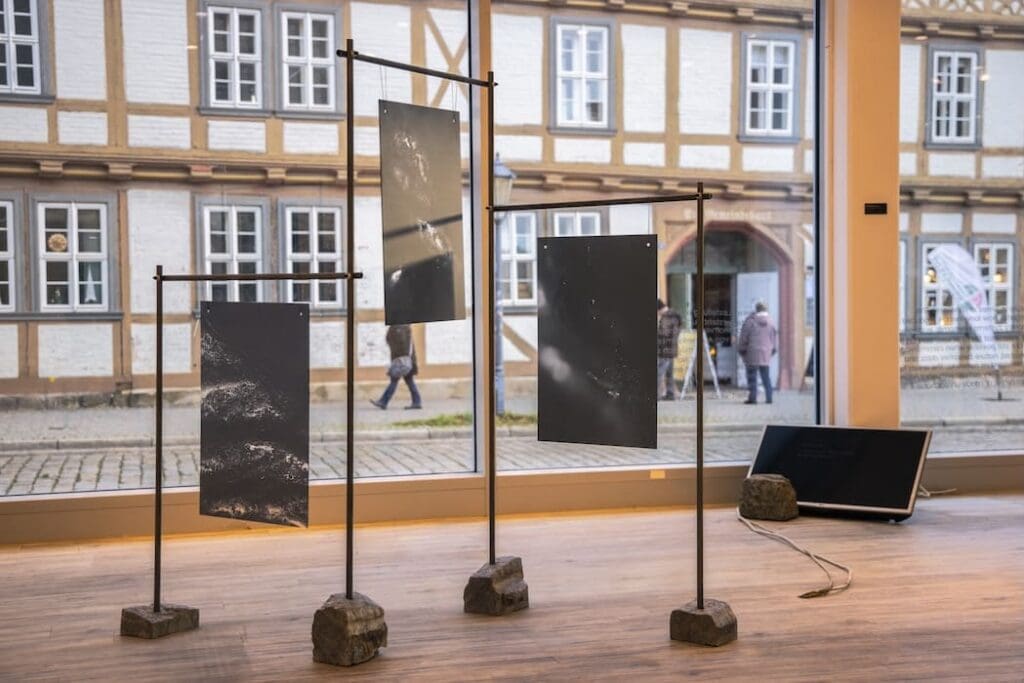
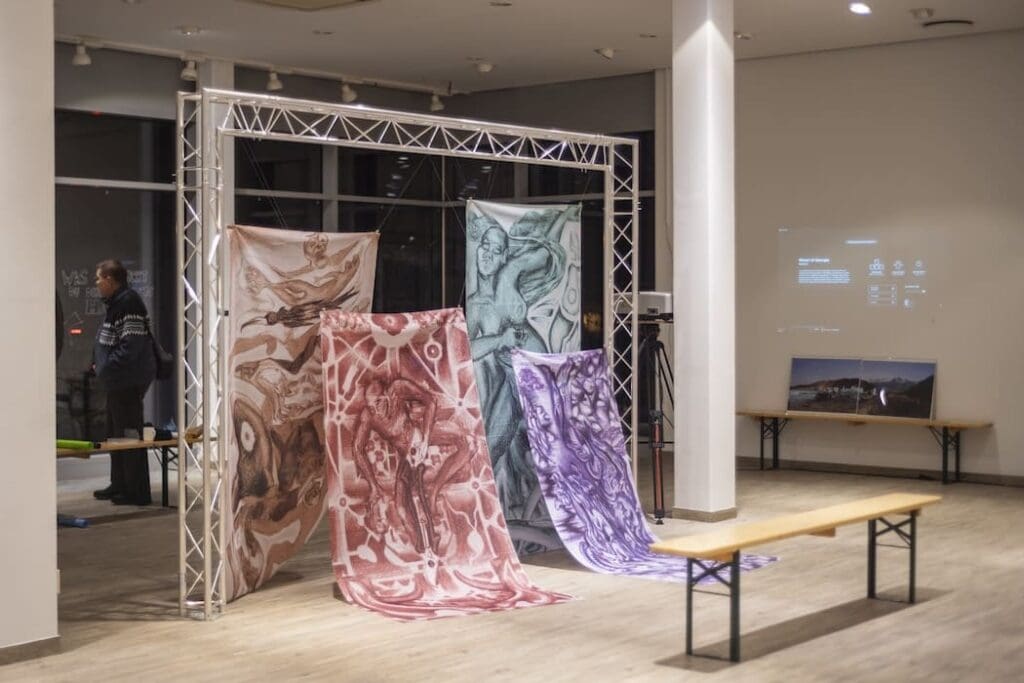
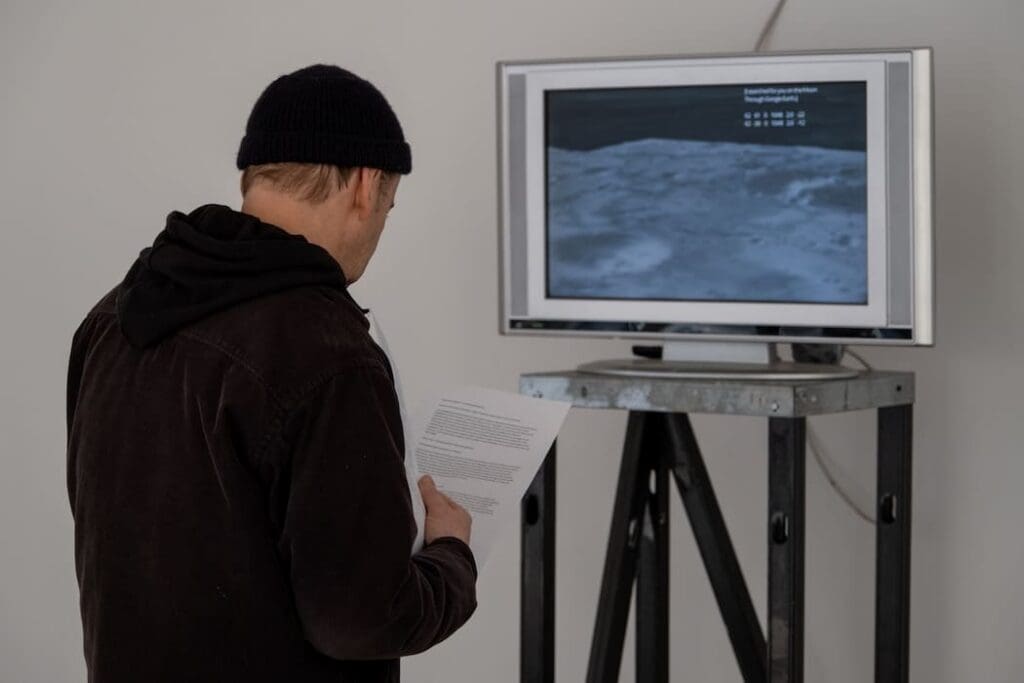
The individual artistic works engaged with different aspects of this constellation. In Apocalypse Now? and Spatium Fantasma, Benjamin Claux examined the political dimensions of images and transmission systems, ranging from scientific visualization to disruptions in communication protocols. Vincent Jondeau traced a movement through a Lithuanian peat bog in Pelkė, making visible processes situated between ecological restoration and extractive use. In Ontologies, Clara Juan placed four different forms of relating to the world side by side, revealing that concepts of “nature” are always bound to specific systems of interpretation and order. In the navigable digital work Ghost of Georgia, as well as in the photo collage Contrasted Remnants, Ilyas Grunt mapped the aftereffects of infrastructure, environmental destruction, and technological intervention. With the participatory video work Human Nature in Times of Loneliness, Oliver Juan invited visitors to become part of a perception test and to question the stability of the categories “natural” and “artificial”.
“We are surrounded by communication. This exhibition asks why so little response comes back between people, and between society and its environment.”
Zuleykha Ibad
Beer garden benches served as a unifying spatial element in the exhibition. As familiar objects in public spaces, they structured visitors’ time in the exhibition space: sitting, staying, striking up conversations. They were less a feature of the décor than a statement – an indication that public space cannot be taken for granted, but must be continually re-established.
The accompanying public programme was conducted in German and developed in collaboration with regional initiatives. Workshops, discussions on environmental and community issues, offerings from the UNESCO Harz Geopark, and several curatorial tours expanded the exhibition to include local perspectives and forms of knowledge. The events were deliberately limited in terms of participant numbers and focused on exchange.
Curatorially, Human and Nature in Times of Loneliness did not see itself as an attempt to remedy or resolve loneliness. Rather, the exhibition treated loneliness as a consequence of contemporary conditions – and at the same time as a state in which attention becomes possible. The works refrained from spectacular exaggerations and clear-cut answers. Instead, they worked with duration, repetition and observation.
The exhibition can be described as a space in which loneliness was neither pathologised nor romanticised. It appeared as something structural – embedded in ecological processes, technical systems and social routines – and at the same time as a state in which listening can continue, even when there is no immediate response.