
The Museum of Modern Art announces Marcel Duchamp, the first North American retrospective of the artist’s work in over 50 years, on view from April 12 through August 22, 2026, in the Steven and Alexandra Cohen Center for Special Exhibitions.
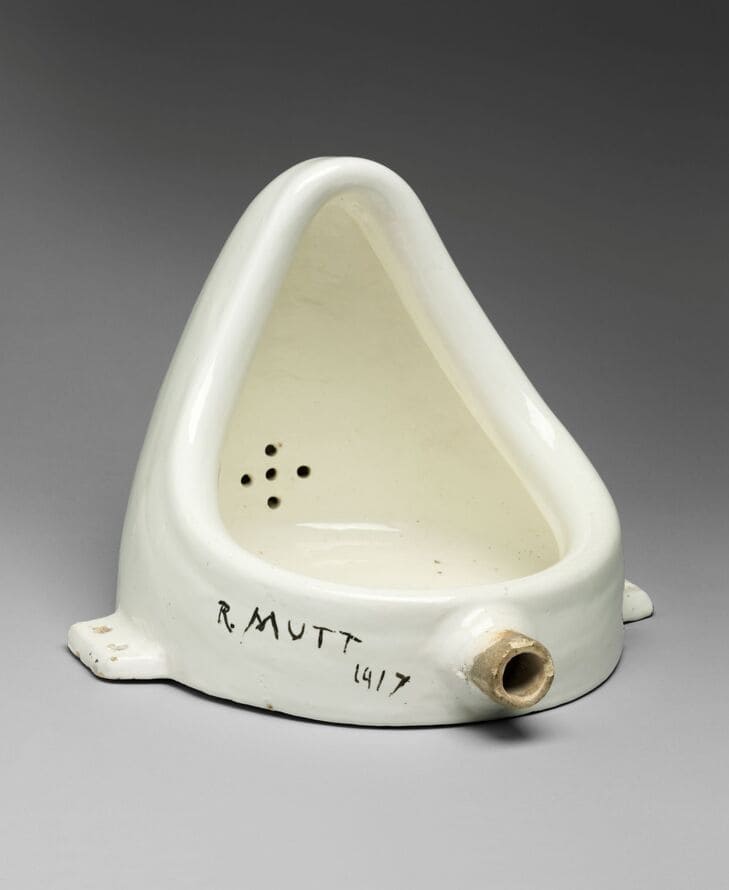
Image Above: Marcel Duchamp. Fountain, 1950 (replica of 1917 original). Porcelain urinal, 12 x 15 x 18 inches (30.5 x 38.1 x 45.7 cm). Philadelphia Art Museum: 125th Anniversary Acquisition. Gift (by exchange) of Mrs. Herbert Cameron Morris
The last major retrospective of Marcel Duchamp’s work was the 1973 survey exhibition offers 21st-century audiences the first opportunity to view the breadth of the artist’s creative output. The exhibition will present work across six decades of the artist’s multifaceted career, spanning all mediums, including painting, sculpture, film, photography, drawings, and printed matter.

“Contemporary artworks often prompt viewers to ask, ‘Why is this art?’ It is virtually impossible to answer this question without referring to the work of Duchamp,” said Temkin, The Marie-Josée and Henry Kravis Chief Curator of Painting and Sculpture, MoMA. “More than any other modern artist, Duchamp challenged and transformed the very definition of an artwork.” Kuo Chief Curator at Large and Publisher, added, “Duchamp’s influence is incalculable and his myriad contributions have established him as one of the most important figures in modern culture. Our exhibition will foreground the ways in which Duchamp upended conventional oppositions between hand and machine, original and copy, intention and chance, and matter and idea.”

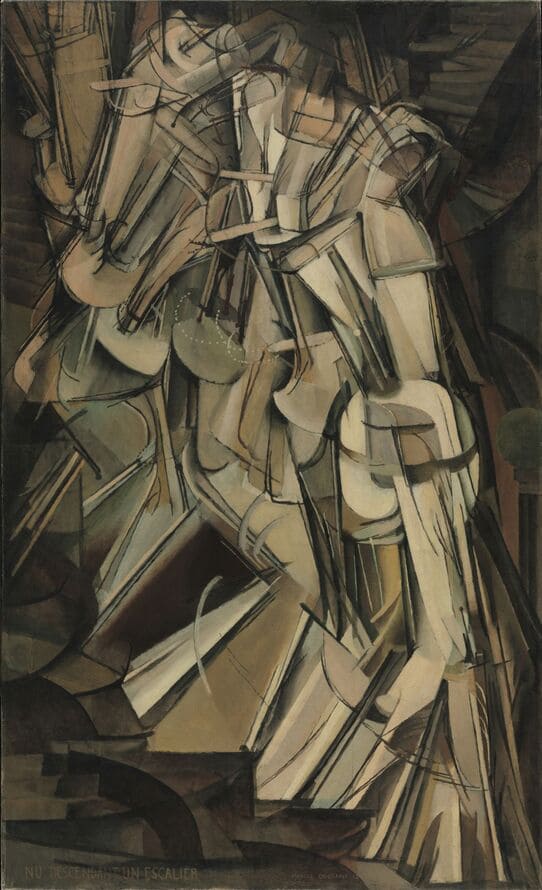
MoMA and PMA have a longstanding history with Duchamp’s work. MoMA was the first museum to acquire a work by Duchamp, in addition to including his work in early landmark exhibitions such as Fantastic Art, Dada, Surrealism (1936) and The Art of Assemblage (1961). The PMA is the largest repository of his oeuvre, as the home of the Louise and Walter Arensberg Collection and the permanent site of two monumental works, The Large Glass (1915–23) and Étant donnés (1946–66). Marcel Duchamp will build on this legacy and illustrate the radical evolution of the artist’s career from 1900 to 1968, with each gallery highlighting a distinct phase of his work. The exhibition, organized chronologically, will begin with a selection of Duchamp’s early drawings and cartoons as well as paintings submitted to French salon exhibitions, culminating with his legendary Cubist masterpiece Nude Descending a Staircase (No. 2) (1912), which was last shown at MoMA in 1974.
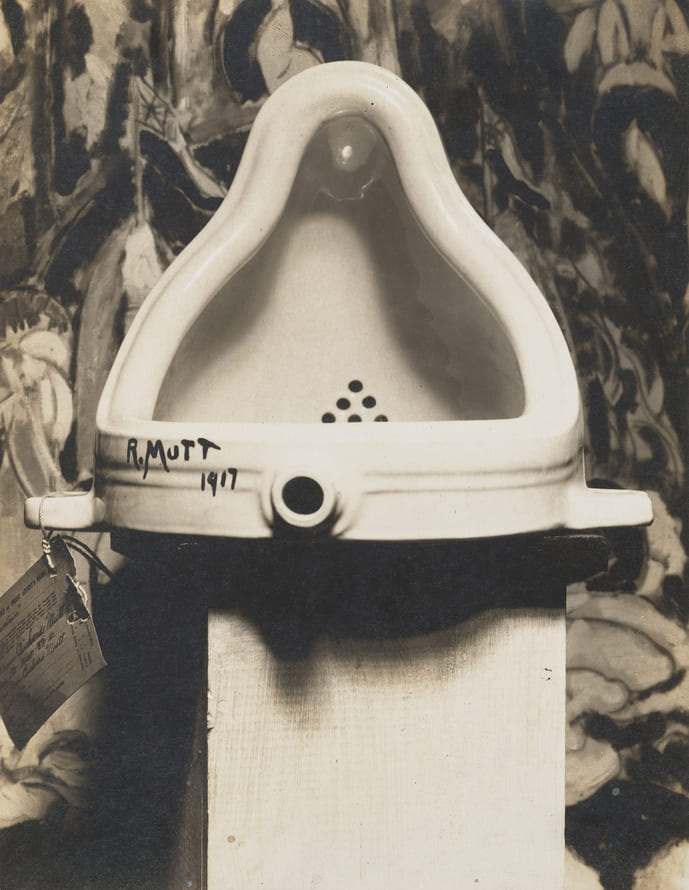
Another key section in the exhibition will outline Duchamp’s invention of the readymade as a form of sculpture, which he described in 1961 as “the most important single idea to come out of my work.” While several of the original readymades are now lost, such as his scandalous Fountain (1917), the exhibition will gather those still in existence. Duchamp developed his readymades in tandem with the preparation of his monumental painting on glass, The Bride Stripped Bare by Her Bachelors, Even (The Large Glass) (1915–23), which liberated painting as a medium from both the canvas and the wall. The exhibition will offer a rare opportunity for audiences to view the full range of materials and approaches that Duchamp employed in his precise planning and execution of The Large Glass.
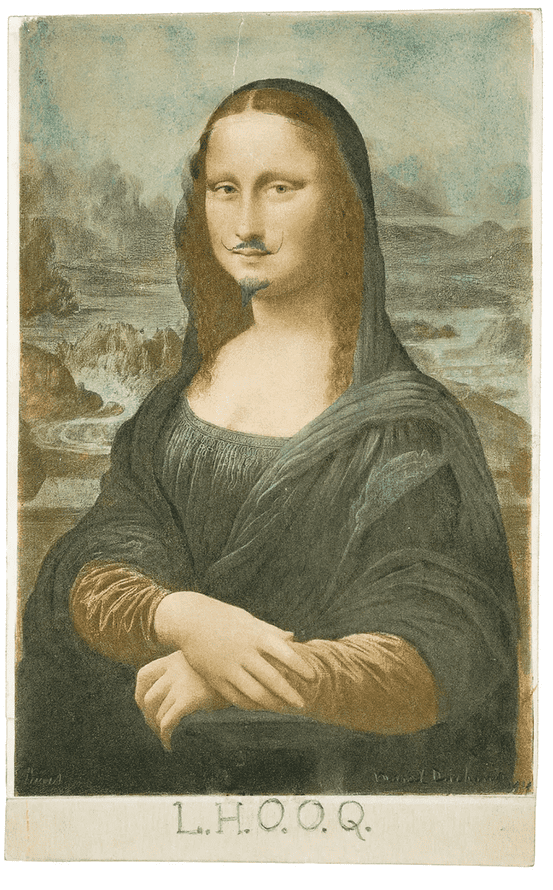
The following section will be dedicated to Duchamp’s transatlantic participation with New York and Paris Dada in the 1920s. This section will present one of the best-known images of the 20th century: L.H.O.O.Q. (1919), Duchamp’s irreverent defacement of a postcard-sized reproduction of Leonardo da Vinci’s Mona Lisa, in which he doodled a mustache and beard around the portrait’s enigmatic smile. His experiments with motorized optical devices and filmmaking, such as his radical film Anemic Cinema (1926), as well as the appearances and achievements of his feminine alter ego Rrose Sélavy, will also be included in this section.
The central gallery of the exhibition will feature Duchamp’s “portable museum,” the Box in a Valise (1935–41), for which the artist painstakingly reproduced in miniature his life’s work up to that point. This will be the most extensive presentation of the Box in a Valise to date; deluxe copies from the 1940s as well as subsequent editions will be shown alongside never before-exhibited preparatory material.
Duchamp’s work was not widely known until the last third of his career; the widespread distribution of the Box in a Valise introduced the breadth of his work to new audiences. The last two decades of Duchamp’s career were marked by the rise of his international renown and were defined by major exhibitions, including his first retrospective at the Pasadena Art Museum in 1963. In many cases, these occasions presented exhibition copies of artworks that were authorized by Duchamp. This approach aligned with his career-long fascination with reproductions—blurring distinctions between original and copy—and his radical views on authorship. The exhibition will present a range of readymade replicas and multiples produced in collaboration with Katherine S. Dreier, Sidney Janis, Ulf Linde, Arturo Schwarz, and Richard Hamilton.

Duchamp continued to innovate through the end of his career, most notably in his covert, two-decade-long preparation of an in-situ tableau for the Philadelphia Museum of Art, Étant donnés: 1° la chute d’eau, 2° le gaz d’éclairage . . . (Given: 1. The Waterfall, 2. The Illuminating Gas . . . ) (1946–66). The exhibition will gather studies that informed the making of Duchamp’s final work, which was installed at the PMA a year after his death. Marcel Duchamp will be accompanied by a richly illustrated catalogue surveying the artist’s work in all mediums. The publication will reproduce all the works in the exhibition and will feature extensive documentation of Duchamp’s life and work, with an abundance of archival documents and historic photographs.

Marcel Duchamp is organized by The Museum of Modern Art, New York, and the Philadelphia Art Museum, with the generous collaboration of the Centre Pompidou. The exhibition is organized by Ann Temkin, The Marie-Josée and Henry Kravis Chief Curator of Painting and Sculpture, MoMA; Michelle Kuo, Chief Curator at Large and Publisher, MoMA; and Matthew Affron, The Muriel and Philip Berman Curator of Modern Art, Philadelphia Art Museum; with Alexandra “Lo” Drexelius, Curatorial Assistant, Department of Painting and Sculpture, MoMA; Helena Klevorn, Curatorial,Assistant, Department of the Chief Curator at Large, MoMA; Danielle Cooke, Exhibition Assistant, Philadelphia Art Museum; and Julia Vázquez, Andrew W. Mellon Postdoctoral Fellow, Philadelphia Art Museum.
WHEN?
EXHIBITIONS DATES: Sunday, 12. April TO Saturday, 22. August 2026.
WHERE?
Museum of Modern Art , 11 West 53 Street, Manhattan, New York, New York, 10019, USA