

When the international art world gathers in Basel from 18 to 21 June 2026, it will quickly become clear why Art Basel continues to hold its position as the most important fair for modern and contemporary art. With 290 galleries from 43 countries, it presents an impressive spectrum ranging from key historical works of the 20th century to the artistic movements shaping the present day. Yet this year’s edition tells another story. It reveals an art market seeking fresh inspiration, and one that, surprisingly often, relies on direct encounters with art.
Fig. above: Site-specific commission by Ibrahim Mahama on Münsterplatz, courtesy of Art Basel
The Return of the First Moment
The most striking new feature is called Basel Exclusive. This new format responds to a trend that has been shaping the art market for years. Many significant works change hands even before the fair begins. Collectors receive previews, price lists and exclusive offers long before the doors of the exhibition halls open.
With Basel Exclusive, the organisers aim to rekindle that special moment of discovery. Participating galleries will keep selected major works under wraps until the VIP opening and present them for the first time during the ‘First Choice Preview’ on 16 June. Among the first participants are Hauser & Wirth, Gagosian, David Zwirner and Pace Gallery. This brings into focus an experience that has long been taken for granted: seeing a work for the very first time.
Art with a message
A clear trend is also emerging in terms of content. Many of the most prominent projects explore social change and historical ruptures. Art poses questions to us about living together.
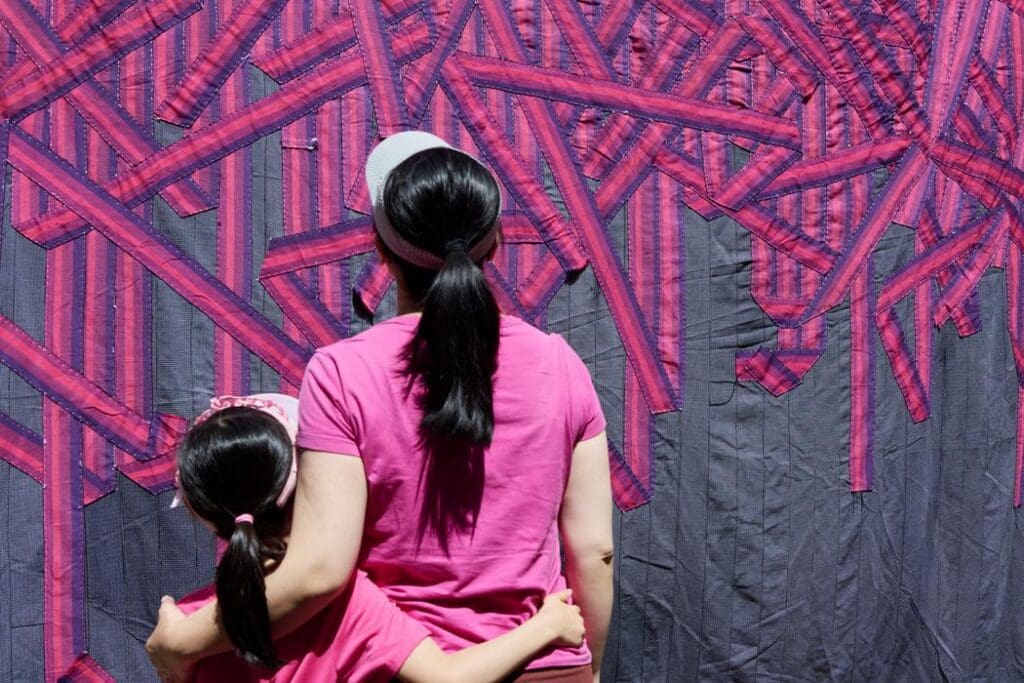
In the Unlimited section, which will be curated for the first time by Ruba Katrib in 2026, visitors will encounter monumental installations and large-scale works by artists such as Isa Genzken, Bruce Nauman, Theaster Gates and Alfredo Jaar. Many of these works explore themes such as memory, social responsibility and the conditions of contemporary life.
This focus continues beyond the exhibition halls. The public art trail, curated by Stefanie Hessler, winds its way through Basel’s streets, squares and historic buildings. Works by Kader Attia, Haegue Yang and Amol K Patil explore themes that extend far beyond the art world. For instance, Kader Attia’s installation explores the spiritual and ecological significance of water, whilst Haegue Yang works with references to Korean mythology and the boundaries between public and private space. Amol K Patil, for his part, turns his attention to social housing, labour movements, political activism and the identity of the Dalit community in India.
AI is becoming part of the conversation
With Zero 10, Art Basel is, for the first time, giving digital art a prominent place within its main fair. This is remarkable because the works on display are hardly characterised by technological euphoria. Instead, they explore the consequences of a world in which images are created, altered and disseminated before we can even make sense of them.
Pierre Huyghe’s installation Of Ideal at Esther Schipper is one of the most striking examples of this. The work continuously processes data from its surroundings and uses it to generate ever-changing visual states. It remains in motion and transforms with every encounter. Anyone who enters the space becomes not merely a viewer, but part of a process whose course can never be fully predicted. The work defies a fixed form and changes throughout its entire duration. In doing so, it poses a question that extends far beyond technology: who, in fact, shapes the images that define our reality today?
Between Duchamp and the Present
One of the most fascinating aspects of Art Basel 2026 is the encounter between art-historical perspectives and contemporary debates. Whilst the Paris-based gallery 1900–2000 is presenting works by Marcel Duchamp and other leading figures of the avant-garde, numerous contemporary works explore questions of authorship, originality and the relationship between idea and execution.
Over a hundred years ago, Duchamp shifted the focus from the handcrafted object to the intellectual act behind it. In the age of artificial intelligence, this perspective is taking on new relevance. When images can be generated by algorithms, the question of what artistic achievement actually consists of comes to the fore once again: is it the finished work, its creation, or the idea that precedes it?
Art Basel highlights just how closely current debates are linked to the questions that Duchamp raised as early as the beginning of the 20th century. What makes a work a work of art? Where does creativity begin? And what role does the human being play when creative processes increasingly emerge in collaboration with technical systems? The fair does not provide any clear-cut answers to these questions, but it does show that many discussions about artificial intelligence ultimately boil down to a fundamental understanding of art and authorship.
Venice’s impact lingers
The fair gains further momentum from its proximity to the 61st Venice Biennale. Numerous artists currently exhibiting there are also featured in Basel. These include, amongst others, Lubaina Himid, Yto Barrada, Sung Tieu, Chiara Camoni and Dana Awartani.
This creates a fascinating dialogue between the major institutional exhibitions in Venice and the galleries at Art Basel. Themes that first emerge there are explored further here: questions of cultural identity, memory and belonging; an examination of colonial and political narratives; and a focus on communities and traditions in a changing world.
A fair with an eye to the future
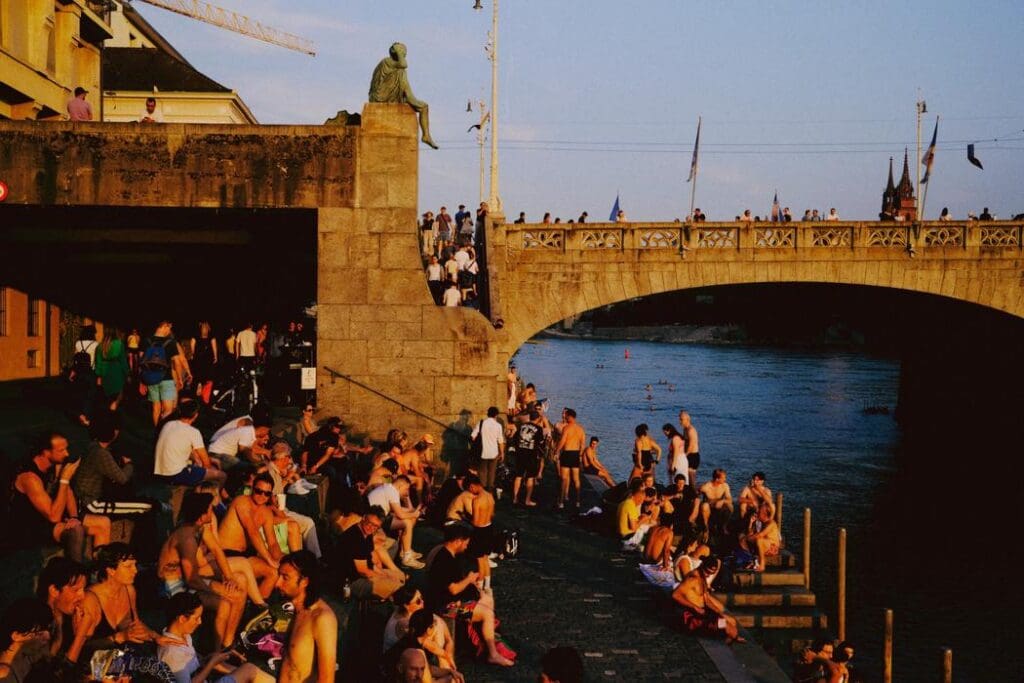
Art Basel 2026 demonstrates that the art market continues to thrive on outstanding works, significant collectors and big names. However, this is the basis of its business, not a realisation. At the same time, it is very clear that the international art world is undergoing a phase of reorientation. Questions of social responsibility, technological change and new forms of interaction and coexistence are coming to the fore. Art Basel 2026 presents art as a place of discovery. As a result, it almost inevitably becomes a space where the major themes of our time come together in discourse: from identity and memory, through our relationship with technology, to the question of how we wish to live together in the future.
WHEN?
VIP Days
Tuesday, 16 June 2026
11:00–16:00: First Choice
16:00–20:00: First Choice & Preview
Wednesday, 17 June 2026
4.00 pm–8.00 pm: Opening reception for ticket and VIP pass holders
11.00 am–8.00 pm: First Choice & Preview
Public Days
Thursday, 18 June 2026
11:00–19:00
19:00–22:00: Unlimited Night
Friday, 19 June 2026
11:00–19:00
Saturday, 20 June 2026
11:00–19:00
Sunday, 21 June 2026
11:00–19:00
WHERE?
Messeplatz 10
4058 Basel
Switzerland