

Galleries usually arise from a personal passion for art and are often developed over decades. They are closely linked to the people who have built them up, their programme, their artists and their network. Consequently, the question of what happens when gallery owners step down is often a difficult one. It is not uncommon for this to result in closure. By contrast, it is comparatively rare for an established art venue to be actively handed over to new owners.
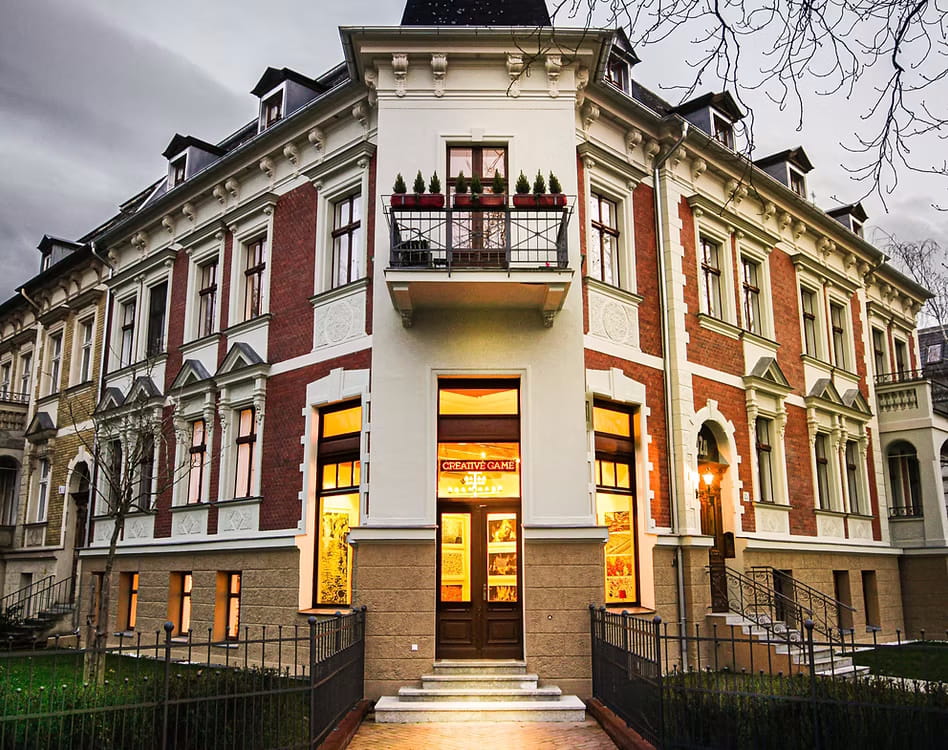
Image above: Galerie Creative Game in Berlin-Lichterfelde, by courtesy of the gallery
This is precisely the path that the Berlin-based gallery Creative Game is currently taking. The gallery’s premises in the south of the city, which have been developed over many years, are to be sold. The plan is for the takeover to take place as part of an asset deal, in which not only the premises but also the operational infrastructure, technical equipment, fixtures and fittings, and organisational structures will be included in the handover. The aim is not to close the site, but to secure its future under new management.
This raises a fundamental question that is likely to increasingly preoccupy the Berlin art market in the coming years: how can the succession of established galleries be managed? Many galleries were founded in the 1990s and early 2000s. Over the decades, their founders have nurtured artists, supported collectors and developed networks. At some point, the question inevitably arises as to how this work can be continued without losing the structures that have been built up over time.
Whilst companies in other sectors can often rely on established succession models, such structures have so far been virtually non-existent in the gallery world. It is not uncommon for the entire exhibition programme to come to an end when the owners step down. Artists lose their representation, collectors lose a trusted point of contact, and neighbourhoods lose a cultural hub that often has an impact far beyond the art market.
Yet the true value of a gallery lies only partly in its premises or its fittings. Even more crucial are the relationships with artists, collectors, curators, institutions and the local community that have developed over the years, the trust that has been built up, the venue’s reputation and the knowledge of how to run a gallery successfully. Whilst these intangible assets cannot be transferred on a one-to-one basis, they can lay the foundations for a successful generational handover.
Gallerist Albert Heiser, the current owner of Creative Game, describes the premises on offer as follows: “Our gallery is situated in a listed Gründerzeit villa dating from 1878, which was renovated in 2022 in accordance with conservation guidelines. The commercial unit, measuring around 96 square metres, features ceilings over five metres high, original wooden beams, Douglas fir floorboards, modern lighting and two front gardens with exclusive rights of use. We have developed and established this space as a gallery and exhibition venue over several years. Incidentally, it takes just 10 minutes to get here by regional train from Potsdamer Platz.”
Heiser is planning a supported handover in January 2027: “We are looking for interested parties who wish to develop the venue in line with their own vision whilst building on our existing infrastructure. The purchase price for the property and the gallery business is available on request.”
It remains to be seen whether such models will become more common in the future. In view of rising operating costs, an increasingly demanding art market and the impending generational change in many galleries, the structured handover of existing art venues could become an interesting alternative between closing down and starting afresh. For Berlin, this would not only mean the preservation of long-established cultural venues, but also the opportunity to continue their history under new management. The future of the art market will therefore be determined not only by new ventures, but equally by whether existing venues can be successfully passed on to the next generation.
Galerie Creative Game will provide further information about the venue on request.
WHERE?
Galerie Creative Game
Jägerstraße 12A
12209 Berlin
Phone +49 179 108 6350