
The Paderborn Diocesan Museum, in collaboration with the storyLab kiU at Dortmund University of Applied Sciences and Arts and inspired by the University of Paderborn, is presenting the exhibition ‘PROPHECIES – Who interprets the signs of the times?’. The interactive exhibition runs from 30 August 2026 to 31 January 2027 and explores humanity’s quest to foresee the future – from ancient oracles and biblical revelations to modern art and artificial intelligence. By combining historical artefacts with contemporary artworks and immersive media installations, the museum creates a stimulating space in which visitors can reflect on where we seek answers in an uncertain world.
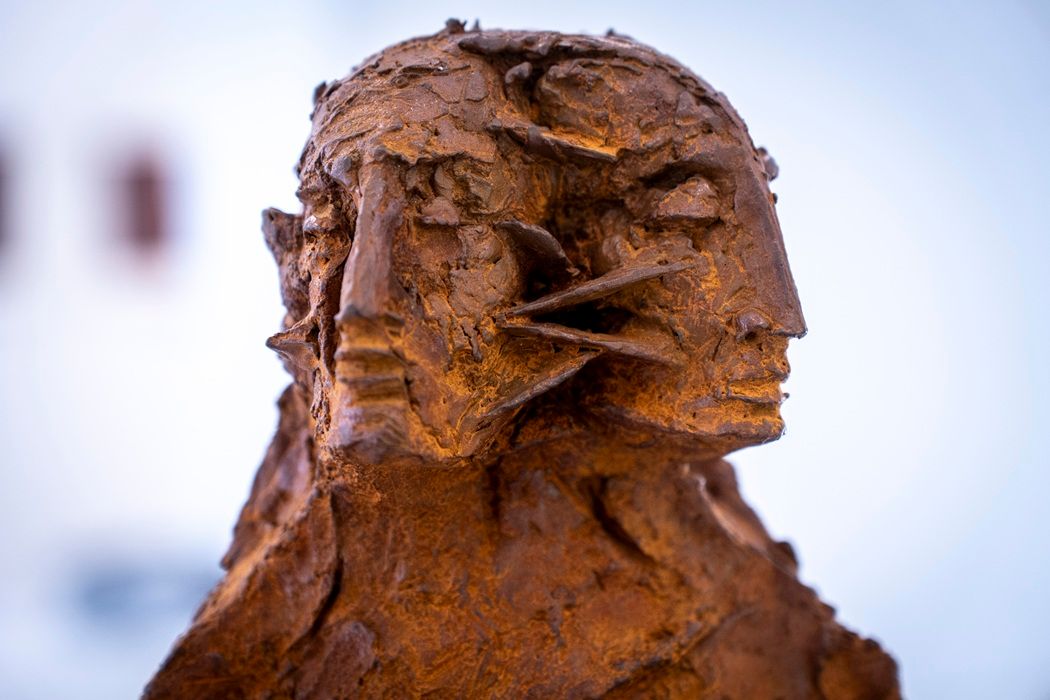
Image above: Kassandra 2023 | Thomas Duttenhoefer | Eisen | Foto: Kalle Noltenhans.
Will I be happy? Will a war break out? What is the meaning behind it all? Who can answer such questions? Is there anyone who can reveal what the future holds? Prophets who are in touch with the divine? Scientists who develop predictive models, or artists who convey new perspectives and viewpoints through their works?
In a poetic, participatory manner and using new immersive narrative techniques, the Diocesan Museum of Paderborn explores such questions in the exhibition PROPHECIES – Who interprets the signs of the times? from 30 August 2026 to 31 January 2027. In doing so, the exhibition creates a space for dialogue on the various manifestations of the prophetic, from antiquity to the age of AI. The exhibition examines a wide range of aspects of the theme and invites visitors to ask their own questions.
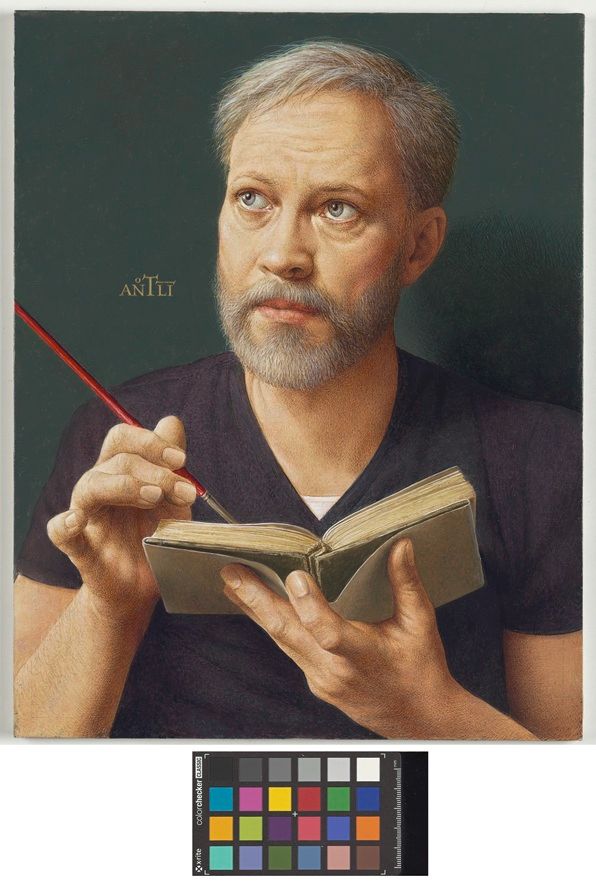
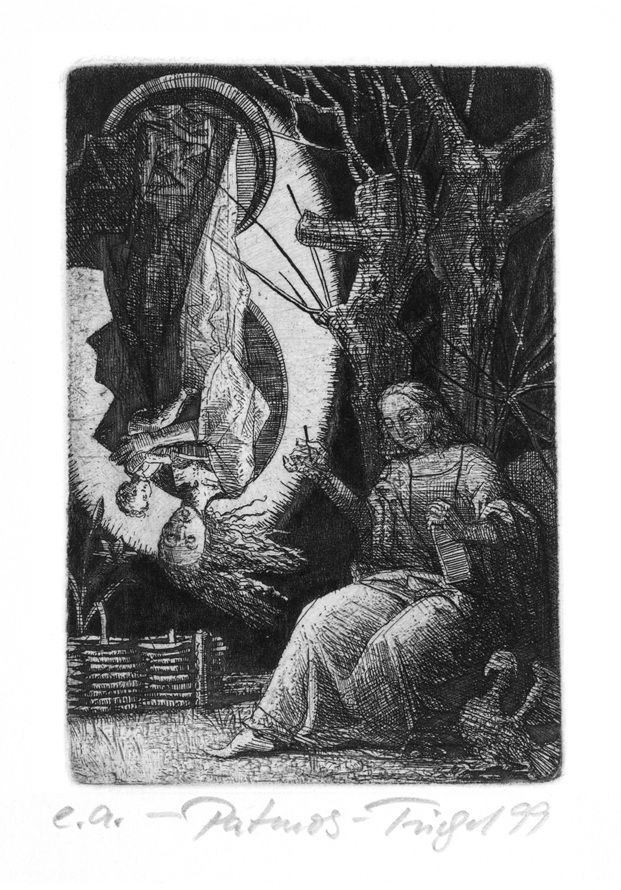
On display are contemporary perspectives by Thomas Duttenhoeffer, Barbara Dombrowski, Michael Triegel, Christoph Brech, Claudia Brieske and Helmut Kirchlechner – six artists whose working styles are very different. Their works engage in dialogue with one another and with objects, sculptures, paintings and manuscripts from late antiquity to the Baroque period from the museum’s collection.
“For millennia, oracles, seers and prophets have answered our existential, religious or political questions, revealing to us the future or the divine will,” explains curator Christiane Ruhmann. “Yet their answers were often ambiguous or even frightening. By juxtaposing these ancient prophecies with contemporary art and immersive installations, we invite visitors to reflect on this: Who do we trust to answer our questions? Prophets? Philosophers, scientists, artists? And what does it mean when, nowadays, we increasingly rely on AI to answer our questions – who is actually providing the answers?”
The Vicar General of the Archdiocese of Paderborn, Monsignor Dr Michael Bredeck, emphasised: “With our new experimental exhibition format, CONNECT #, we – together with our partners – invite visitors to engage with important contemporary issues in a creative and playful way. Here, the poetic, artistic and participatory approach enables visitors to find space – alongside our partners – to ask themselves creative questions and to connect with the exhibition. In this way, the museum is increasingly becoming a ‘third place’ – a space for participation and encounter.”
The partner for the third CONNECT # exhibition is the storyLab kiU at Dortmund University of Applied Sciences and Arts, based at the Dortmunder U. It explores new media-based forms of storytelling and cultural mediation through virtual visual and audio worlds. In doing so, it relies, amongst other things, on immersive techniques that convey the feeling of being part of the action oneself.
On the theme of prophecies, storyLab kiU has developed a multimedia visual and audio installation and a large-scale, immersive production for the exhibition. The focus here is on the question of how and in what form prophetic interpretations from the past continue to exist in the present day and are carried forward into the age of AI.
At audio points accompanying selected exhibits, the voice of the well-known cabaret artist and eloquent linguistic genius Jochen Malmsheimer recites ancient, handed-down prophecies.
The Exhibition – From Cassandra to AI
Visitors enter the exhibition via an introduction – conceived by storyLab kiU. On a monitor, vague, mysterious images flash by in rapid succession. Is that the Oracle of Delphi in the distance? Is there something beyond the world?
Cassandra is known as a prophetess from Greek mythology. Here she is depicted in the form of a contemporary iron sculpture by the contemporary artist Thomas Duttenhoefer. Cassandra can foresee the future, yet no one believes her warnings. In the exhibition, the sculpture of the mythical prophetess looks out towards a work by Barbara Dombrowski from her project ‘Tropic Ice_Dialog Between Places Affected by Climate Change’, through which the photographic artist warns of the consequences of climate change. Barbara Dombrowski has portrayed Indigenous peoples across the five continents who are particularly affected by climate change. In the Paderborn exhibition, five of her large-format photographic works are displayed on a monthly rotation.
Oracles and Revelation
Right next to it, oracle sticks dating from the 5th to the 9th century, found in women’s graves in Westphalia, bear witness to late antique and medieval practices of divine divination. A precious 9th-century manuscript, the Corvey Gospel Book, records: ‘A prophet is not without honour except in his own country…’ . In early Christianity, John the Baptist was regarded as the last and most important prophet of Israel. Here, he is depicted in two wooden sculptures.
A 15th-century panel painting and two impressive woodcuts by Lucas Cranach (1473–1553) illustrate the Revelation of John from the New Testament, the biblical Apocalypse. The exhibition places these works in a fascinating dialogue with paintings by the Leipzig artist Michael Triegel, who works in the style of the Old Masters. Triegel’s paintings are complex, at times visionary and also ironic artistic explorations of ancient mythological and Christian themes.
The works of Christoph Brech and Helmut Kirchlechner respond to the well-known First Epistle to the Corinthians by the Apostle Paul, which states that all prophetic speech is of no use without love. Christoph Brech’s mirror installation ‘Punto di Vista’ plays on Paul’s words: ‘Now we see through a glass, darkly; but then face to face.’ The Munich-based artist’s large distorting mirror causes everything to merge; perspectives become uncertain. Everything changes depending on the viewer’s vantage point. Anyone who engages with the interplay of the reflective surface will discover Helmut Kirchlechner’s ‘raumzeit(k)reise’ on the opposite wall. Kirchlechner created them on site for the exhibition and also explicitly as a response to Brech’s mirror. They are, at the same time, part of his long-term project. Using various tools, he draws spirals in a steady, even stroke from the inside out, which condense into circular discs during the process. For the artist, these forms symbolise pathways to infinity.
The storyLab kiU at Dortmund University of Applied Sciences and Arts has created a sibylline cave, a walk-in space of prophecies that overlap in time and space. Anyone who enters it becomes an active part of the installation; they can interact with it, but also contribute in an analogue way by placing sticky notes with their own questions inside the ‘cave’.
The exhibition was thematically inspired by one of the museum’s long-standing partners, the Faculty of Cultural Studies at the University of Paderborn, which is exploring the exhibition’s theme as part of a seminar.
WHEN?
Exhibition dates: Sunday, 30 August 2026 – Sunday, 31 January 2027
Opening: Saturday, 29 August 2026, 4 pm (Paderborn Museum Night from 6 pm)
Opening hours: Tuesday to Sunday, 10 am–6 pm; every first Wednesday of the month until 8 pm
WHERE?
Diözesanmuseum Paderborn
Markt 17
33098 Paderborn
COSTS?
4 EUR, concessions 2 EUR