

How do we see ourselves – and how did people want to be seen at different times? With its major special exhibition ‘Portraits! Surprising Encounters from Botticelli to Lempicka’, the Gemäldegalerie invites visitors on a journey through the history of portraiture. Portraits spanning five centuries enter into unexpected dialogues, raising questions about how we perceive others and ourselves, self-presentation, status and individuality. Masterpieces by artists such as Dürer and Giorgione, Rubens and Gainsborough, or Titian and Therbusch are juxtaposed, revealing astonishing similarities.
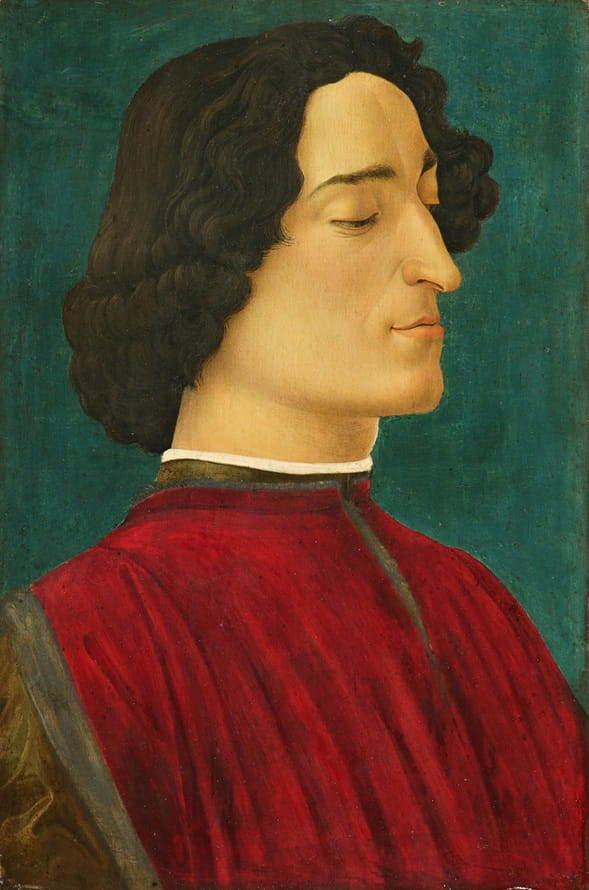
Image above: Sandro Botticelli, Giuliano de’Medici, 1478, 57,1 x 38,4 cm, Gemäldegalerie, Kat.Nr. 1068, Foto: Staatliche Museen zu Berlin, Gemäldegalerie / Jörg P. Anders.
In the exhibition, portraits from different centuries, regions and cultures are brought together in pairs and engage in dialogue. Works that have never before encountered one another are placed opposite each other for the first time – thereby opening up new perspectives on themes such as identity, beauty, power and role models.
Portraits are far more than mere depictions of outward appearance: they reveal a sense of self and character, emotion and self-presentation. Clothing, posture and accessories become symbols of social, political or gendered identity. Through these juxtapositions, artistic choices and visual strategies become immediately apparent: what was considered beautiful, dignified or regal? How have these notions changed over the centuries? The exhibition reveals just how diverse, yet at the same time related, the answers are.
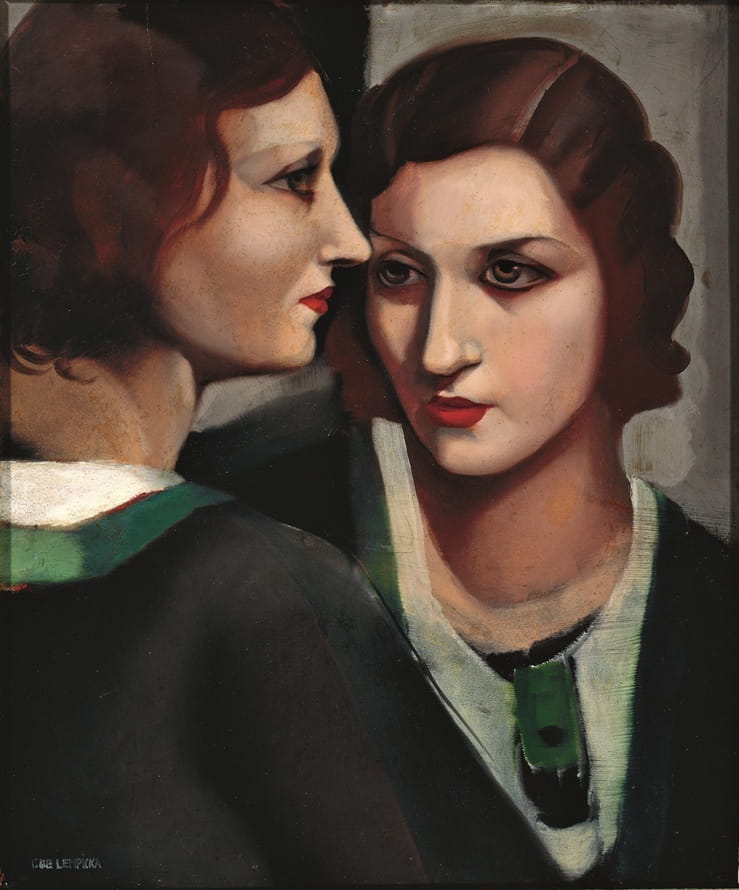
The exhibition takes as its starting point the Gemäldegalerie’s internationally renowned collection of portraits, which has been supplemented for this show by loans from other institutions within the Staatliche Museen zu Berlin – including the Alte Nationalgalerie, the Neue Nationalgalerie, the Egyptian Museum and the Sculpture Collection. Together, these form a rich panorama of portraiture from the 15th to the 20th century. Around 90 masterpieces by artists including Petrus Christus, Botticelli, Giorgione, Dürer, Cranach the Elder, Holbein the Younger, Sofonisba Anguissola, Rembrandt, Rubens, Velázquez, Anna Dorothea Therbusch, Lovis Corinth, Tamara de Lempicka and Picasso demonstrate the diversity of portraiture. Each encounter tells its own story; each juxtaposition invites visitors to marvel, compare and discover.
The sections of the exhibition
Spanning four sections, the exhibition explores the various forms and functions of the portrait. A prologue highlights the remarkable constants in the art of portraiture over the centuries, whilst also shedding light on the genre’s roots in Europe.
Types of portrait on both sides of the Alps
The first chapter traces the development of portraiture in Italy and Northern Europe during the Renaissance. Whilst, for example, Flemish artists such as Rogier van der Weyden favoured the three-quarter profile, Italian masters such as Filippo Lippi opted for the austere, classical profile. Various basic types, as well as the differing tendencies towards naturalism and idealisation, soon began to intertwine and shaped the development of portraiture in the centuries that followed.
Self-representation of the Elite
Portraits have always served as symbols of power, wealth and social standing. Clothing, posture, gaze and picture format all convey the aspirations, ambitions and status of those depicted. Anthonis Mors’s portrait of Duchess Margaret of Parma, for example, is rendered in the same stately knee-length format and with the same regal expression as Giovanni Battista Moroni’s portrait of a Spanish nobleman.
Family, Friendship and Intimacy
In contrast, the following chapter focuses on the private aspects of portraiture. Relatives, close friends and loved ones are captured in images that serve as personal mementos. Sofonisba Anguissola’s mother, Bianca, gazes just as intimately at her daughter, the painter, as the wife of the painter Eugen Spiro does at her husband 380 years later. Portraits of the dead capture the final glimpse of those who have passed away.
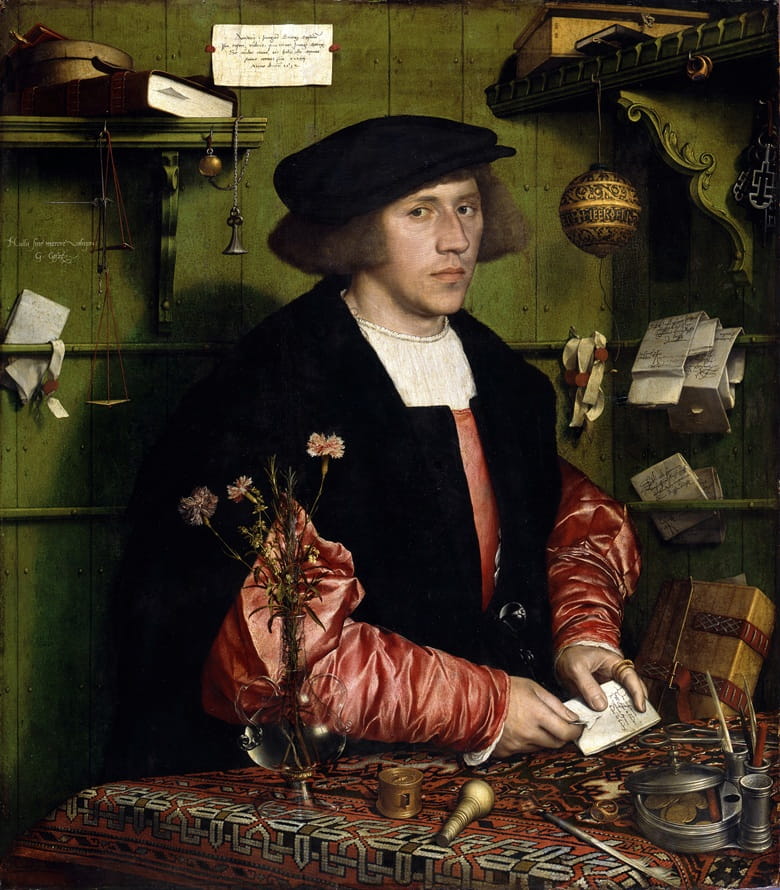
Portraits of Art Collectors and Artists
The concluding chapter focuses on artists and collectors. Their portraits speak of self-confidence and self-exploration, but also of the desire to define their own place in the history of art. Therbusch presents herself as a learned woman; in their self-portraits, Poussin and Anton Raphael Mengs reflect on their existence and their fame.
Reflections on the ‘self’ in the age of selfies
‘Portraits!’ is more than just an art-historical exhibition; it is also a reflection on today’s visual world: how do we construct identity in the age of selfies and social media? How do we read faces – and what does our gaze reveal about ourselves? Nowhere can these questions be studied and understood more vividly than in the mirror of the masterpieces of past centuries.
Exhibition catalogue
A richly illustrated catalogue will be published, providing an in-depth exploration of the works and their interrelationships (Michael Imhof-Verlag, Petersberg).
Curatorial team
The exhibition is curated by Sven Jakstat and Stephan Kemperdick, in collaboration with Marie-Luise Hugler.
Funding
The exhibition is funded by the Kulturstiftung der Länder, the Fondation Etrillard, the Kaiser Friedrich Museumsverein and the Fontana Foundation.
WHEN?
Opening: Thursday, 15 October 2026, 7 pm
Exhibition dates: Friday, 16 October 2026 – Sunday, 14 March 2027
Opening hours: Tuesday – Sunday, 10 am – 6 pm
WHERE?
Kulturforum Berlin, Gemäldegalerie
Johanna-und-Eduard-Arnhold-Platz / Matthäikirchplatz
10785 Berlin